US tariff switch leaves importers puzzled in a complex new trade landscape
The US today replaced its temporary Section 122 import surcharge with a new Section 301 ...

TFII: EARNINGS BEATCHRW: PUMMELED DSV: LACK OF TRUST WEIGHSDHL: NEW HIGH DHL: E-COMM DEAL SIGNEDF: NEW PROFIT STREAMCHRW: HEALTHY CORRECTIONDSV: TIME TO BUY INWTC: NO LUCKCHRW: 'NUCLEAR VERDICT'DSV: DEEP CUTKNIN: UPGRADED
TFII: EARNINGS BEATCHRW: PUMMELED DSV: LACK OF TRUST WEIGHSDHL: NEW HIGH DHL: E-COMM DEAL SIGNEDF: NEW PROFIT STREAMCHRW: HEALTHY CORRECTIONDSV: TIME TO BUY INWTC: NO LUCKCHRW: 'NUCLEAR VERDICT'DSV: DEEP CUTKNIN: UPGRADED
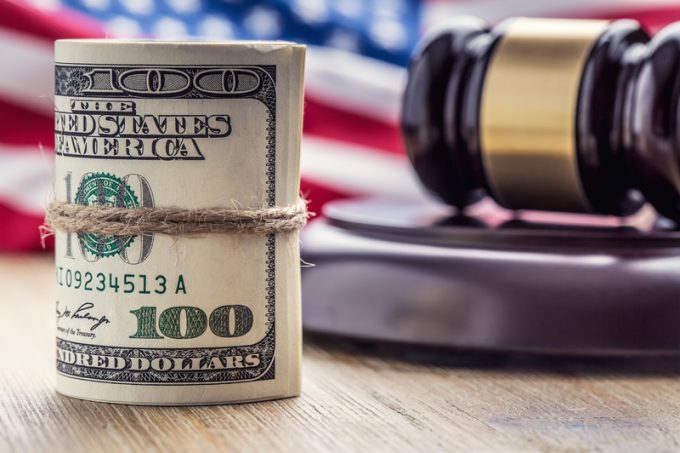
A US trade court has ordered Customs to begin unwinding tariffs imposed under emergency powers later ruled unlawful by the Supreme Court – a decision that could trigger billions in refunds for importers.
But speakers at this week’s TPM conference in Long Beach warned the legal victory may only mark the start of a much longer fight – over how and when companies actually get their money back.
Baker Tilly global trade advisory director Pete Mento told delegates the refund process could prove contentious, warning the US government may resist or delay repayments, despite the court rulings.
“They owe us money,” he said. “And they’re trying to find every possible way to weasel out of not paying what you’re owed.”
His comments came as the US Court of International Trade (CIT) ordered Customs and Border Protection to liquidate affected entries without the tariffs, and reliquidate those not yet final, effectively forcing the refund process forward.
However, Mr Mento later clarified that, for entries that have not yet been liquidated, the mechanics may be far simpler than many expect.
In its order, the court noted that all importers with entries subject to the tariffs were entitled to benefit from that decision, potentially widening the scope of refunds far beyond the companies involved in the initial lawsuits.
The individual case before the court involves manufacturer Atmus Filtration, but the ruling indicates that any importer that paid the unlawful tariffs could ultimately qualify for repayment.
That potentially puts the US government on the hook for billions of dollars in refunds across millions of import entries.
But Mr Mento explained that for unliquidated entries, the issue may resolve automatically when Customs finalises those shipments.
If duties were only estimated at the time of entry and the shipment has not yet been liquidated, Customs can simply remove the IEEPA tariff during the normal liquidation process. In those cases the illegal duty never becomes payable.
Where importers have already paid estimated duties, the Automated Commercial Environment system should automatically return any overpayment once the entry is liquidated without the IEEPA tariff, meaning many refunds could occur through standard Customs procedures, rather than a special refund programme.
However, Mr Mento warned that returning that money may not be straightforward.
“The first real problem is the Treasury says ‘we don’t have the money’,” he told the TPM audience, suggesting officials may look for ways to soften the financial impact of large-scale repayments.
Among the possibilities being discussed in Washington, he said, were structured payout schemes, where refunds are stretched over years, or paid in instalments.
“What if we owe someone $100m in refunds and we pay them $10m for the next 10 years?” he asked.
Others have speculated that refunds could be issued as credits against future tariffs rather than direct payments, though such proposals would likely face legal challenges.
Mr Mento also warned that a wave of litigation could still lie ahead, particularly for companies whose entries fall outside standard protest periods.
“Hope is not a strategy,” he said, urging importers with significant exposure to consider joining existing cases to protect potential claims.
He added that the court’s focus on unliquidated entries reflected the fact they are the easiest to correct administratively.
“Those are the easy ones,” he said, noting that liquidation alone could remove the unlawful duty.
Peter Friedmann, executive director of the Agriculture Transportation Coalition, and a long-time Washington trade advocate, said the mechanics of calculating refunds themselves should not be difficult.
Customs already holds detailed records of tariff payments through its Automated Commercial Environment database, meaning the government knows precisely how much each importer paid.
“They could push a button and know exactly how much to refund, to whom,” he said.
But the bigger question now is how the court directs the refund process and whether companies must file claims to secure repayment.
“The Court of International Trade is really in charge of this, not Customs,” Mr Friedmann said. “Customs is going to do whatever the court says.”
Thousands of companies have already filed legal challenges or joined refund actions in an effort to secure their position, should repayments begin.
Even so, trade advisers say companies should prepare for close scrutiny of their import records as the process unfolds.
Mr Mento told delegates he had already reviewed hundreds of import entries and found frequent compliance errors, ranging from classification mistakes to valuation issues and incorrect application of other tariffs.
Such problems, he warned, could complicate refund claims if Customs conducts detailed audits before releasing funds.
He added that the most complex, and financially significant, disputes would likely involve entries that had already liquidated with the tariffs applied. In those cases, protests, court orders, or new refund mechanisms may be required before importers see their money returned.
Despite the uncertainty, Mr Mento urged importers not to ignore the opportunity.
“I don’t think there’s ever been a greater refund opportunity in the history of the Treasury,” he told delegates.
“But getting the money back may prove to be a fight.”
Listen to this clip from The Loadstar Podcast of Sinan Ozcan, senior executive officer and director at DP World Trade Finance, explain how transparency and traceability play into trade finance

For uninterrupted access, sign in or sign up to The Daily News, Premium or The Loadstar Enterprise Plan.
Comment on this article