US forwarders react with fury over cuts to flights at Chicago O'Hare
The US Airforwarders Association (AfA) has responded angrily to the Federal Aviation Authority (FAA) plan ...

WTC: 'ONE RECORD'HLAG: EARNINGS GUIDANCE UPGRADE AAPL: GLOBAL SMARTPHONE SHIPMENTS VW: THE IMPACT VW: MASSIVE JOB CUTS CONFIRMEDEXPD: BULLISHCHRW: POSITIONING AHEAD OF EARNINGSAMZN: IN THE NUMBERSAMZN: PEOPLE MATTER UNTILVW: THE LAST CUT IS THE DEEPESTJBHT: GEARING UP VW: BUYING TIMER: BIG VOTE OF CONFIDENCEAAPL: BEARISH HEDGEYE
WTC: 'ONE RECORD'HLAG: EARNINGS GUIDANCE UPGRADE AAPL: GLOBAL SMARTPHONE SHIPMENTS VW: THE IMPACT VW: MASSIVE JOB CUTS CONFIRMEDEXPD: BULLISHCHRW: POSITIONING AHEAD OF EARNINGSAMZN: IN THE NUMBERSAMZN: PEOPLE MATTER UNTILVW: THE LAST CUT IS THE DEEPESTJBHT: GEARING UP VW: BUYING TIMER: BIG VOTE OF CONFIDENCEAAPL: BEARISH HEDGEYE
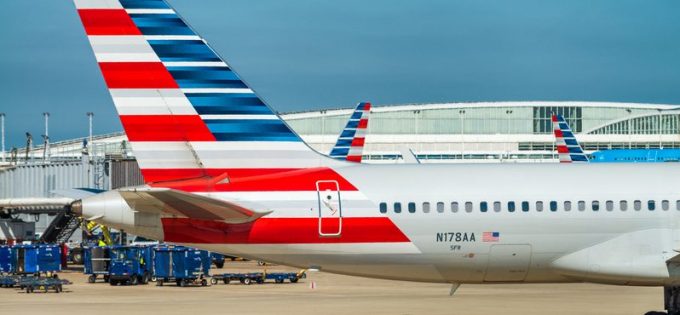
The big three US airlines posted strong results for the second quarter, but they expect turbulence as economic headwinds increase.
All three carriers tabled year-on-year increases in overall revenue, with both American Airlines, at $14.4bn, and Delta ($16.6bn in operating revenue) hitting records.
Their cargo business was strong, with gains in revenue ranging from 3.8% to 8.2%.
United, the largest player, saw revenue up 3.8%, to $430m in the quarter, bringing its tally for the first half to $859m, 6.5% more than a year ago.
Delta’s cargo revenue was up 7% over Q2 24, at $199m, and for the first six months was up 12%, to $421m.
American’s cargo business generated $212m in the quarter, up 8.2%, which brought revenue for the first half of the year to $400m, an improvement of 4.7%.
These results were above expectations, which had been clouded by concerns over the impact of Washington’s trade policies, especially the sharp drop in trade with China.
“We’re happy with the result. It was a little better than expected,” commented Roger Samways, VP commercial, cargo at American. Volumes from Asia-Pacific to the US declined, but this was compensated by strength in other sectors, especially outbound from the US to Latin America and Europe.
Overall demand did not drop, which kept yields stable, he added.
The spectre of tariffs kept front-loading going longer than anticipated, Mr Samways said, but he pointed out that American’s transatlantic business was largely driven from the US point of sale.
Revenue received a boost from special segments, notably the healthcare vertical, which grew in double digits in the first half of the year, Mr Samways reported.
Bookings remained robust through July. The first week of August saw a slowdown, which is in line with past years’ patterns, he said.
While he does not anticipate a significant shift in demand, he expects demand to soften in the second half, citing elevated inventory levels and doubts about consumer spending, reinforced by the prospect of higher prices as tariffs hit. Several large firms have signalled their intention to raise prices in the US.
The US airlines’ passenger results point to slower demand at the lower end of the economic spectrum. They show a bifurcation marked by higher revenues from premium travel services and a decline in bookings for the main cabin, signalling that lower-income Americans are reluctant to travel.
All three carriers have signalled plans to reduce domestic flying this month.
International flying, on the other hand, has performed well. The problems in aircraft production have kept a lid on capacity growth, but international expansion was a key theme this spring. American ramped up its international operations with a slew of new transatlantic routes to run over 4,000 monthly widebody flights between Europe and its home market.
For the most part, the route expansion involved tertiary cities like Athens, Naples, Rome and Edinburgh. While not high-profile cargo markets, they have given the airline more choices to route cargo to and from the US through road feeder services and interline arrangements, Mr Samways said.
The resurgence in Boeing’s output is boosting the airline’s fleet faster than anticipated.
“We got four B787-9s in Q2, and we now expect a total of 11 this year. We had expected eight,” Mr Samways said.
The acceleration of fleet additions is playing out against a darkening economic outlook, however – not only for cargo. American’s top management expects worse results for the current quarter, due to tariffs and a sluggish domestic travel market.
Get up to speed on all things supply chain!
For uninterrupted access, sign in or sign up to The Daily News, Premium or The Loadstar Enterprise Plan.

Comment on this article
Santiago Corrales
August 04, 2025 at 4:13 pmWhat about the profitability on this first 2 quarters, cost increased, does profit follow revenue growth?