'Senseless' flight restriction at Chicago was 'a political decision'
President Trump’s strained relationship with local and state politicians may have been a factor in ...

WTC: ANOTHER DIFFICULT WEEK CHRW: NEW PRODUCT LAUNCHDSV: LEADING THE DROP RXO: CRATERINGDSV: WHAT TO LIKEDSV: BULLISH BAMZN: 'AI EDGE'HD: HERE IS HOW IT LOOKSAMZN: REG RISKMAERSK: MOST HARMED
The US Airforwarders Association (AfA) has responded angrily to the Federal Aviation Authority (FAA) plan to cull the number of flights into one of the country’s busiest gateways.
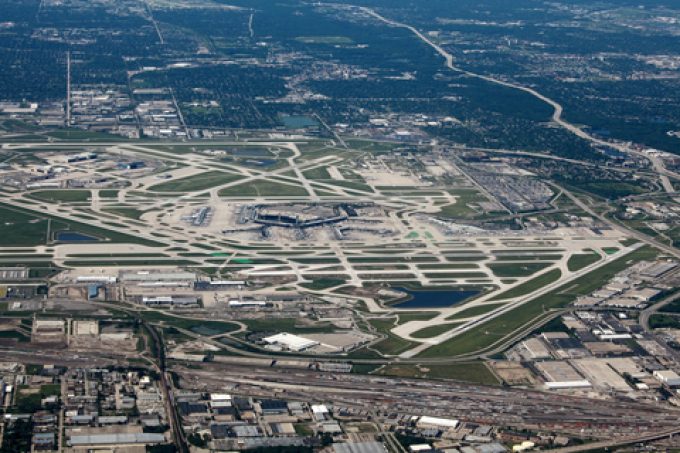
Chicago O’Hare is to lose some 10% of its services after carriers were told to reduce daily flights down to some 2,700 from a high of 3,000 peak-day movements.
Perhaps some relief amid a wave of protest was the decision to delay implementation by a fortnight, from 17 May to 2 June, up until 24 October.
The FAA said the decision to push back the introduction of the cap was made to “give operators sufficient time to modify their schedules due to certain crew scheduling already assigned for the summer 2026 scheduling season”.
AfA executive director Brandon Fried said the decision was not a surprise, merely a “consequence of years of under-investment in infrastructure and a failure to adequately staff the air traffic control”.
“When demand outpaces what the system can safely handle, the result is disruption, reduced capacity, and higher costs that ripple across the supply chain,” Mr Fried added, warning constraints in cargo were likely, with time-sensitive shipments under threat.
Compounding the problem is that nigh on 800 Transportation Security Administration (TSA) officers resigned during a record-setting partial government shutdown, with payroll funding for those remaining in the role set to lapse in May.
Affecting the Department of Homeland Security (DHS), a resolution for the shutdown has been hampered by the administration’s deployment of immigration enforcement officials that have resulted in the death of two protestors.
Mr Fried said: “We urgently need a resolution that restores stability, including a sustainable, long-term approach to pay for TSA personnel. While aviation security remains robust, the longer-term impact of workforce disruption is real.”
More long-term, the AfA is urging the federal government to adopt a more coordinated approach to addressing the plight of US aviation infrastructure constraints, and to work on rebuilding staffing resilience across the sector, not least in air traffic control (ATC).
For decades, the country’s ATC has been woefully under-equipped, with efforts to bolster the number of ATC officers failing amid issues of employee burnout and recruits failing to pass vital exams.
The AfA said policy decisions were needed to urgently address these issues, noting that policy needed to hold front and centre the idea of an “efficient movement of goods” as opposed to decisions that could restrict cargo flows.
Elsewhere in US aviation, proposals for a merger between stalwarts American Airlines and United Airlines have failed to take off following the former’s public rejection of the latter’s approach, with United CEO conceding defeat.
Scott Kirby said: “There’s a big trade deficit with foreign airlines – they fly 65% of long-haul seats into our country but only 40% of customers are foreign citizens – and the combined scale of United and American would be a better way to compete.”
Inside the industry’s AI shift
Complete The Loadstar’s ‘State of AI in the Supply Chain’ survey — and receive the full report and data before release.
For uninterrupted access, sign in or sign up to The Daily News, Premium or The Loadstar Enterprise Plan.
Comment on this article