CMA CGM the fastest-growing top-ten container carrier this year
CMA CGM has been the fastest-growing top-ten container carrier this year, overtaking long-time leader MSC, ...


VW: D-DAYPLD: KEEP PUSHINGDHL: NEW AIR SERVICEDHL: GUIDANCE UPGRADE REACTIONDHL: NEW HIGH TARGET ON THE STREET DSV: EXPECTATIONS RUN HIGH KNIN: DHL GUIDANCE UPGRADE READ-ACROSSKNIN: NEW OPENINGGM: TECH UPSIDEAMZN: BIG DEBT FUNDING ON ITS WAYDHL: 'STELLAR EXPRESS'DHL: UPDATEDHL: STRONG PRELIMINARY UPDATE CHRW: STILL VERY BEARISH
VW: D-DAYPLD: KEEP PUSHINGDHL: NEW AIR SERVICEDHL: GUIDANCE UPGRADE REACTIONDHL: NEW HIGH TARGET ON THE STREET DSV: EXPECTATIONS RUN HIGH KNIN: DHL GUIDANCE UPGRADE READ-ACROSSKNIN: NEW OPENINGGM: TECH UPSIDEAMZN: BIG DEBT FUNDING ON ITS WAYDHL: 'STELLAR EXPRESS'DHL: UPDATEDHL: STRONG PRELIMINARY UPDATE CHRW: STILL VERY BEARISH
Container shipping could see an extra $30bn to $35bn in extra fuel costs if the Hormuz crisis lasts a full year and fuel prices stay at the level we see right now, according to a Sea-Intelligence analysis – but the bigger concern is the “indirect impact”.
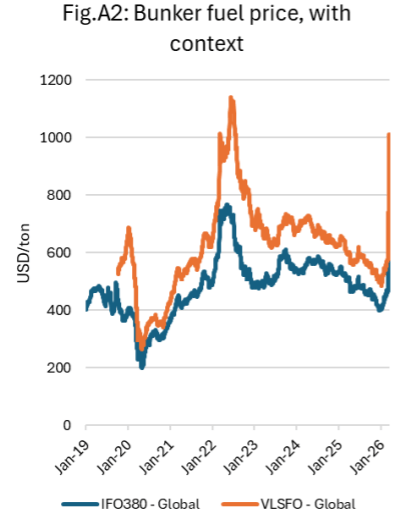
In its latest report, Sea-Intelligence notes the pace of increase in oil price has been “extreme” since the escalation of conflict in the Middle East led to the de-facto closure of the Strait of Hormuz.
But the analyst contextualised that although the recent increase has been dramatic, the absolute level of fuel prices is not historically exceptional.
Source: Sea-Intelligence
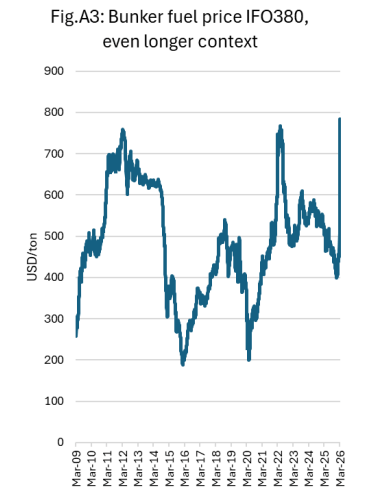
And, examining a longer historical dataset for IFO380, Sea-Intelligence said the present level was only marginally higher than previous peaks and comparable with the prolonged period of elevated fuel prices seen between 2011 and 2013.
Source: Sea-Intelligence
However, it calculated that if the current crisis were to last a full year, the cost implications for container lines could be substantial.
Using Maersk as a proxy for the wider industry, Sea-Intelligence noted that the carrier spent $6.3bn on bunker fuel in its container division in 2025. With a capacity market share of 13.8%, this implies an industry-wide bunker bill of roughly $45.6bn last year.
If fuel prices remained 65% to 76% higher than 2025 levels for a full year, the consultancy estimated the industry would face an additional bunker fuel expense of $29.5bn to $34.5bn.
Spread across global container demand of 193.6m teu over the past 12 months, based on data from Container Trade Statistics, this would equate to an extra $153–$178 per teu in fuel costs, potentially feeding through into freight rates if sustained.
“The problem is that no-one knows how long the current situation will last, nor what the oil price will do in the coming days, weeks, and months,” Sea-Intelligence said.
But industry consultant Lars Jensen suggested “rising fuel costs in themselves will not wreck container shipping supply chains”.
He said: “Look at Maersk as an example. In FY25 it spent $6.3bn on fuel and moved 12.9m FFE. This is 488 USD/FFE on fuel on average.
“If fuel prices now double due to Hormuz, and stay at that level for a year… this would elevate freight rates on average to the same level as Maersk had in 2024.
“Supply chains were working okay in 2024, ie, the fuel cost increase was expensive, but not destructive to the global supply chain. This is assuming there is no material shortages in physical access to fuel.”
Indeed, Sea Intelligence underscored that while oil prices were increasing sharply, “some added perspective needs to be applied”.
CEO Alan Murphy said: “The direct impact on global container shipping from rising fuel costs are, for now, not at a destructive level. Expensive, yes. But not destructive.
“The concern related to global container shipping, would be more aptly placed on the potential indirect impact, which an oil price shock can cause on global demand. A sudden economic downturn due to an oil price shock could lead to plummeting container volumes, with significant impact on the supply-demand balance.”
Meanwhile, on the airfreight side, Oman Air Cargo today announced a fuel surcharge across its cargo network from 18 March, along with a war-risk surcharge.
“The measures reflect increased operating costs associated with fuel price volatility and higher insurance and security expenses linked to the current operating environment,” said the carrier.
The fuel surcharge will be determined using the US Gulf Coast Jet A1 price per gallon, based on data published by the US Energy Information Administration, and will be reviewed weekly in line with movements in global fuel prices, it explained.
Other carriers across all modes have also announced more surcharges.
Maersk said: “The recent surge in global energy prices, amplified by the evolving security situation in the Middle East and its impact on worldwide fuel availability, continues to place significant pressure on logistics and intermodal transportation markets.”
It noted that approximately 20% of global fuel passed through the Strait of Hormuz, with current developments creating an “unprecedented cost environment”, affecting Inland and Intermodal operations.
Watch the latest episode of The Loadstar Podcast News in Brief on YouTube and subscribe so you never miss an episode!

For uninterrupted access, sign in or sign up to The Daily News, Premium or The Loadstar Enterprise Plan.
Comment on this article