Truck driver shortage now a 'structural threat' to businesses
The global truck driver shortage has become a structural threat to freight transport, according to ...


MATX: SMASHING RECORDSDHL: NEW HIGHSPLD: PAY UPCHRW: WAITING FOR THE NEXT EARNINGS BEATMAERSK: DEAL TIME FOR THE OWNERSDHL: ASSET POWERCAT: TIME TO SELLMAERSK: UPGRADEMAERSK: ANOTHER UPGRADE HITS THE WIRES MAERSK: FLATTISH
MATX: SMASHING RECORDSDHL: NEW HIGHSPLD: PAY UPCHRW: WAITING FOR THE NEXT EARNINGS BEATMAERSK: DEAL TIME FOR THE OWNERSDHL: ASSET POWERCAT: TIME TO SELLMAERSK: UPGRADEMAERSK: ANOTHER UPGRADE HITS THE WIRES MAERSK: FLATTISH
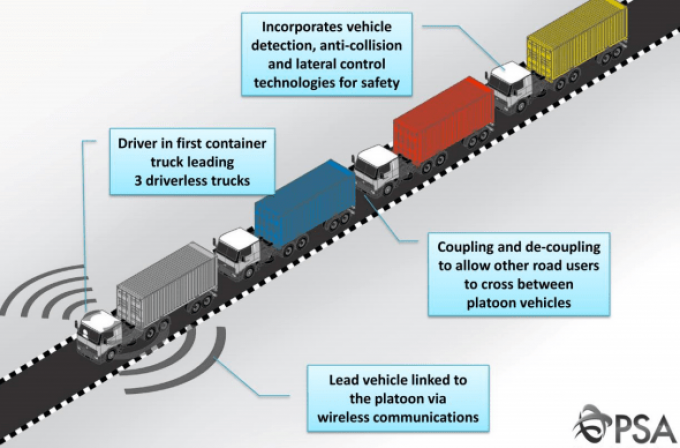
The global truck driver shortage could soon be alleviated by the imminent usage of autonomous vehicles.
They have already become a reality in Australian mining, but now port operator PSA is to check out the benefits in Singapore.
As reported in Container Management, PSA and Singapore’s Ministry of Transport have signed an agreement with Scania and Toyota for the design, development and trial of an autonomous truck platooning system.
The trials will involve transport of containers between the port’s terminals, with a human-driven truck leading a convoy of driverless trucks.
The port and Singapore itself have been seeking ways to tackle a manpower shortage and shift more movement of freight to nights to reduce traffic congestion.
The trials will take place in two phases over three years to December 2019, with the first, year-long phase focusing on design, testing and improvement of truck platooning technology to adapt to local conditions.
This first stage will be conducted by Scania and Toyota in their respective research centres in Sweden and Japan, with the ministry and PSA selecting one of the two companies to conduct local trials and some development of the technology in Singapore.
This article is © The Loadstar. Reproduction, rewriting, or derivative use requires a license. Contact [email protected] for licensing enquiries.
For uninterrupted access, sign in or sign up to The Daily News, Premium or The Loadstar Enterprise Plan.

Comment on this article