Poland-Belarus border closure disrupts supply chains, driving up airfreight rates
More than 130 trains have been stranded, airfreight rates are spiking, and Beijing appears increasingly ...
GXO: NEW WINAMZN: LTL SERVICE UPDATEGM: ENERGY PROVIDER MODELEXPD: LAYOFFS CONFIRMED DHL: DOWNSIDE RISKDHL: OVERVIEWDHL: DATE CENTRE PUSH IN APACMAERSK: HAVE A LOOKTSLA: TAILWINDS FDX: PAYOUT ADJUSTMENT UPDATEKNIN: AIR FREIGHT NETWORK EXPANSION
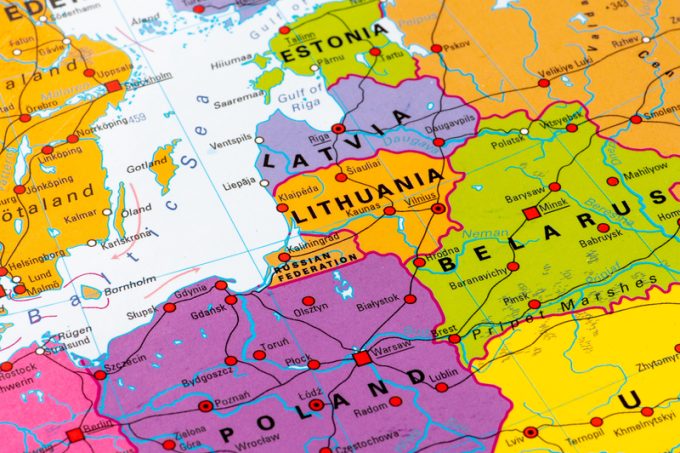
The Poland-Belarus border has re-opened, allowing China-Europe rail freight through, but the closure marked yet another political impact on logistics.
Israel’s assault on Gaza has seen dockers refuse to handle Israel-bound vessels, led to the Houthi-enforced closure of the Red Sea and prompted concerns about the wider region, while jitters in Europe have driven more defence spending.
But the disruption has proved a something of a boon for a logistics sector that had otherwise been looking at a disastrous market after Covid-induced highs.
The closure of the Suez Canal – although it should be stressed ships are still using it – has mitigated excess capacity in an otherwise weak demand market, and a report from Transport Intelligence suggests that defence spending could bolster work opportunities as infrastructure projects pile up.
But the cost of these ‘get-out-of-jail-free’ cards is the loss of predictability.
Ambrey’s global maritime and risk management lead, Joshua Hutchinson, told The Loadstar, supply chains were now at the mercy of events far beyond their control.
“Geopolitics is affecting both trade and the structure of trade in a way we have not seen for a long time,” he said, adding: “These are situations outside the supply chain sector’s realm, but with both Gaza and Ukraine, new routes have developed as a consequence”.
Those include the now standard practice of container lines sailing around the Cape of Good Hope, and the shifting of China-Europe railfreight services away from Russia.
China, despite being one of the main advocates of the Middle Corridor railfreight pathway sidestepping Russia and passing through Kazakhstan has continued to send around €25bn-worth of goods through Russia to Europe by rail each year. That would explain the anger from Beijing when Poland closed its border with Belarus, severing that trade flow.
Polish authorities took the decision on 12 September, citing security risks from joint Belarus-Russia military exercises, with indications that after these finished, the border would reopen, which it did last week after nearly a fortnight, reportedly under pressure from China and the EU.
But, with both Beijing and Brussels (albeit the latter not publicly) displeased with Warsaw’s decision, the closure exemplifies how global trade is at the mercy of militarism.
For uninterrupted access, sign in or sign up to The Daily News, Premium or The Loadstar Enterprise Plan.
Comment on this article