Maersk returns West Africa service to the Red Sea as Suez comeback gathers pace
Maersk has announced that it is returning a third service to the Red Sea routing, ...


JBHT: STRONG TRADING UPDATE JBHT: CEO REMARKS WMT: VERTICAL INTEGRATION IN LOGISTICSJBHT: HERE WE GOPG: STEADYEXPD: NEW RECORD BA: DELIVERIESMAERSK: BEAR CAMP MUSINGSCHRW: HIGHER HIGHS ON THE RADARWTC: 'ONE RECORD'HLAG: EARNINGS GUIDANCE UPGRADE AAPL: GLOBAL SMARTPHONE SHIPMENTS VW: THE IMPACT
JBHT: STRONG TRADING UPDATE JBHT: CEO REMARKS WMT: VERTICAL INTEGRATION IN LOGISTICSJBHT: HERE WE GOPG: STEADYEXPD: NEW RECORD BA: DELIVERIESMAERSK: BEAR CAMP MUSINGSCHRW: HIGHER HIGHS ON THE RADARWTC: 'ONE RECORD'HLAG: EARNINGS GUIDANCE UPGRADE AAPL: GLOBAL SMARTPHONE SHIPMENTS VW: THE IMPACT
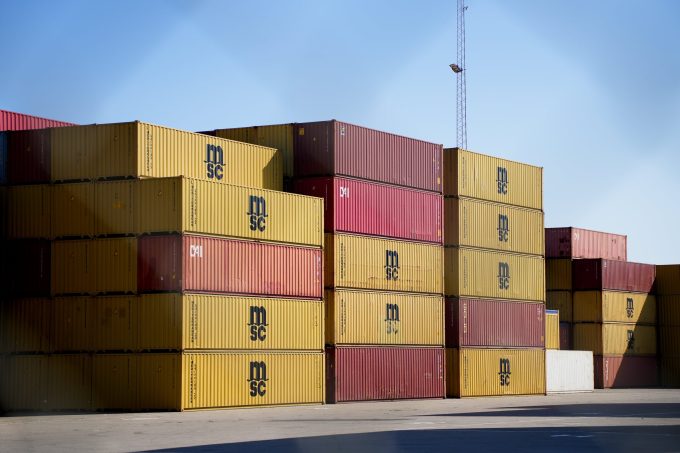
The “Big 3” in the global container shipping industry — MSC, Maersk, and CMA CGM — seem to have solid plans to step up operations in India, as part of their supply chain strategies in an increasingly volatile environment.
After domestic fleet “trailblazer” moves from CMA CGM and Maersk, MSC has now got on the re-flagging bandwagon, with a dozen of its ships lined up for the transformation.
“India is a key country for MSC, with continued strong development across shipping, ports and logistics,” said CEO Soren Toft, who was in Mumbai last week to attend a five-day maritime conference hosted by the Indian government.
“As part of the discussions, we also confirmed our commitment to deploy 12 vessels under the Indian flag, strengthening our long-term partnership and support for India’s maritime ambitions,” he added.
Mr Toft was among many global industry CEOs invited to the event, widely publicised as the India Maritime Week. Officials claimed the event had seen the conclusion of as many as 600 provisional investment agreements, largely covering the shipbuilding, port development, and shipping and green transition sectors.
Apart from the vessel flagging move, Mr Toft said MSC would be keen to explore other investment opportunities, including shipbuilding/ship repairs, container manufacturing, tug towage service and participation in the Vadhavan port development.
Vadhavan, off Mumbai, has already drawn interest from most mainline carriers, as well as other logistics industry leaders.
“MSC’s Indian fleet development plan will certainly go a long way to rebuilding our maritime capacity,” one industry observer told The Loadstar.
CMA CGM began the Indian fleet game by reflagging four small box ships and deploying them on the regional BIGEX service, followed by Maersk transferring two Singapore-flagged vessels to the Indian registry.
“This initiative aligns with the growing importance of domestic tonnage for supply chain resilience,” the carrier said. “Maersk is intending to significantly expand its operational footprint in the country through port infrastructure investments, vessel reflagging, and enhanced local partnerships across the maritime value chain.”
Typically, ship owners register their vessels in countries where costs/taxes are most competitive, which generally involve two components – a one-time fee and a tax computed on the basis of the tonnage of the ship, expert sources said.
Indian policies have been liberalised in recent years to address those industry concerns and incentivise fleet operators – an effort that is now yielding impressive results.
Indian government sources believe more mainline carriers will follow suit, taking a cue from the trio.
As of June 2024, the Indian fleet capacity stood at some 13.7 million gross tonnage, available data shows.
“A national fleet is important to manage the strategic risk related to energy and food cargo imports and the supply chain,” the Indian National Shipowners’ Association said.
“It is for this reason that countries such as China, Japan, the US and Australia and the European Union have adopted aggressive policies to build up national capacity for operating national flag ships manned by their nationals and protect strategic interest.”
Listen to the latest News in Brief Podcast to get up to speed on the recent supply chain news!
For uninterrupted access, sign in or sign up to The Daily News, Premium or The Loadstar Enterprise Plan.

Comment on this article