MEPC failure threatens 'new era of fragmented, conflicting regional regulation'
A rise in unilateral climate action spurred by the vote against the IMO global decarbonisation ...

GM: TRADING UPDATE OUTUPS: REMEMBER THE TAILWINDS PLD: NEW RELEASEPLD: OUCHVW: NEW PARTNERS SOUGHTEXPD: AIRCRAFT ON GROUND SERVICESTSLA: JUST AS VW STRUGGLESBA: NEW BIG ORDERBA: THE ORDERBOOK GROWSPLD: PUSHING FOR A DEAL PLD: TIME TO DEALEXPD: ANOTHER ALL-TIME HIGH CHRW: NEW RECORD DSV: AHEAD OF EARNINGS RELEASE JBHT: NEW HIGHS EVERYWHERE
GM: TRADING UPDATE OUTUPS: REMEMBER THE TAILWINDS PLD: NEW RELEASEPLD: OUCHVW: NEW PARTNERS SOUGHTEXPD: AIRCRAFT ON GROUND SERVICESTSLA: JUST AS VW STRUGGLESBA: NEW BIG ORDERBA: THE ORDERBOOK GROWSPLD: PUSHING FOR A DEAL PLD: TIME TO DEALEXPD: ANOTHER ALL-TIME HIGH CHRW: NEW RECORD DSV: AHEAD OF EARNINGS RELEASE JBHT: NEW HIGHS EVERYWHERE
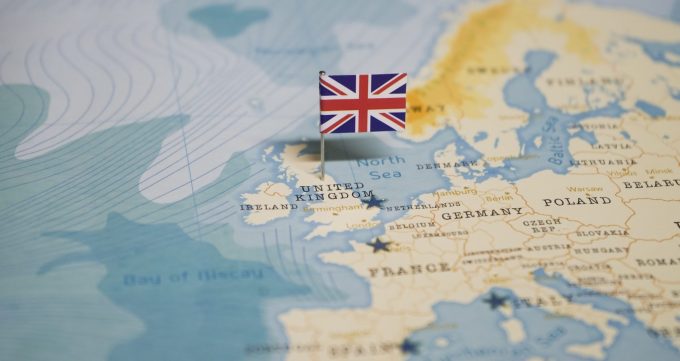
Shipping companies are being urged to prepare now for the arrival of the UK Emissions Trading Scheme (UK ETS) in the maritime sector in July – industry experts warning that companies relying on simple “buy-to-comply” strategies risk higher long-term costs.
During a webinar today, hosts Zero44 and CFP Energy said the new regime would initially mirror many elements of the EU ETS, but would create new compliance and cost-management challenges for shipowners, operators, and charterers.
From 1 July, UK ETS will apply to domestic UK voyages, emissions at berth in UK ports, and movements within ports for vessels above 5,000 gt. International voyages to and from the UK will be excluded, although the government is expected to review that in 2028.
Sandra Bronsvoort, head of stategy at Zero44, said the regulations were designed to align closely with EU ETS to reduce complexity for the industry.
“The regulatory scope is, apart from the geographical part of it, very similar to EU ETS, which is good news, I think,” she said.
However, she cautioned that even operators with limited UK exposure could still face a significant administrative burden, because all emissions while ships are berthed in UK ports fall within its scope.
That means a vessel calling at a single UK port on an international voyage may still need monitoring, reporting, and verification (MRV) arrangements, and a UK registry account.
“Unfortunately, the answer is ‘yes’,” Ms Bronsvoort said in response to a question about whether operators making only occasional UK calls would still require a registry account.
The speakers repeatedly stressed that shipping companies should begin preparing charter-party arrangements well before the scheme takes effect. Ms Bronsvoort said: “Who pays what, when, [is] very important, but also how.”
According to Zero44, charterers are already signalling differing preferences around how UK ETS costs and emissions reporting should be handled, with some likely to request separate UK ETS statements alongside EU ETS settlements.
The webinar also highlighted growing concern over future carbon costs. CFP Energy said tightening emissions caps in both the UK and EU schemes would place upward pressure on allowance prices longer-term, particularly as regulators increasingly focus on harder-to-abate sectors, such as shipping, aviation, and industry.
Tim Atkinson, head of carbon at CFP Energy, urged that shipping companies should start approaching carbon exposure in the same way they manage fuel procurement or freight risk.
“We’ve seen this over the years with the industrial sector,” he said. “Very much as a ‘buy to comply’, and then as they started to get better understanding of their emissions, as the cost of allowances went up, as the amount they need to buy went up, they look to get a little bit smarter about how they put a risk management strategy in place.”
He added that many companies remained overly reactive in their purchasing strategies.
“Not surprisingly, when prices dropped below 70, there was a massive amount of activity from compliance buyers looking to hedge their 2026 requirements at what is very favourable pricing,” Mr Atkinson explained.
The webinar also underlined the growing political significance of carbon markets. CFP Energy noted that UK carbon prices had increasingly tracked EU prices since London and Brussels opened discussions on potentially linking the two systems.
If a linkage agreement is eventually reached, UK and EU allowances could become mutual for compliance, a move widely expected to push UK carbon prices closer to those in the EU. Speakers suggested 2028 was emerging as a possible timeline for both linkage and expansion of UK ETS to international voyages.
Listen to our recent podcast with Container Trades Statistics for a data-driven discussion of Q1 26 in ocean freight!
For uninterrupted access, sign in or sign up to The Daily News, Premium or The Loadstar Enterprise Plan.
Comment on this article