Ecommerce and Asia demand keep LatAm cargo buoyant despite fuel spike
Apparently, the reverberations from the war in the Middle East have not dented the fortunes ...

VW: THE IMPACT VW: MASSIVE JOB CUTS CONFIRMEDEXPD: BULLISHCHRW: POSITIONING AHEAD OF EARNINGSAMZN: IN THE NUMBERSAMZN: PEOPLE MATTER UNTILVW: THE LAST CUT IS THE DEEPESTJBHT: GEARING UP VW: BUYING TIMER: BIG VOTE OF CONFIDENCEAAPL: BEARISH HEDGEYE AAPL: THE BEAR CASEFDX: LIFE SCIENCES ORG UNVEILEDWTC: UPS AND DOWNSWTC: ASX ANNOUNCEMENT REGARDING DSV PARTNERSHIP VW: D-DAY
VW: THE IMPACT VW: MASSIVE JOB CUTS CONFIRMEDEXPD: BULLISHCHRW: POSITIONING AHEAD OF EARNINGSAMZN: IN THE NUMBERSAMZN: PEOPLE MATTER UNTILVW: THE LAST CUT IS THE DEEPESTJBHT: GEARING UP VW: BUYING TIMER: BIG VOTE OF CONFIDENCEAAPL: BEARISH HEDGEYE AAPL: THE BEAR CASEFDX: LIFE SCIENCES ORG UNVEILEDWTC: UPS AND DOWNSWTC: ASX ANNOUNCEMENT REGARDING DSV PARTNERSHIP VW: D-DAY
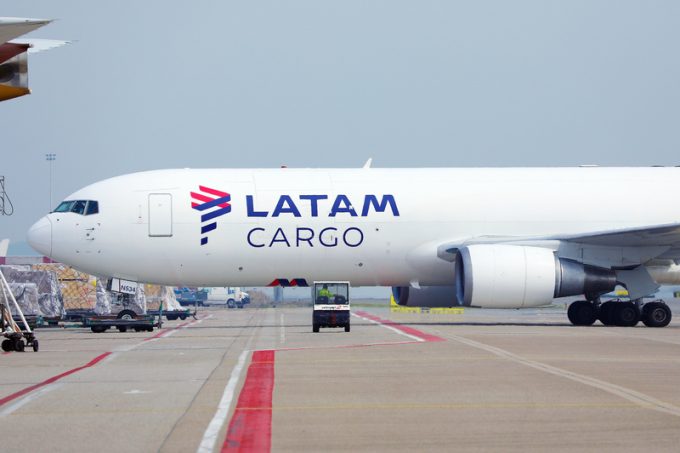
LATAM Cargo is responding to increased pressure from major shippers, pushing airlines to rethink their sustainability plans as Scope 3 emission targets and new regulations come into play.
The airline said it was “moving fast with flexible, transparent solutions to meet rising corporate and regulatory demands”.
Cristina Oñate, VP for sustainability and product, said: “We are seeing a growing demand from our cargo customers for lower-emission shipping options. This demand is primarily driven by corporate sustainability commitments.”
She said many large shippers, especially in pharmaceuticals, perishables and ecommerce, had ambitious Scope 3 CO₂ reduction targets across their supply chains, and viewed LATAM Cargo “as an important partner in helping them achieve these goals”.
The evidence was already visible in procurement processes, claimed Ms Oñate, who added that sustainability had moved from a marketing topic to a contractual one.
“A clear indicator is that we are seeing emissions reduction requirements being incorporated into the RFPs, and customers are requesting verifiable decarbonisation plans.”
For carriers, that translates into a structural shift in how freight is sold. Price remains critical, but environmental transparency and credible reporting are increasingly determining who wins a contract.
But, while many customers are demanding greener options, not all are able, or willing, to pay for them.
“Willingness to pay a premium varies considerably by customer segment,” Ms Oñate admitted. “While large clients with established science-based targets are prepared to pay a measured premium for sustainability, more cost-sensitive segments are willing to engage through trials or ad-hoc shipments.”
To address that issue, LATAM Cargo is positioning itself around flexibility rather than fixed commitments, she explained.
“We aim to deliver transparent, traceable and flexible solutions that fit our customers’ budgets and sustainability ambitions, making it easy to start now and scale up gradually.”
The biggest challenge for airlines is that sustainable aviation fuel (SAF), the main way to cut emissions right now, is expensive and in short supply. According to Ms Oñate, shippers can select the percentage of SAF that aligns with their goals.
“We do not impose a minimum CO₂ reduction, allowing clients to select the percentage that aligns with their goals. This flexibility provides a more competitive alternative to a 100% footprint reduction,” she said.
LATAM Cargo has also signed “strong agreements with leading SAF producers” to ensure sourcing security and choice. To guarantee integrity, Ms Oñate said, the airline relied on robust measurement, reporting, and verification processes by third-party auditors that build confidence and encourage greater customer participation in SAF adoption.
To meet growing customer demand for measurable carbon reductions, the airline has structured its sustainable freight products around two options, one linked to SAF use on specific flights and another that allows emission reductions on any shipment.
“The latter, which we have seen more interest in, is a key market-based mechanism that enables emission reduction even in regions such as South America, which currently lack local SAF production,” Ms Oñate noted.
LATAM complements this with a CO₂ calculator and independently verified certificates to “offer clients the credibility and proof they need to address their sustainability requirements”.
An offsetting programme, 1+1: offset to conserve, provides an additional route for shippers looking to balance their carbon footprint through conservation projects.
While shippers are pushing the button for greener freight, regulations are adding extra pressure. New environmental reporting rules, especially in Europe and the Americas, are making airlines more accountable for emissions from their logistics operations. Its sustainability performance is now measurable and reportable, directly affecting how customers meet their own compliance requirements.
However, Ms Oñate acknowledged that SAF alone could not meet aviation’s full decarbonisation challenge.
“Even if all global liquid biofuels were allocated to aviation, they would only cover approximately 70% of the energy requirement by 2030,” she explained, citing Clean Air Task Force research.
With shippers including emissions requirements in contracts and regulators stepping up enforcement, it appears air cargo decarbonisation is now driven more by obligation rather than ambition.
Catch up with all the latest developments in this week’s News in Brief podcast
For uninterrupted access, sign in or sign up to The Daily News, Premium or The Loadstar Enterprise Plan.

Comment on this article