India Iran

India-Africa trade is seeing a reconfiguration of capacity deployment due to the shipping alliance changes that began with the Gemini Cooperation launch in February.

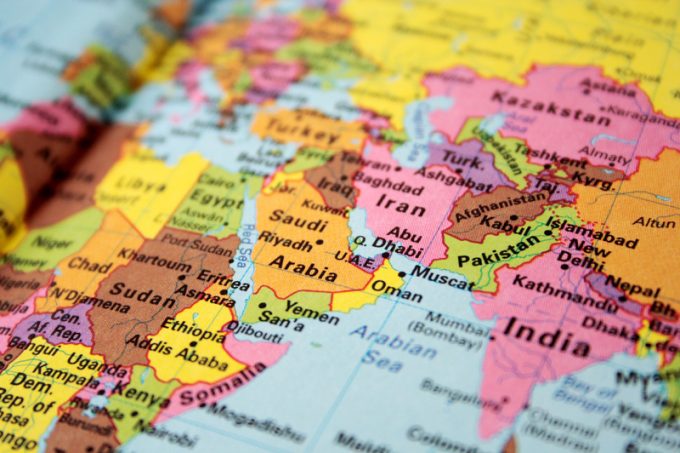
Hapag-Lloyd has opened a new service with Emirates Shipping Line (ESL) on trades between India, the Middle East and East Africa, starting at the end of August. This follows the ending of their vessel-sharing agreement (VSA) with CMA CGM.

The joint loop, known as East Africa Service 2 (EA2) for Hapag-Lloyd and Gulf India Africa Express (GIA) for ESL, has a weekly rotation of Nhava Sheva–Mundra-Jebel Ali-Mombasa-Dar es Salaam-Nhava Sheva, using four 2,600-teu vessels for a 35-day round trip.

ESL Dubai will make the first call at Nhava Sheva port on 28 August, then at Mundra on 30 August, sources told The Loadstar.

“We will also continue to offer competitive relay options for cargo originating from the upper Arab Gulf, Pakistan, Europe, the Mediterranean and North America,” Hapag-Lloyd told customers.

ESL added: “The regular weekly service offers seamless transhipment connectivity for Red Sea and East Mediterranean cargo.”

The market outlook for trades out of India to Africa remains markedly buoyant, as global investors look beyond China and other Asian countries for more competitive manufacturing locations.  Kenya leads that alternative investment chart.

That all-round economic development seems to have boosted cargo volumes for ocean carriers.  Data from industry sources point to an approximate 25% spike in Indian containerised trade to Africa since the second half of 2024.

From October 2024 to May 2025, the India-Africa container flow was some 545,000 teu, of which Maersk accounted for around 200,000 teu, and MSC some 140,000 teu, data suggests. CMA CGM and Hapag-Lloyd are the other predominant operators fighting for market share.

Growing demand has also yielded strong rate gains for carriers, according to sources.  For example, mainliners are booking cargo per 40ft container out of Nhava Sheva at $1,600 to Dar es Salaam, $3,000 to Cape Town, $4,000 to Luanda and $4,500 to Tema.

Agricultural products traditionally dominate Indian exports to the African region, with shippers of chemicals, automobiles, pharmaceuticals, and confectionery also contributing sizeably.

Indian project cargo volumes have become another major freight target for carriers, as African countries increasingly concentrate on electrification in tandem with urbanisation and industrial development, industry sources said.

Indian conglomerate Adani has energy-related investment stakes in Africa, including Kenya and Tanzania.

Additionally, several Indian logistics industry players are pursuing investment opportunities in Africa to capitalise on the boom.  Recently, two Mumbai-based logistics service providers, Abrao Group and Rushabh Sealink, announced a joint-venture for the African market, A&R Africa, offering forwarding, warehousing, customs clearance, project cargo handling and ship agency services.

“India-Africa trade is stabilising around the $100bn market, backed by more than $75bn in Indian investments across sectors,” Raju Anthony, COO of Abrao, told The Loadstar.

“With a shared goal of reaching $200bn by 2030, the partnership is deepening through digital, infrastructure and manufacturing collaborations. And Abrao is primed to support this by strengthening logistics capabilities.”

Comment on this article


You must be logged in to post a comment.