BAL re-enters liner trades with transpacific loader
Opportunistic Chinese shipowner BAL Container Line is making a selective comeback to the transpacific trade, ...


WMT: VERTICAL INTEGRATION IN LOGISTICSJBHT: HERE WE GOPG: STEADYEXPD: NEW RECORD BA: DELIVERIESMAERSK: BEAR CAMP MUSINGSCHRW: HIGHER HIGHS ON THE RADARWTC: 'ONE RECORD'HLAG: EARNINGS GUIDANCE UPGRADE AAPL: GLOBAL SMARTPHONE SHIPMENTS VW: THE IMPACT VW: MASSIVE JOB CUTS CONFIRMEDEXPD: BULLISH
WMT: VERTICAL INTEGRATION IN LOGISTICSJBHT: HERE WE GOPG: STEADYEXPD: NEW RECORD BA: DELIVERIESMAERSK: BEAR CAMP MUSINGSCHRW: HIGHER HIGHS ON THE RADARWTC: 'ONE RECORD'HLAG: EARNINGS GUIDANCE UPGRADE AAPL: GLOBAL SMARTPHONE SHIPMENTS VW: THE IMPACT VW: MASSIVE JOB CUTS CONFIRMEDEXPD: BULLISH
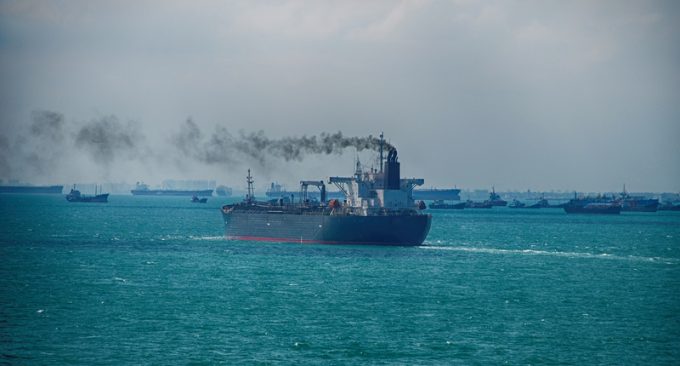
FuelEU Maritime has been in force for almost a year, yet a surprising number of charter parties still contain no meaningful provisions for the new regulation.
Many contracts rely on language written for a pre-FuelEU world, even though the regulation fundamentally reshapes cost exposure, operational choice and responsibility.
BIMCO’s FuelEU T/C clause offers a starting point, but avoids the most contentious issue: how owners and charterers should determine a fair price for compliance. In short-term charters – where the polluter and the party responsible for FuelEU Maritime are not the same – that gap is becoming untenable.
The first point of friction is fuel choice. Most vessels can use biofuels, and bunker processes are increasingly more standardised, yet many charter parties still restrict bunkering to conventional fuels. That is no longer workable. Owners and charterers need explicit agreements on which fuels are acceptable, what proof and documentation is required and when, and how fuel decisions affect each party’s compliance balance.
Without that clarity, no credible strategy is possible.
A second issue is the vessel’s compliance status at delivery. A vessel may have already accumulated a deficit or penalty multipliers may already have been triggered. BIMCO requires disclosure, but does not provide guidance in cost-sharing or resolution.
Charterers should request a verified compliance statement from the owner and analyse inherited balances before signing the charter party. Failing to do so may lead to disputes when annual compliance is calculated.
Fuel prioritisation is another overlooked area, even though it can shift a vessel from deficit to surplus. Charterers should ensure they fully benefit from the biofuels they bunker. To do so, fuel prioritisation logic should be applied to the fuels consumed within the charter period.
The most sensitive issue, however, remains pricing. Owners want protection against deficits; charterers reject penalty-level pricing, as cheaper compliance strategies exist. Without a transparent method for calculating a price per tonne of CO₂eq, both sides negotiate without a basis. The cost differences are too large to ignore: penalties are around €640/tCO₂eq; pooling can be closer to €250; the abatement cost when using high-quality biofuels can fall well below that. Any serious negotiation requires comparing these abatement costs, rather than relying on bargaining power or outdated assumptions.
Finally, redelivery of the vessel with biofuels left on board is another topic that requires special attention. Biofuels now carry compliance value, yet many charter parties still prohibit leaving them in the tanks upon redelivery of the vessel. This conflicts with the realities of FuelEU.
With proper safeguards – agreeing on accepted blends, fair compensation, and charterers bearing the risk of degradation or instability – both sides can benefit from allowing biofuels left on board at redelivery. But the contractual language must catch up.
What all these issues illustrate is that FuelEU Maritime has altered the commercial logic of time-chartering far more than current practices acknowledge. Much of the short-term charter market still negotiates as if compliance were a secondary technicality. The result is higher costs, unnecessary penalties, and rising uncertainty.
What the industry needs now are three things: a clearer understanding of efficient compliance options under various operating models; the ability for both owners and charterers to run their own numbers and make a fair comparison of the costs of alternative strategies; and, based on that, greater transparency and collaboration between parties regarding the vessel’s compliance status and the strategy, going forward.
Companies that take these steps now will protect margins and reduce compliance risk as FuelEU tightens year by year.
The tools and frameworks exist. What remains is the resolve to use them.
For uninterrupted access, sign in or sign up to The Daily News, Premium or The Loadstar Enterprise Plan.

Comment on this article