Poland starts to make its presence felt as an ecommerce gateway
Poland’s rapid emergence as one of Europe’s largest logistics hubs is cementing its position as a key ...

JBHT: NEW HIGHS EVERYWHEREPLD: STRONG DELIVERYJBHT: FAIR-VALUE CONSENSUS ESTIMATE AT ALL-TIME HIGH KNIN: AI TECH ADVANTAGEPLD: TRADING UPDATE ON THE WAY KNIN: UPSIDEJBHT: STRONG TRADING UPDATE DSV: EVERY LITTLE HELPSJBHT: CEO REMARKS WMT: VERTICAL INTEGRATION IN LOGISTICS
JBHT: NEW HIGHS EVERYWHEREPLD: STRONG DELIVERYJBHT: FAIR-VALUE CONSENSUS ESTIMATE AT ALL-TIME HIGH KNIN: AI TECH ADVANTAGEPLD: TRADING UPDATE ON THE WAY KNIN: UPSIDEJBHT: STRONG TRADING UPDATE DSV: EVERY LITTLE HELPSJBHT: CEO REMARKS WMT: VERTICAL INTEGRATION IN LOGISTICS
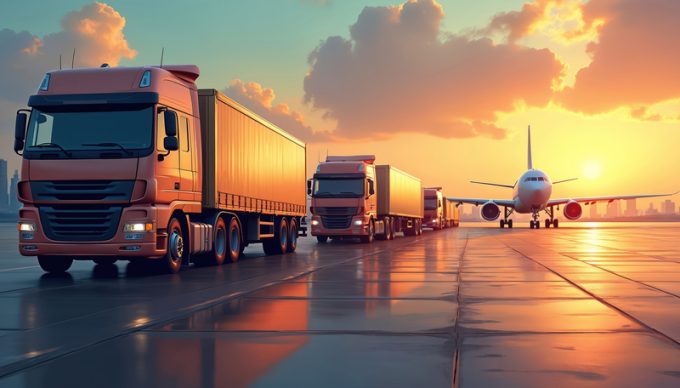
Growth and the shifting lanes of ecommerce demand a new level of flexibility from stakeholders, delegates at the Aviation Connect conference in Copenhagen heard this week.
Jason Breakwell, chief commercial officer at Wallenborn Transport, highlighted how the shifting behaviour of the ecommerce consumer had upended traditional cargo operations and accelerated a pivot toward ecommerce-centred logistics.
“US consumers are scared to buy because prices rise so easily, so ecommerce platforms are shifting their focus from that market and doubling down on Europe instead.
“What does it mean to ‘put all in in Europe’? It means they will make extra promotion, extra attention-catchers, cheap, bundled packages. And that is how they identify new markets,” explained Mr Breakwell.
Kendy Choi, founder of consultancy NEMplus, added: “Eastern Europe is a perfect example of that, because they really love that kind of cheap line of fast-find. So, when [the ecommerce providers] see the analytics of this market mean a really good responsive market, they will up the capacity.”
And Mr Breakwell noted that, for road transport providers like Wallenborn, this change has not been subtle.
“We treat ecommerce as a separate pillar,” he said. “Customers have completely different expectations. They work in very different ways.”
In the past 18 months, Mr Breakwell said, he had seen ecommerce undergo what he called “revolutionary” shifts, forcing companies to become “extremely nimble”, particularly when dealing with surging volumes at unpredictable hubs.
“At very short notice, volumes can move from one hub to a different one… We’ve seen a massive explosion in freight arriving in Oslo this year. We’ve had to position huge amounts amount of capacity.
“Last year, at very short notice again, there were products flying into obscure airports in central Europe I couldn’t find on a map. So, yeah, it’s very testing.”
He warned that this volatility was putting intense pressure on infrastructure, airports, ground handling operations and trucking companies.
“We obviously went through a period in Q4 last year when handling companies at major gateways were completely jammed up, they couldn’t handle the volumes, and they didn’t have the sufficient customs guarantee to issue transit documents.
“It’s extremely volatile. And therefore, we have a different team that manages it, and we have to have a different mindset.”
At the same time, Mr Breakwell said, he had observed “quite a dramatic downturn” in general cargo volumes and demand for LTL [less-than-truckload], “because so much of the capacity is being sucked up by e-commerce”.
“We’ve essentially pivoted from being an RFS [road feeder service] provider to being an ecommerce provider,” he summed up.
For uninterrupted access, sign in or sign up to The Daily News, Premium or The Loadstar Enterprise Plan.

Comment on this article