HMM upsizes plan to boost box shipping fleet with extra orders
HMM has decided it needs more ships to support its hub-and-spoke model for liner shipping. On ...

UPS: EARNINGS BEATWTC: REGAINING PRIDE TFII: EARNINGS BEATCHRW: PUMMELED DSV: LACK OF TRUST WEIGHSDHL: NEW HIGH DHL: E-COMM DEAL SIGNEDF: NEW PROFIT STREAMCHRW: HEALTHY CORRECTIONDSV: TIME TO BUY INWTC: NO LUCKCHRW: 'NUCLEAR VERDICT'
UPS: EARNINGS BEATWTC: REGAINING PRIDE TFII: EARNINGS BEATCHRW: PUMMELED DSV: LACK OF TRUST WEIGHSDHL: NEW HIGH DHL: E-COMM DEAL SIGNEDF: NEW PROFIT STREAMCHRW: HEALTHY CORRECTIONDSV: TIME TO BUY INWTC: NO LUCKCHRW: 'NUCLEAR VERDICT'
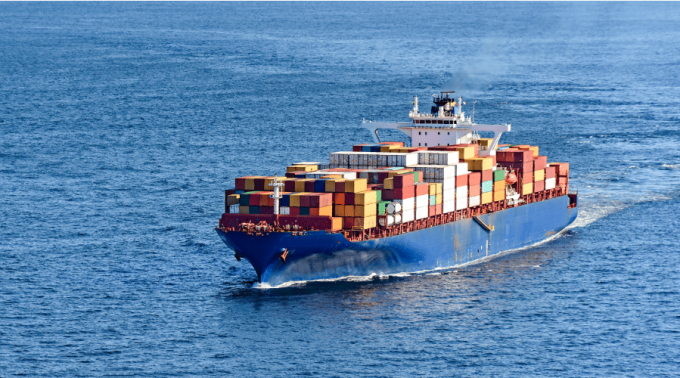
Container fleet growth is slowing, but ordering remains intense, with a pronounced shift towards smaller, “more flexible” tonnage, according to a Braemar analysis.
As of the end of the first quarter, the global cellular fleet stood at 32.81m teu, across 1,416 vessels, according to Braemar. Around 36 ships were delivered during the quarter, adding roughly 270,512 teu, which equates to net fleet growth of 0.8%, with total capacity 6.1% higher, year on year.
Compared with Q1 25, fleet growth reached 1.75%, suggesting what Braemar described as a moderation of near-term supply expansion.
But though deliveries have eased, contracting has not. Year to date, about 150 vessels have been ordered so far this year, compared with 108 at the same point in 2024. The orders represent capacity of around 790,000 teu, versus 977,000 teu in 2024, and have pushed the orderbook to 39% of the trading fleet.
Braemar said average order sizes had fallen sharply, from an average of around 11,100 teu in 2024 to 7,400 teu in 2025 and about 5,200 teu so far this year.
“This clearly signals a move away from ultra-large container vessels (ULCVs) toward smaller and mid-sized segments,” Braemar said.
That trend is reinforced by the absence of orders for 14,000+ teu ships this year, the largest new contracts featuring 11,500-13,000 teu and ordering activity instead focused on feeder and regional classes.
Braemar said the pattern reflected growing demand for “flexibility, regional connectivity, and network optimisation”, rather than “scale-driven efficiency alone”.
Chinese shipyards are strengthening their dominance as this shift gathers pace; they now account for 75% of global orderbook capacity, up from 69% at the same point in 2025. Braemar explained that as ordering tilted toward feeder and regional tonnage, China’s cost and production advantages in those segments became more pronounced.
And the delivery pipeline is set to accelerate sharply from 2027, reflecting the large orderbook built during the recent contracting surge. Current projections indicate around 394 vessels, or 3.5m teu, due for delivery in 2027, followed by 575 ships, 5.2m teu, in 2028.
Demolition, meanwhile, remains effectively absent. Just two containerships have been scrapped so far in 2026 and Braemar said: “Continually heightened geopolitical instability is likely to keep vessels away from demolition yards in 2026,” adding that it was “realistic that demolition may not resume noticeably until 2027”.
In the charter market, Braemar described “another active week”, despite persistent geopolitical headlines, service disruptions and elevated bunker prices.
“That market does not seem overly concerned. For now, it remains impressively stable, perhaps even more than one would expect given the broader backdrop,” the broker said.
“Looking ahead, there is little to suggest any real change in the near term, and it would not be surprising if this steady tone continues through the remainder of the year.”
And, much like in the newbuild market, second-hand activity remains concentrated in the feeder segment.
Although no sales were concluded this week, Braemar said buyer profiles were changing, with a notable uptick in enquiries from China.
“Over the past 24 months, most of these buyers have been acquiring tonnage either for their own services or for Chinese charters trading in the Red Sea. However, we are increasingly seeing Chinese investors entering the market for vessels with charters attached, or seeking to fix vessels to major lines,” it said.

For uninterrupted access, sign in or sign up to The Daily News, Premium or The Loadstar Enterprise Plan.
Comment on this article