Amazon chases US parcels spurned by FedEx, UPS
Amazon is stepping on the accelerator to ramp up its transport volumes. A month after ...

PLD: PROPOSAL DETAILSPLD: FINAL OFFERDSV: ROAD CEO MATTERSDSV: VOLUME PROGRESSION IN SEA FREIGHT DSV: TIME TO INCREASE THE VOLUMES IN SEA FREIGHTDSV: HEADCOUNT DISCREPANCIESDSV: TRASHEDDSV: IT IS A MATTER OF TRUSTDSV: FREE CASH FLOW QUESTIONEDDSV: QUESTION TIMEDSV: CEO ON SCHENKER INTEGRATIONDSV: CFO PREPARED REMARKSDSV: CEO PREPARED REMARKSDSV: CONF CALL FWRD: SHOOTING UPKNX: TRADING UPDATE ON THE WAY GM: TRADING UPDATE OUTUPS: REMEMBER THE TAILWINDS
PLD: PROPOSAL DETAILSPLD: FINAL OFFERDSV: ROAD CEO MATTERSDSV: VOLUME PROGRESSION IN SEA FREIGHT DSV: TIME TO INCREASE THE VOLUMES IN SEA FREIGHTDSV: HEADCOUNT DISCREPANCIESDSV: TRASHEDDSV: IT IS A MATTER OF TRUSTDSV: FREE CASH FLOW QUESTIONEDDSV: QUESTION TIMEDSV: CEO ON SCHENKER INTEGRATIONDSV: CFO PREPARED REMARKSDSV: CEO PREPARED REMARKSDSV: CONF CALL FWRD: SHOOTING UPKNX: TRADING UPDATE ON THE WAY GM: TRADING UPDATE OUTUPS: REMEMBER THE TAILWINDS
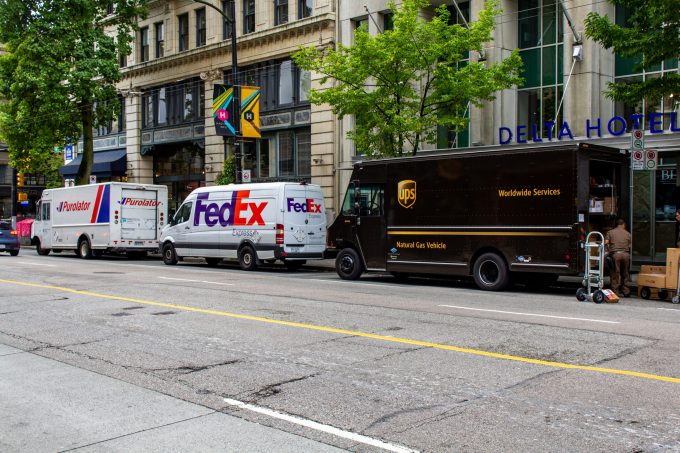
In a move unlikely to endear itself to customers, FedEx has tweaked its surcharges yet again.
From 18 August, the integrator will change the way it calculates dimensional weight of packages: henceforth, any fraction of an inch or centimetre will be rounded-up to the next full inch or centimetre. Historically, the company has rounded-down dimensions of less than half an inch.
It is part of a round of modifications of surcharge calculations, the latest in a series of changes that have altered pricing for clients on top of the usual annual rate hikes FedEx and UPS have been implementing.
“This is almost telling the market: “We can’t afford your B2C packages. We don’t want them,” commented Cathy Morrow Roberson, founder and head analyst of Logistics Trends & Insights.
The integrators’ endless tinkering with surcharges has tested the patience of shippers, pushing a growing number of them to look for ways to curb expenses – or look for alternative carriers.
According to the latest TD Cowen/AFS Freight Index, ground delivery costs climbed to a record high in the past quarter, buoyed by surcharge hikes and reduced discounting, and are now 32% higher than the index’s January 2018 baseline.
The index also noted that shippers had shifted some package traffic to slower, less-costly service options, like FedEx Ground Economy, UPS Ground Saver, or US Postal Service products.
The competitive landscape has broadened, with the expansion of regional parcel carriers and fulfilment platforms using third-party drivers at costs the integrators cannot match, not to mention the advance of Amazon and moves by Walmart and Target to entice shippers to use their delivery services.
Ms Roberson believes the integrators should be very concerned about Walmart, in particular, which keeps expanding, leveraging technology to turn around packages for same-day delivery faster than they can.
For the past year, FedEx and UPS managed to hang on to dissatisfied customers through significant discounting, but they have recently back-pedalled on that front, the TD Cowen/AFS Freight Index reported.
“Pressure to meet Wall Street expectations in the face of headwinds like high labour costs and low demand is driving increasingly aggressive efforts by UPS and FedEx to wrestle back control of pricing from shippers. The heavy discounting that played a major role in parcel pricing for well over a year is finally starting to ease and UPS is taking a particularly aggressive approach, overhauling rating logic and rolling out new surcharges,” it noted.
“Their focus is not on volumes any more, the focus is on more profitable volumes,” Ms Roberson commented.
The second lever FedEx and UPS have been using is the ongoing effort to slash costs by closing terminals, reducing fleets and eliminating thousands of jobs. The latest move by UPS on that front raised some eyebrows with the offer of voluntary buy-outs to its full-time drivers in the US. This prompted an angry reaction from the Teamsters union, which called it an “illegal violation” of the national contract.
Ms Roberson said the notion that “our drivers are our brand” used to be a mantra at UPS, so this step signalled a profound shift in response to a changing market characterised by the rise of B2C parcel traffic, while B2B volumes remain lacklustre. The pressures associated with this change give low-cost upstarts an advantage, as they are able to offer pricing the integrator networks cannot compete with.
She regards this as a transformation that goes beyond the downsizing of networks and added: “This is not going to be the end of FedEx and UPS, but the end of how we saw them in the past.
“They will be around but won’t look the same as they did,” she said, explaining that they would reduce their scope and be less focused on delivering packages to residential neighbourhoods.
She does not envisage a complete retreat from the B2C sector, though.
“They do need B2C volumes to support their network cost,” she said, adding that the focus on SME shippers, which offer better margins than large clients, is a key plank in this strategy.
That said, constant tweaking of surcharges may well prompt more shippers to look for alternatives.
For uninterrupted access, sign in or sign up to The Daily News, Premium or The Loadstar Enterprise Plan.
Comment on this article