Cargo chaos in North Asian ports as Typhoon Bavi blows in
Typhoon Bavi created chaos in North Asian ports over the weekend, with nearly 2m teu ...


JBHT: NEW HIGHS EVERYWHEREPLD: STRONG DELIVERYJBHT: FAIR-VALUE CONSENSUS ESTIMATE AT ALL-TIME HIGH KNIN: AI TECH ADVANTAGEPLD: TRADING UPDATE ON THE WAY KNIN: UPSIDEJBHT: STRONG TRADING UPDATE DSV: EVERY LITTLE HELPSJBHT: CEO REMARKS WMT: VERTICAL INTEGRATION IN LOGISTICS
JBHT: NEW HIGHS EVERYWHEREPLD: STRONG DELIVERYJBHT: FAIR-VALUE CONSENSUS ESTIMATE AT ALL-TIME HIGH KNIN: AI TECH ADVANTAGEPLD: TRADING UPDATE ON THE WAY KNIN: UPSIDEJBHT: STRONG TRADING UPDATE DSV: EVERY LITTLE HELPSJBHT: CEO REMARKS WMT: VERTICAL INTEGRATION IN LOGISTICS
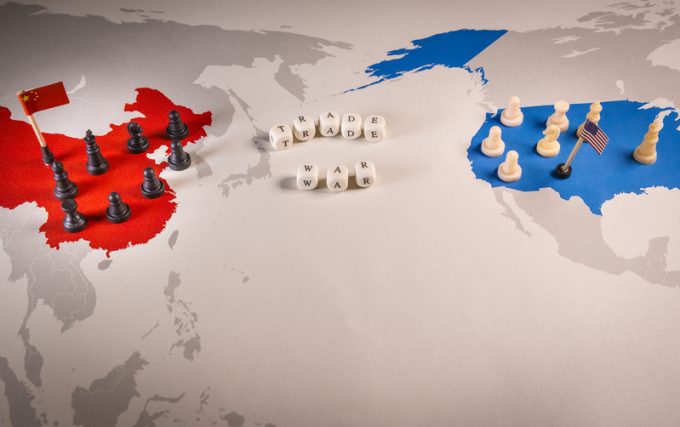
Beijing urged the US to rethink its looming port call fee structure as it announced details of its reciprocal policy for American vessels calling into its ports.
Both the US Trade Representative’s and China’s new port fees will take effect on Tuesday, 14 October, the Chinese Ministry of Transport setting rates in line with those of the USTR, at Rmb400 ($56) per net tonne, rising each year to 2028, when it will hit Rmb1,120.
The ministry said: “We urge the United States to immediately correct its wrong practices and stop its unreasonable suppression of China’s maritime industry.”
It added that its reciprocal fees were “a legitimate measure to safeguard the legitimate rights and interests of Chinese shipping enterprises”.
Ships affected will be US-built or flagged, and those owned or operated by US businesses, entities, or individuals holding 25% or more of the equity.
The ministry noted that ships calling at multiple Chinese ports on the same voyage would only be charged for the first port of call, and individual vessels would be charged for no more than five voyages within a calendar year.
Among the carriers facing Chinese fees are Hawaii-headquartered US carrier Matson, which operates two transpacific services, and Seaboard Marine.
Of Matson’s two services, the CLX incorporates a Jones Act element, running a Long Beach-Honolulu-Guam-Naha-Ningbo-Shanghai rotation, with Xeneta-owned eeSea noting it deploys five US-flagged and -built vessels of between 2,300 teu and 3,600 teu.
Matson’s other transpacific service, the express MAX, deploys five vessels of between 4,200 teu and 4,860 teu on its Shanghai-Ningbo-Long Beach rotation.
There are question marks over how the ownership structure will be determined, with some commentators pointing out that APL, Maersk, and Zim could find themselves subject to the Chinese fees, although Linerlytica suggested the fees were unlikely to hurt much.
The Loadstar’s Gavin van Marle also raised questions over how the retaliatory measures would work, given that under the USTR fee structure, vessels under 4,000 teu are exempt. He noted last week in the wake of Beijing announcing its own fees that this would, “in theory mean the ships on Matson’s CLX service would not be subject to retaliation while its vessels on the MAX would”.
He also commented that Beijing’s wording was “frustratingly vague” for liner network and supply chain planners, “potentially leaving scope for US shippers and their 3PLs to be affected”.
For uninterrupted access, sign in or sign up to The Daily News, Premium or The Loadstar Enterprise Plan.
Comment on this article