A calmer transatlantic as box carriers balance supply and demand
Following a turbulent 2025 and early 2026, marked by shrinking volumes and rates, the transatlantic ...


WTC: 'ONE RECORD'HLAG: EARNINGS GUIDANCE UPGRADE AAPL: GLOBAL SMARTPHONE SHIPMENTS VW: THE IMPACT VW: MASSIVE JOB CUTS CONFIRMEDEXPD: BULLISHCHRW: POSITIONING AHEAD OF EARNINGSAMZN: IN THE NUMBERSAMZN: PEOPLE MATTER UNTILVW: THE LAST CUT IS THE DEEPESTJBHT: GEARING UP VW: BUYING TIMER: BIG VOTE OF CONFIDENCEAAPL: BEARISH HEDGEYE
WTC: 'ONE RECORD'HLAG: EARNINGS GUIDANCE UPGRADE AAPL: GLOBAL SMARTPHONE SHIPMENTS VW: THE IMPACT VW: MASSIVE JOB CUTS CONFIRMEDEXPD: BULLISHCHRW: POSITIONING AHEAD OF EARNINGSAMZN: IN THE NUMBERSAMZN: PEOPLE MATTER UNTILVW: THE LAST CUT IS THE DEEPESTJBHT: GEARING UP VW: BUYING TIMER: BIG VOTE OF CONFIDENCEAAPL: BEARISH HEDGEYE
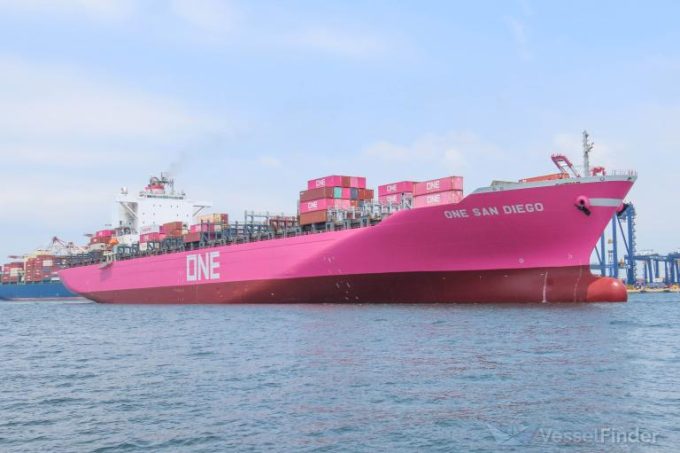
Typhoon Bavi created chaos in North Asian ports over the weekend, with nearly 2m teu of containership capacity delayed in major ports.
Consultancy Linerlytica said that by Sunday, 54% of congestion in all container ports was in North Asia and estimates that the gateways will need two weeks to clear the backlog – mostly concentrated in Shanghai and Ningbo.
On Friday, China’s National Meteorological Centre issued an orange alert, the second-severest typhoon warning and Typhoon Bavi made landfall early Sunday, with winds of up to 40 metres per second.
On Thursday, Shanghai, the world’s busiest container port, had begun clearing berths, telling ships to leave the deepwater Yangshan terminal by 8pm local time on Friday. Vessels in Shanghai’s Waigaoqiao terminal began clearing the same day.
Ningbo, the world’s third-busiest container port, paused all container collection and delivery operations from noon (local time) on Friday, resuming operations yesterday.
Shippers have been advised to reroute urgent cargo through the southern Chinese terminals of Yantian and Shekou, as these were not affected by the typhoon.
The ONE San Diego omitted Shanghai with export cargo transferred to the Aries, which skipped its Ningbo call. Both ships serve Maersk’s China-Australia service. Cargo meant to be discharged from ONE San Diego in Shanghai was released in Hong Kong and transhipped to final port of discharge. Similar arrangements were made for cargo meant to be discharged from Aries in Ningbo.
Ports along the Yangtze River – Taiwan, Nantong, Changsha, and Nanjing – that act as feeder channels to Shanghai and Ningbo, also closed in a preventive measure.
Taiwan’s main container port, Kaohsiung, ordered all ships carrying hazardous goods to leave Intercontinental Terminal Phase 2 and berths 104-105 by 10am local time on Friday, with all other vessels to clear the port by 10pm.
Forwarder Seko Logistics said Shanghai had resumed port operations yesterday, but cautioned: “Port gates reopening doesn’t mean vessel schedules have immediately normalised. Pilotage, berth sequencing, and vessel movements may require additional recovery time, while ships that slowed, diverted, or waited outside the affected area are repositioned.”
Seko added that customers should expect heavy truck demand and slower processing as terminals worked through accumulated cargo.
For uninterrupted access, sign in or sign up to The Daily News, Premium or The Loadstar Enterprise Plan.

Comment on this article