Maersk fined $1.9m for unfair D&D fees, with more carriers in the firing line
It has been a busy fortnight for the US Federal Maritime Commission (FMC), having slapped ...

PLD: OUCHVW: NEW PARTNERS SOUGHTEXPD: AIRCRAFT ON GROUND SERVICESTSLA: JUST AS VW STRUGGLESBA: NEW BIG ORDERBA: THE ORDERBOOK GROWSPLD: PUSHING FOR A DEAL PLD: TIME TO DEALEXPD: ANOTHER ALL-TIME HIGH CHRW: NEW RECORD DSV: AHEAD OF EARNINGS RELEASE JBHT: NEW HIGHS EVERYWHEREPLD: STRONG DELIVERYJBHT: FAIR-VALUE CONSENSUS ESTIMATE AT ALL-TIME HIGH
PLD: OUCHVW: NEW PARTNERS SOUGHTEXPD: AIRCRAFT ON GROUND SERVICESTSLA: JUST AS VW STRUGGLESBA: NEW BIG ORDERBA: THE ORDERBOOK GROWSPLD: PUSHING FOR A DEAL PLD: TIME TO DEALEXPD: ANOTHER ALL-TIME HIGH CHRW: NEW RECORD DSV: AHEAD OF EARNINGS RELEASE JBHT: NEW HIGHS EVERYWHEREPLD: STRONG DELIVERYJBHT: FAIR-VALUE CONSENSUS ESTIMATE AT ALL-TIME HIGH
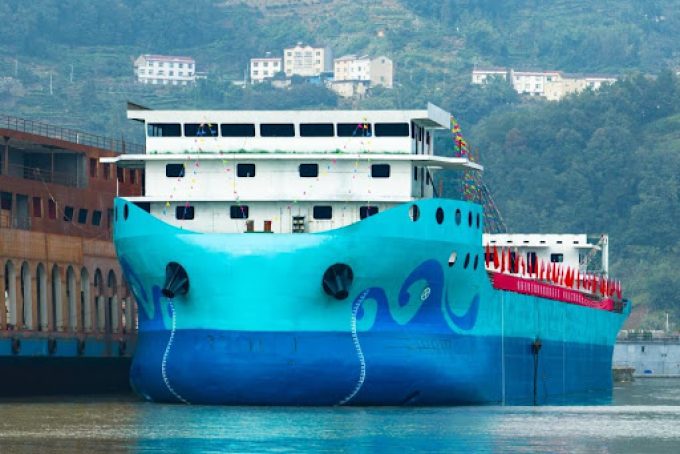
This week, China launched a new all-electric cargo vessel, the Gezhouba, a departure from conventional all-electric ship designs that could point the way for implementation around the world.
Various electric ships – the most famous could be the Yara Birkeland operating along the Norwegian coast – have featured integrated batteries, and are designed to connect to a shore charging point while in port. Indeed, this approach has been in operation for some years in China, with vessels operating along the Yangtze river replenishing coal reserves at powerplants.
But while it is easy to supply sufficient charge to replenish a vessel down the road from a coal plant, transmitting enough power to provide this level of service in other ports around the world has proved quite a different matter.
Gezhouba features a hot-swappable battery system, instead, with 12 slots for containerised lithium-ion batteries that could provide as much as 24MWh of electricity.
Another vessel delivery earlier this year, Cosco’s Shui 01, in March also evidenced this shift in strategy, featuring the same slots for hot-swappable containerised, though it also features its own integrated, 50MW battery.
Europe has marked some major strides in electrification this year, chiefly in the ferry sector, as well as a design for a pair of 850 teu container feeders featuring some 100MWh of batteries each. Rike J, the first in a series of 16 conventionally-powered 1,208 teu feeders, is being delivered to Reederei Jüngerhans this week, with specialised slots for the retrofit of battery packs in due course.
But, as China indisputably leads the west in batteries and electrification, the decision by its naval architects to opt for battery-swapping designs is most instructive.
A container vessel might draw as much as 2MW at peak to run its systems while idling at quayside, according to European Maritime Safety Administration (EMSA) calculations; but suddenly providing sufficient energy to recharge a massive battery system of 20, 50, or even 100MWh during a loading and unloading interval is a much more imposing task.
In contrast, containerised batteries could be charged at the quayside over a period of days, ahead of a vessel’s arrival, and swapped with empties at the quayside. The advantages are many, as this could lead to less strain on local port power grids and even allow ports to charge at night, when electricity is cheaper, supporting the uptake and stability of wind power.
Slower trickle-charging, viable in many more locations globally than are likely to see high-throughput shore power, could potentially lead to healthier and longer-lasting batteries, as well as open the door to the use of safer chemistries than lithium-ion.
Additional container slots could be used as cargo slots on shorter voyages, where less energy is needed, and would also add to the vessel’s operational lifespan, since individual batteries can be replaced much more readily than entire ships.
Proper implementation of such a battery-swapping ecosystem – as is currently under implementation in China with the arrival of Gezhouba, Shui 01 and other vessels – could be an avenue for clean, dirt-cheap shortsea shipping, using technology that is already here.
For uninterrupted access, sign in or sign up to The Daily News, Premium or The Loadstar Enterprise Plan.
Comment on this article