Growing demand drives up China-India box rates, despite capacity boost
Container freight rates from China to India have substantially strengthened in the past few weeks, ...


VW: THE LAST CUT IS THE DEEPESTJBHT: GEARING UP VW: BUYING TIMER: BIG VOTE OF CONFIDENCEAAPL: BEARISH HEDGEYE AAPL: THE BEAR CASEFDX: LIFE SCIENCES ORG UNVEILEDWTC: UPS AND DOWNSWTC: ASX ANNOUNCEMENT REGARDING DSV PARTNERSHIP VW: D-DAYPLD: KEEP PUSHINGDHL: NEW AIR SERVICEDHL: GUIDANCE UPGRADE REACTION
VW: THE LAST CUT IS THE DEEPESTJBHT: GEARING UP VW: BUYING TIMER: BIG VOTE OF CONFIDENCEAAPL: BEARISH HEDGEYE AAPL: THE BEAR CASEFDX: LIFE SCIENCES ORG UNVEILEDWTC: UPS AND DOWNSWTC: ASX ANNOUNCEMENT REGARDING DSV PARTNERSHIP VW: D-DAYPLD: KEEP PUSHINGDHL: NEW AIR SERVICEDHL: GUIDANCE UPGRADE REACTION
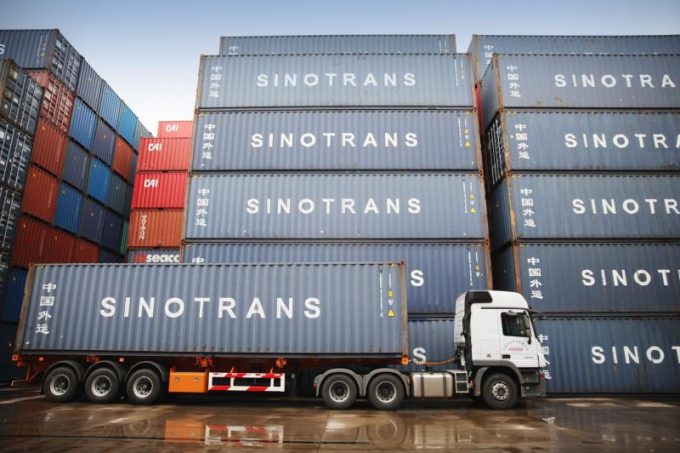
Indian manufacturers and shippers relying on imports from China have begun to see a slight downward correction in ocean rates, a response to additional capacity in the intra-Asia tradelane.
Booking rates from major ports in China to India’s east (Chennai) and west (Nhava Sheva/Mundra) coast ports) have dropped by up to $200 per container, month on month, industry data shows.
Carriers are now accepting bookings from Shanghai to Nhava Sheva at rates in the range of $900 to $1,000 per teu – “a correction due to demand and supply dynamics”, one forwarder in Mumbai told The Loadstar.
However, sources expect some rate gains for carriers on India’s largest import tradelane in March, after New Delhi unveils its annual federal budget plans for the next fiscal year (2026-27).
“The organic growth on the China-India trade has been 8% and 10%,” the source noted. “Ours is a consuming economy, so import demand stays strong.”
According to provisional official data, India’s imports from China between April through December last year were valued at some $96bn, up 13.5% year on year, with the trade deficit pegged at some $82bn.
India’s exports to some of the Far East and South-east Asian markets are also picking up, mainly to Vietnam, according to industry sources.
A wave of new services has been introduced by budding regional carriers, like Interasia Lines, SITC and Sinolines, to capitalise on promising demand signals on the back of strengthening investments in local manufacturing and burgeoning consumption.
The most recent example was a weekly loop added by Taiwanese Interasia Lines, the China-India Service 9, or CI9, on a rotation of Nansha-Shekou-Laem Chabang-Port Klang (west port)-Chennai-Port Klang (north port)-Nansha.
Import volumes through Chennai’s terminals are steadily growing, as the southern corridor has benefited the most from trade diversification. Chennai handled some 756,000 teu of imports from April through December, and 660,000 teu of exports, available data shows.
Other predominant intra-Asia lines, such as Cosco, Wan Hai, RCL and Evergreen, have also significantly expanded their networks out of India to seize market expansion opportunities, with Indian logistics service providers looking to reap the rewards of roaring China-India trade growth.
“As China expands its exports across machinery, intermediate goods. and consumer products, India is well positioned to plug into these supply chains,” said Jitendra Srivastava, CEO of Mumbai-based Triton Logistics & Maritime.
“For logistics players like us, this translates into rising volumes, more predictable lanes, and the need for scalable capacity,” he added.
For uninterrupted access, sign in or sign up to The Daily News, Premium or The Loadstar Enterprise Plan.
Comment on this article