EXCLUSIVE: MSC vs CMA CGM – twists and turns at Clasquin & Ceva
Rivalry? What rivalry?


VW: THE IMPACT VW: MASSIVE JOB CUTS CONFIRMEDEXPD: BULLISHCHRW: POSITIONING AHEAD OF EARNINGSAMZN: IN THE NUMBERSAMZN: PEOPLE MATTER UNTILVW: THE LAST CUT IS THE DEEPESTJBHT: GEARING UP VW: BUYING TIMER: BIG VOTE OF CONFIDENCEAAPL: BEARISH HEDGEYE AAPL: THE BEAR CASEFDX: LIFE SCIENCES ORG UNVEILEDWTC: UPS AND DOWNSWTC: ASX ANNOUNCEMENT REGARDING DSV PARTNERSHIP VW: D-DAY
VW: THE IMPACT VW: MASSIVE JOB CUTS CONFIRMEDEXPD: BULLISHCHRW: POSITIONING AHEAD OF EARNINGSAMZN: IN THE NUMBERSAMZN: PEOPLE MATTER UNTILVW: THE LAST CUT IS THE DEEPESTJBHT: GEARING UP VW: BUYING TIMER: BIG VOTE OF CONFIDENCEAAPL: BEARISH HEDGEYE AAPL: THE BEAR CASEFDX: LIFE SCIENCES ORG UNVEILEDWTC: UPS AND DOWNSWTC: ASX ANNOUNCEMENT REGARDING DSV PARTNERSHIP VW: D-DAY
Fires in containers caused by faulty lithium batteries have emerged as one of the deadliest hazards facing shipping in recent years and have mushroomed due to expanding demand for electric vehicles.
Lithium-ion battery fires are so intense that they can cause an entire ship to sink, as is commonly attributed to the 2022 Felicity Ace casualty.
Meanwhile, in December a report of the US’s NSTB into two fires aboard the Genuis Star XI in 2023 determined they were caused by the snapped lashing belts during heavy weather which allowed “41 lithium-ion BESS units to shift in the cargo holds, leading to internal structural deformation.
“This damage caused batteries in three of the units to enter thermal runaway, when a lithium-ion cell enters an uncontrollable, self-heating state that can exceed 572°F, causing the two fires within the holds,” it explained.
The potential for disaster becomes even greater when transporting used lithium batteries for recycling.
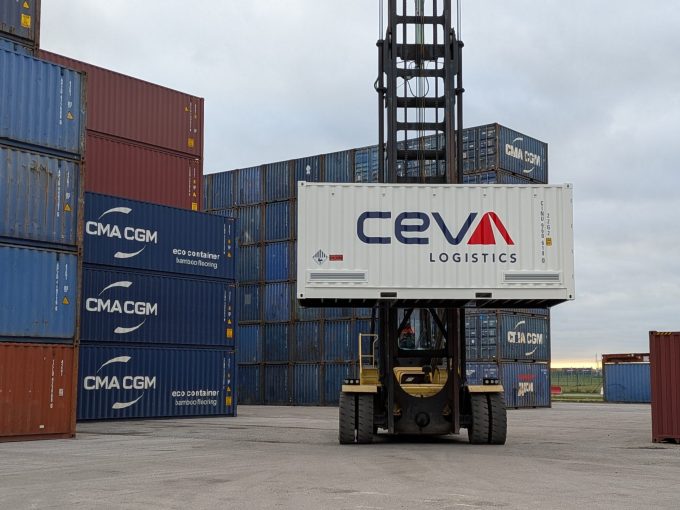
However, a new type of shipping container designed and developed by CMA CGM’s logistics subsidiary CEVA is claimed to mitigate the dangers posed by used lithium batteries in transport, as part of its reverse logistics services for EVs.
It explained the new cargo unit is a “custom double-container system”.
“The used batteries are consolidated into containment vaults and then placed into larger shipping containers specifically designed to accommodate this special type of cargo.
“Each shipping container can hold four vaults, for a transport capacity of up to six tons each.

Photo: CEVA Logistics
“This custom solution aims to neutralise any risks associated with the potential instability of used lithium-ion batteries during transit,” the company said in a statement.
“Lithium-ion battery recycling is a key issue for Europe, and we are committed to making the battery sector more circular,” Eric Dessupoiu, VP finished vehicle logistics, CEVA, said.
“We’ve leveraged our expertise as a logistics provider in the automotive sector with the launch of CEVA’s Reverse Logistics solution in 2025, and now we’re strengthening the offering with a dedicated maritime transport solution to support the disposition and transport of batteries for recycling purposes,” he added.
It has so far produced five of the new units, which are to be deployed on CMA CGM vessels and will used to repatriate used batteries from “island territories” to mainland Europe for recycling.
“The battery market has experienced rapid and sustained expansion for the last several years thanks to the growing demand for energy storage solutions and the rise of electric vehicles.
“This growth has fuelled the increasing need for transport solutions for used batteries from island territories, which are faced with the challenges of managing the accumulation of used batteries on their land, to recycling facilities located on the mainland,” CEVA said.
Last August, the collection and recycling of batteries sold in the EU became mandatory under Regulation 2023/1542.
“Expert technicians, trained in electrical, chemical, and fire safety, are deployed for each operation to ensure the batteries are safely packed and loaded into the containers.
“Furthermore, every used battery transport project undergoes a comprehensive technical and administrative review prior to shipping, including the completion of all tracking declarations and notification procedures by CEVA’s Reverse Logistics experts,” the company added.
For uninterrupted access, sign in or sign up to The Daily News, Premium or The Loadstar Enterprise Plan.

Comment on this article