JAL builds hybrid cargo network with rail-air push and asset-light freighter strategy
Japan Airlines (JAL) is reshaping its cargo business around a hybrid, asset-light model, combining rail, ...


MAERSK: ANOTHER UPGRADEFWRD: HEALTHY CORRECTION R: RYDER CEO SAYS R: AMAZON ANNOUNCEMENTS RPLD: EV INFRASTRUCTURE PUSHDHL: RAMPING UP 'NEW ENERGY LOGISTICS' GXO: NEW WINAMZN: LTL SERVICE UPDATEGM: ENERGY PROVIDER MODELEXPD: LAYOFFS CONFIRMED DHL: DOWNSIDE RISKDHL: OVERVIEWDHL: DATE CENTRE PUSH IN APAC
MAERSK: ANOTHER UPGRADEFWRD: HEALTHY CORRECTION R: RYDER CEO SAYS R: AMAZON ANNOUNCEMENTS RPLD: EV INFRASTRUCTURE PUSHDHL: RAMPING UP 'NEW ENERGY LOGISTICS' GXO: NEW WINAMZN: LTL SERVICE UPDATEGM: ENERGY PROVIDER MODELEXPD: LAYOFFS CONFIRMED DHL: DOWNSIDE RISKDHL: OVERVIEWDHL: DATE CENTRE PUSH IN APAC
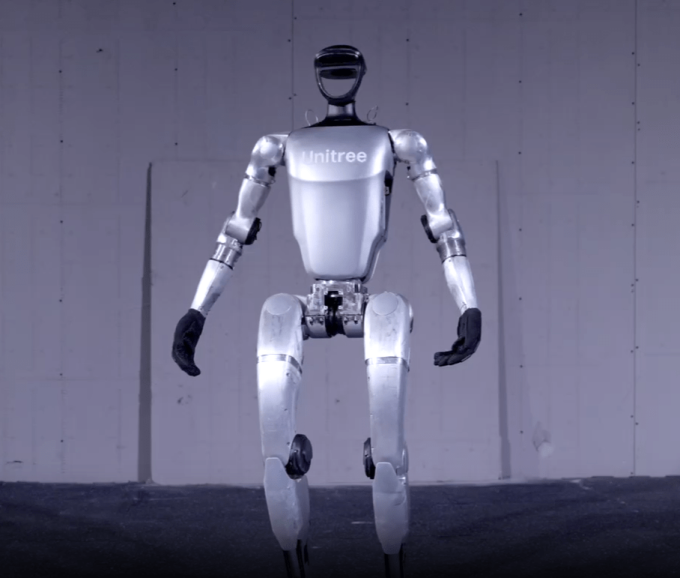
Since May, travellers through Tokyo’s Haneda Airport may have seen a new type of worker on the ramp: Japan Airlines (JAL) is running a trial using humanoid robots to handle freight and luggage.
The experiment, slated to run until 2028, is using robots produced in China to load and unload containers and move them on the ramp.
According to JAL Ground Service, having robots perform physically demanding tasks reduces the burden on workers and “provides significant benefits to employees” – increasingly important, given Japan’s demographics, which are blamed for growing labour shortages that triggered an influx of foreign labour, which in turn has prompted growing pressure to put the brakes on immigration.
At the same time, passenger volumes have kept rising after hitting a record 60m travellers passing through Haneda last year.
The robots can operate continuously for up to three hours, and management is planning to deploy them pn other tasks, such as cleaning aircraft cabins, while key tasks, like safety management, will continue to be performed by humans.
Humanoid robots are also in action at China Post’s Jinggao logistics site, at the Guangzhou postal centre, where they sort parcels. Equipped with fingertip sensors sensitive to 3 grams of pressure, they grip parcels from containers and place them onto sorting lines, reportedly handling 1,200 items an hour. The Jianggao facility can handle an average of 6.5m pieces of mail every day.
Along similar lines, German tech firm Siemens recently partnered with UK-based AI/robotics company Humanoid for a ‘proof of concept’ project that saw a humanoid robot pick up totes from a storage stack, transport them to a conveyor, and place them at the designated pick-up point for human operators.
The robot met target metrics that included throughput of 60 totes an hour, dealing with two different tote sizes, continuous autonomous task execution for more than 30 minutes, and uptime exceeding eight hours.
According to new research by Interact Analysis, humanoid robotics hold great promise, with revenues possibly reaching $15bn by 2035. Its researchers described the field as “an emerging market with huge opportunities for growth”.
They highlighted the flexibility humanoid robotics offer, as they can move through facilities, climb stairs, handle packages, and perform repetitive work without requiring major facility re-design.
On the other hand, the report notes considerable hurdles that can slow widespread deployment: it points to high costs compared with traditional automation; battery life limitations; productivity concerns; safety requirements when operating near people; and integration with existing warehouse systems.
While recent announcements indicate firms are looking at larger deployments, many projects have not moved beyond pilot phases, it adds, suggesting: “While the market will grow quickly, market penetration will be very low.”
And Cody Upp, chief commercial officer of Vecna Robotics, is not expecting a victory parade of humanoid robots into warehouses. The dominant work in such facilities involves repeat processes at high volumes, whereas humanoids are more geared to bespoke processes, he pointed out.
“Every warehouse is a cost centre. The goal is to try to remove cost from the warehouse without affecting efficiency, speed, and reliability,” Mr Upp added.
While some basic humanoid robots with marginal capabilities may be available for as little as $10,000, more sophisticated models may cost as much as half a million dollars, he noted. And in light of the emphasis on cost savings, they are not viable for warehouse operations.
“A warehouse worker in the US earns $20-$25 an hour, and the question is, how much he can produce in an hour? If a humanoid can beat the unit economics of human labour, that’s when we’ll see them in warehouses,” he said, adding that a significant portion of the volume in most warehouses is processed by 3PLS, which have very low margins.
Some organisations will deploy humanoid robots despite the economics hurdles, but they will be less driven by economics than by a decision to embrace new technology, he suggested.

For uninterrupted access, sign in or sign up to The Daily News, Premium or The Loadstar Enterprise Plan.

Comment on this article