Ecommerce specialists eye cost-saving potential of Beta's Alia electric aircraft
E-commerce outfits are in the market for electric aircraft, believing recent developments in the technology ...


EXPD: QUOTE OF THE WEEKVW: MASSIVE JOB CUTSFDXF: FIRST TRADING UPDATE EXPD: MORE BULLISH THAN BEARISHFWRD: HUNTING FOR VALUEFDX: CAPITAL STRUCTURE ADJUSTMENTPLD: DOWN SHE GOESPLD: REIT DEAL-MAKINGFDX: HOLDING UPVW: BIG DIVESTMENTAMZN: AI INVESTMENTMAERSK: ANOTHER UPGRADE GXO: CONTRACT RENEWALFDX: SELL-SIDE REACTION TO INTERIMS
EXPD: QUOTE OF THE WEEKVW: MASSIVE JOB CUTSFDXF: FIRST TRADING UPDATE EXPD: MORE BULLISH THAN BEARISHFWRD: HUNTING FOR VALUEFDX: CAPITAL STRUCTURE ADJUSTMENTPLD: DOWN SHE GOESPLD: REIT DEAL-MAKINGFDX: HOLDING UPVW: BIG DIVESTMENTAMZN: AI INVESTMENTMAERSK: ANOTHER UPGRADE GXO: CONTRACT RENEWALFDX: SELL-SIDE REACTION TO INTERIMS
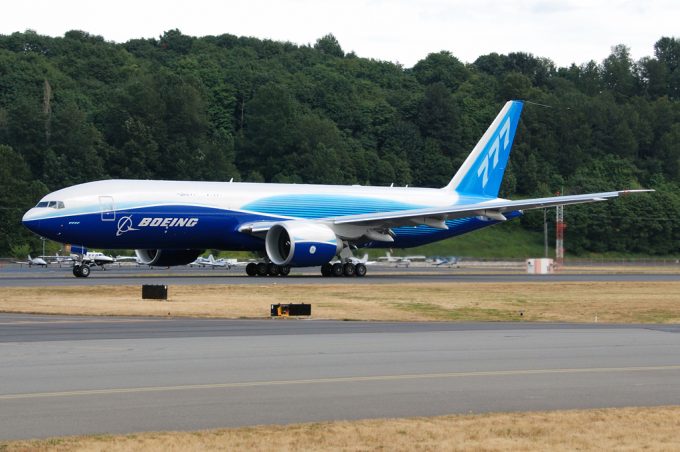
The B777-200LRMF (long-range mammoth freighter) is officially joining the global freighter aircraft fleet, as conversion specialist Mammoth Freighters has obtained type certification for its programme from the US Federal Aviation Administration (FAA).
However, the stratospheric price of jet fuel threatens to accelerate the exit of the iconic B747 from the market.
Mammoth had hoped to bring its conversion to market, quicker, but certification got delayed by US government shutdowns, explained Brian McCarthy, VP of marketing and sales.
While the 777-200LRMF is now good to go, it faces one more test by the FAA, of its auto landing system, a step to raise the payload authorisation.
“Without approval you can’t fly the payload you want if your pilots intend to use auto landing,” Mr McCarthy said.
He is confident that Mammoth will have this certification by the time its conversion programme for the larger B777-300ER obtains the green light from the FAA. Ground tests for the first prototype should beginin June, followed by flight testing through the summer.
If everything goes smoothly, the programme could get the green light from the regulator in September or October.
“It’s an amendment of the -200 STC (supplemental type certificate), not a new STC. It’s all under one project number with the FAA,” he said.
He expects deliveries of the first aircraft within three or four weeks, noting that three are ready for painting. At this point Mammoth has seven aircraft in the programme.
The first pair will go to Qatar Airways, followed by two freighters for DHL. Mammoth is due to convert five destined for the Middle Eastern carrier and nine to the integrator.
The conversion specialist recently got two 777s from Ethiopian Airlines, which will remain in the African carrier’s livery after their conversion. One outstanding characteristic of these is that they have small aft doors for the lower deck, which measures 80 inches in height, versus 106 for the large door. This limits loading to LD-3 containers.
According to aircraft valuation firm Oriel, about 17% of the global B777-300ER fleet – some 140 aircraft – are equipped with the smaller door, while nearly 40% of the 777-200LR contingent have it. Among the operators that opted for the smaller door are cargo carriers like Singapore Airlines, Korean Air and Japan Airlines.
In an assessment from 2022, Oriel calculated a $1.5m value deduction from the smaller door.
Mr McCarthy noted that a lot of B767s were also built with the smaller aft door for the lower deck. He pointed to one benefit of loading LD-3s in the lower hold: unlike straight ULDs, these extend into the cheeks of the fuselage, allowing more volume, he said.
Two of Mammoth’s 777 conversions are in progress in Manchester, the others in Texas. At this point, management is in talks with several Chinese MRO providers about establishing a conversion line in China to use domestic B777 feedstock destined for freighter operations there.
Mr McCarthy estimates that it will be “a couple of years” before Chinese airlines will start retiring their 777s, so early conversions there will likely serve international clients.
Overall, B777 passenger airlines have held on to their 777s beyond their normal service life in that segment, owing to a shortage of large widebodies to meet rampant demand in passenger traffic. This has driven up feedstock values and kept aircraft ready for conversion to a trickle.
Mr McCarthy reckons Mammoth’s 777-200LR programme, helped by aircraft that have been stripped of engines, will generate enough activity until 777-300ERs become available in growing numbers.
In the near term, the stratospheric cost of aviation fuel looms over the aviation industry, skewing operating economics. By most estimates, it will take several months for halted or damaged oil production to ramp up to pre-war levels. This is particularly ominous for large freighters with four engines, coming at a time when B747-400F operators are contemplating the retirement of the ageing type.
“I don’t think anybody is going to plan their future on what’s going on in Iran,” said Mr McCarthy. That said, he does think the outlook for the “ageing” 747 is getting darker.

For uninterrupted access, sign in or sign up to The Daily News, Premium or The Loadstar Enterprise Plan.

Comment on this article