The Loadstar Leader: Headline news for trade – or is it? Best just wait and see...
Over the weekend the Chinese government announced that preliminary agreements on tariff reduction had been ...


GXO: NEW WINAMZN: LTL SERVICE UPDATEGM: ENERGY PROVIDER MODELEXPD: LAYOFFS CONFIRMED DHL: DOWNSIDE RISKDHL: OVERVIEWDHL: DATE CENTRE PUSH IN APACMAERSK: HAVE A LOOKTSLA: TAILWINDS FDX: PAYOUT ADJUSTMENT UPDATEKNIN: AIR FREIGHT NETWORK EXPANSION
GXO: NEW WINAMZN: LTL SERVICE UPDATEGM: ENERGY PROVIDER MODELEXPD: LAYOFFS CONFIRMED DHL: DOWNSIDE RISKDHL: OVERVIEWDHL: DATE CENTRE PUSH IN APACMAERSK: HAVE A LOOKTSLA: TAILWINDS FDX: PAYOUT ADJUSTMENT UPDATEKNIN: AIR FREIGHT NETWORK EXPANSION
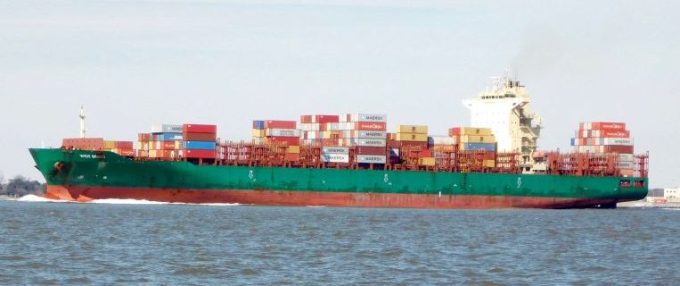
The easing of US-China trade tension could prolong the disconnect between the containership charter market and freight rate levels.
On 30 October, after a meeting between presidents Donald Trump and Xi Jinping, both leaders pledged to pause the tariff war and the mutual port fees on vessels owned by each other’s entities.
However, liner operators have been pre-empting the persistent political and economic uncertainties by forward-fixing ships.
MB Shipbrokers reported that panamax-size containerships were expected to be scarce going into Q3 26, with many being chartered in advance.
Linerlytica said forward fixtures suggested charter rates would remain firm into the first half of 2026 – they are now four times higher than in 2019, even as freight rate levels have come off a boom seen during Covid and the early days of Houthi attacks on ships in the Red Sea.
Hapag-Lloyd has chartered the 2017-built 11,923 teu Sao Paulo Express from Seaspan, after the ship came off a hire to ONE, a fixture concluded on private terms.
The carrier was also reported to have chartered the 2014-built 5,466 teu Stephanie C from Danaos, after the vessel completed a charter to Asyad Shipping, for three years at $33,750 a day.
And Zim continues to secure tonnage, extending its hire of Danaos’s 2009-built 4,253 teu Jamaica for 32 months, paying $35,000 a day.
Linerlytica suggested the current US-China detente had delayed an expected normalisation of charter rates, going against the downward pressure on freight rates. It said: “Charter rates have continued to hold firm across all size segments, with rates and periods remaining very strong.”
Drewry researcher Simon Heaney believed liner operators were more concerned with service reliability and alliance obligations in the face of an uncertain operating environment. He said: “This has prompted a shift toward securing long-term charters as a strategic hedge against future disruptions and rate volatility. The result is a surge in forward-fixing activity, with particularly high demand for modern, fuel-efficient vessels.”
In its weekly note, Clarksons said that, while the pause in port fees would ease financial and operational pressures for directly impacted companies, it was uncertain how things could change.
The brokerage said: “Markets will be wary of further policy changes and may continue to manage their risk profile for the moment.”
Listen to the latest News in Brief Podcast to get up to speed on the recent supply chain news!
For uninterrupted access, sign in or sign up to The Daily News, Premium or The Loadstar Enterprise Plan.

Comment on this article