MSC to act early on tougher transport rules for charcoal shipments
MSC, the world’s largest shipping line has announced it will enforce the International Maritime Dangerous ...


HON: DEALS ON THE MENUEXPD: NEW RECORD XPO: THE REBOUNDCAT: PAYOUT UPDHL: LIGHTHOUSEMAERSK: ANOTHER UPGRADEFWRD: HEALTHY CORRECTION R: RYDER CEO SAYS R: AMAZON LTL ANNOUNCEMENTPLD: EV INFRASTRUCTURE PUSHDHL: RAMPING UP 'NEW ENERGY LOGISTICS' GXO: NEW WINAMZN: LTL SERVICE UPDATEGM: ENERGY PROVIDER MODEL
HON: DEALS ON THE MENUEXPD: NEW RECORD XPO: THE REBOUNDCAT: PAYOUT UPDHL: LIGHTHOUSEMAERSK: ANOTHER UPGRADEFWRD: HEALTHY CORRECTION R: RYDER CEO SAYS R: AMAZON LTL ANNOUNCEMENTPLD: EV INFRASTRUCTURE PUSHDHL: RAMPING UP 'NEW ENERGY LOGISTICS' GXO: NEW WINAMZN: LTL SERVICE UPDATEGM: ENERGY PROVIDER MODEL
This week The Loadstar will be in attendance at London International Shipping Week bringing you the news that matters.
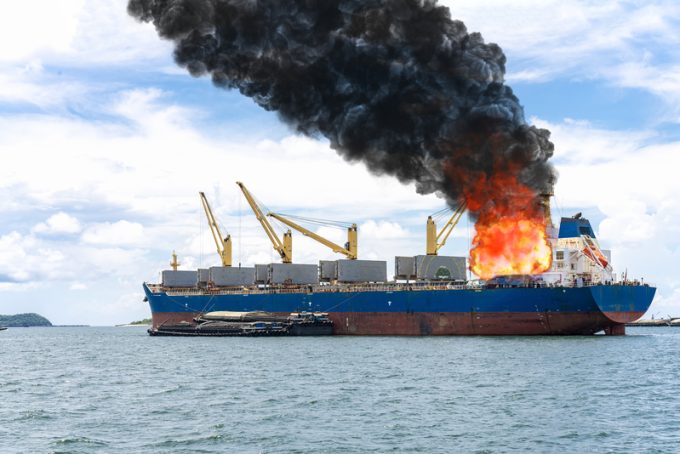
New products and the demand for cheap goods are creating emerging risks for ship fires, delegates at London International Shipping Week heard, but SMEs don’t have the same prevention capabilities as large players.
In 2024, the number of ship fires reached 250 and was up 20% from the year before.
Adrian Scales, director of Europe at Brooks Bell and Master Mariner, explained: “This year, to date, we’ve handled three or four major fire cases, and it’s been emerging products that I would never have thought we would have had a problem with five years ago.”
Mr Scales identified goods such as biomass product or wood pulp products in bulk, that can produce condensation and become self-heating. He also pointed to lithium-ion batteries.
“So, this is all new that was not there 10 years ago. These are emerging risks that are only being found as we go through the process of carrying these cargoes and carrying these things and have an accident,” he said.
“We need to start thinking through ‘what is the next emergency’ because we’re trying to avoid the accidents in the first place,” Mr Scales urged.
Chris Grieveson, managing partner at law firm Wikborg Rein, added that goods from China have become a large contributor to the increase in ship fires.
“I think the first big container ship fire that I got involved in, the goods that caught fire had originated from China and every single one that we look at now, it originates from China.”
Mr Grieveson explained: “China has become the world’s manufacturing workshop. And everyone wants everything very, very cheaply. There are a number of batteries, but a lot of it is chemicals and maybe sometimes it isn’t manufactured quite to the standard it should be.”
He also noted that a lot of cheaply manufactured products that fall into the ‘dangerous goods’ category are more subject to misdeclarations.
“When they have to pay extra for the dangerous cargo, they say it’s not dangerous cargo and that it’s something completely different to what it actually is,” he said.
According to Mr Grieveson, prevention of this is largely in the hands of liners and freight forwarders.
“You’re starting to see some of the big lines insisting on seeing photographs at the vanning stage if you’re sending dangerous goods, because there’s no way you can check whether it’s been done properly when it’s in the container you are waiting to be stuck on with 3,000 other boxes within 24 hours,” he said.
But Edward Wollaston, vice president of Casualty & Major Claims at Skuld, highlighted that SME players might not have the same prevention capabilities as larger players.
“We’ve seen a real disparity in our memberships, where the big liners have the time and the ability to get to know customer cargo, they’ve got in their Ts and Cs proper packing requirements. We have members that haven’t had a fire for nine years, and they tend to be the big ones,” he said.
“The little ones tend to have fires a bit more regularly because they don’t have that chain going all the way back to the manufacturers to ensure the packing and identification are done properly,” Mr Wollaston added.
“That’s where efforts need to go now to prevent it from the operators’ perspective, but all these extra checks obviously have logistical and cost implications. At the moment, it’s only the larger operators who can do that.”
Mr Wollaston noted that as the regulations are already in place, it’s “the industry’s move” to ensure that they’re followed.
Listen to this episode of The Loadstar Podcast that explores the current dynamics in the ocean freight market, with a deep dive into major trade lanes and the contextual factors impacting supply, demand, and rates, as informed by Container Trades Statistics
For uninterrupted access, sign in or sign up to The Daily News, Premium or The Loadstar Enterprise Plan.
Comment on this article