Trump’s 50% Canada tariff spares key supply chains, but risks legal challenge
President Donald Trump has escalated his trade dispute with Canada with additional 50% tariffs on ...

PLD: PROPOSAL DETAILSPLD: FINAL OFFERDSV: ROAD CEO MATTERSDSV: VOLUME PROGRESSION IN SEA FREIGHT DSV: TIME TO INCREASE THE VOLUMES IN SEA FREIGHTDSV: HEADCOUNT DISCREPANCIESDSV: TRASHEDDSV: IT IS A MATTER OF TRUSTDSV: FREE CASH FLOW QUESTIONEDDSV: QUESTION TIMEDSV: CEO ON SCHENKER INTEGRATIONDSV: CFO PREPARED REMARKSDSV: CEO PREPARED REMARKSDSV: CONF CALL FWRD: SHOOTING UPKNX: TRADING UPDATE ON THE WAY GM: TRADING UPDATE OUTUPS: REMEMBER THE TAILWINDS
PLD: PROPOSAL DETAILSPLD: FINAL OFFERDSV: ROAD CEO MATTERSDSV: VOLUME PROGRESSION IN SEA FREIGHT DSV: TIME TO INCREASE THE VOLUMES IN SEA FREIGHTDSV: HEADCOUNT DISCREPANCIESDSV: TRASHEDDSV: IT IS A MATTER OF TRUSTDSV: FREE CASH FLOW QUESTIONEDDSV: QUESTION TIMEDSV: CEO ON SCHENKER INTEGRATIONDSV: CFO PREPARED REMARKSDSV: CEO PREPARED REMARKSDSV: CONF CALL FWRD: SHOOTING UPKNX: TRADING UPDATE ON THE WAY GM: TRADING UPDATE OUTUPS: REMEMBER THE TAILWINDS
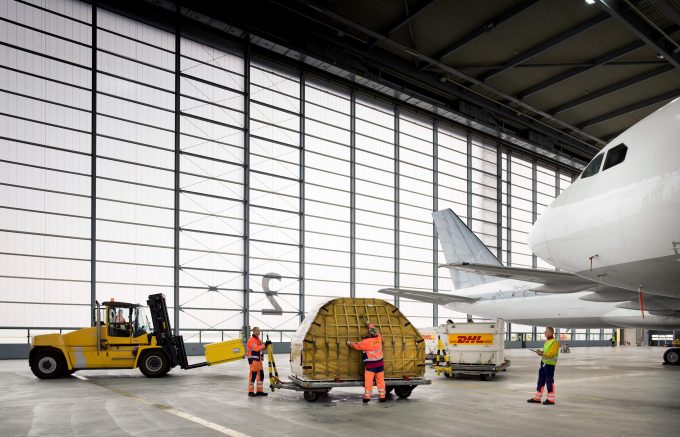
Around half of the lost air cargo capacity on the transpacific has returned in the wake of the US-China trade deal, but it’s likely not for ecommerce.
According to Cirrus Global Advisors (CGA), half the transpacific flights removed after the 2 May de minimis exemption revocation, are flying again now US tariffs on China have been reduced from 145% to 30% and de minimis fees from 120% to 54%.
CGA said: “We have seen some flying back into secondary China cities like Hefei, Wuxi, Ningbo, Shenyang, and Xiamen. Hangzhou had been fairly dormant for freighters but also strongly popped back. Atlas has increased its flying by about four more flights a day, but is still down about two flights a day from its eastbound ANC operation.”
However, the consultancy advised: “This is not primarily ecommerce-driven.”
Derek Lossing, CGA founder and senior industry advisor of ecommerce and transportation, explained: “Cross-border ecommerce has not bounced back very well. Much of the capacity that has returned, we suspect, is carrying pent-up demand of traditional air freight that had been paused during the 145% tariff environment.”
Indeed, Brandon Fried, executive director of the Air Forwarders’ Association, told The Loadstar on the sidelines of IATA’s CNS conference in Miami last week: “We have members who have made substantial investments in the facilitation of ecommerce shipments, and those are the people I’m most concerned about.
“When you have blanket tariffs pervading the landscape, you’re going to have a degree of demand curtailment, and that’s a concern.
“I think, generally speaking, people like ordering online. They like the convenience of it. The proverbial ecommerce horse has been let out of the barn, and you can’t block the barn now. But I think there are certain tariff levels that are sustainable. I don’t think 30% is it.
“Certainly, it’s much better than 145%; I hope to negotiate lower than 30%,” he added.
Despite the partial return of transpacific capacity, Mr Lossing noted that there was still some 1.3m kg a day less capacity flying than pre-2 May.
As for ecommerce volumes, Mr Fried explained that, rather than tariffs, it was the loss of the de minimis exemption that would “really have an adverse impact”.
“That de minimis programme had a profound impact on ecommerce. It allowed it to thrive,” he said.
Mr Fried told The Loadstar that, while “certain items will still come through, we’re going to see a different approach to the distribution of those goods”, which means reduced reliance on airfreight.
“The Sheins and Temus are going to come in via ocean in bulk, and they’re going to be stored in US warehouses. They’ll have formal clearances not per item but just as a general shipment. They’ll be stored in US warehouses and dispatched out there much like an Amazon.”
Listen to the latest News in Brief Podcast to get up to date with what’s been happening in supply-chain news!
For uninterrupted access, sign in or sign up to The Daily News, Premium or The Loadstar Enterprise Plan.
Comment on this article