Maersk fined $1.9m for unfair D&D fees, with more carriers in the firing line
It has been a busy fortnight for the US Federal Maritime Commission (FMC), having slapped ...

GM: TRADING UPDATE OUTUPS: REMEMBER THE TAILWINDS PLD: NEW RELEASEPLD: OUCHVW: NEW PARTNERS SOUGHTEXPD: AIRCRAFT ON GROUND SERVICESTSLA: JUST AS VW STRUGGLESBA: NEW BIG ORDERBA: THE ORDERBOOK GROWSPLD: PUSHING FOR A DEAL PLD: TIME TO DEALEXPD: ANOTHER ALL-TIME HIGH CHRW: NEW RECORD DSV: AHEAD OF EARNINGS RELEASE JBHT: NEW HIGHS EVERYWHERE
GM: TRADING UPDATE OUTUPS: REMEMBER THE TAILWINDS PLD: NEW RELEASEPLD: OUCHVW: NEW PARTNERS SOUGHTEXPD: AIRCRAFT ON GROUND SERVICESTSLA: JUST AS VW STRUGGLESBA: NEW BIG ORDERBA: THE ORDERBOOK GROWSPLD: PUSHING FOR A DEAL PLD: TIME TO DEALEXPD: ANOTHER ALL-TIME HIGH CHRW: NEW RECORD DSV: AHEAD OF EARNINGS RELEASE JBHT: NEW HIGHS EVERYWHERE
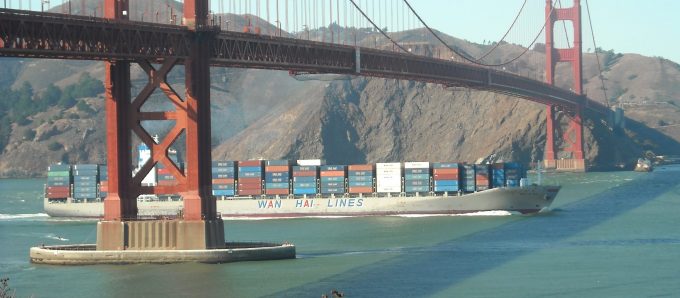
Wan Hai Lines GM Tommy Hsieh said that the company expects to secure higher contract rates for transpacific container shipments.
To be effective from May, the full-year rates would be around 14% higher year-on-year, at $1,600-$1,700 per feu.
Speaking at a Chinese New Year event yesterday, Mr Hsieh said that while uncertainty caused by US president Donald Trump’s implementation of a global 10% tariff must be monitored, China expanded exports last year, despite Mr Trump’s initial Liberation Day tariffs.
Mr Hsieh said: “The container shipping market this month was weak due to the Lunar New Year holidays in China and Vietnam. Factories in China and other countries only resumed operations this week, so it’s necessary to observe changes in cargo volume after the resumption of work. However, regarding long-term transpacific contracts, clients have so far given positive feedback on our proposed year-long freight rates.
“We assess there will be some impact from the 10% tariff, but it won’t be far-reaching. Last year, despite the US tariffs, China’s exports grew, especially to other countries such as Europe, Southeast Asia, and Africa.”
Originally an intra-Asia carrier, Wan Hai launched standalone transpacific services when demand spiked during the Covid-19 pandemic.
Mr Hsieh appeared unperturbed by concerns of a tonnage overhang, with record newbuilding orders in 2024 and 2025, saying that world trade continues to grow. The Wan Hai chief said: “What is of greater concern is that infrastructure in major ports has not caught up with demand.”
Mr Hsieh said the shift in trade flows from China to other countries is expected to continue.
He added: “Among these, East Africa and other markets have potential, but currently, Wan Hai lacks sufficient vessels. We plan to expand into new markets only after receiving new ships and considering the overall fleet configuration. Our current operational focus will remain on markets that are ‘expanding westward’, such as Southeast Asia, India, the Middle East, the Red Sea, and the Eastern Mediterranean.”
In a world of volatility, what is one to do? Perhaps the insight of DP World’s Sinan Ozcan could be of help.
For uninterrupted access, sign in or sign up to The Daily News, Premium or The Loadstar Enterprise Plan.
Comment on this article