LX Pantos US coast-to-coast self-drive trucking route now a round-trip
South Korean 3PL LX Pantos has expanded its autonomous trucking route across the US into ...


DHL: NEW HIGH TARGET ON THE STREET DSV: EXPECTATIONS RUN HIGH KNIN: NEW OPENINGGM: TECH UPSIDEAMZN: BIG DEBT FUNDING ON ITS WAYDHL: 'STELLAR EXPRESS'DHL: UPDATEDHL: STRONG PRELIMINARY UPDATE CHRW: STILL VERY BEARISH PLD: 'MOST PREFERRED'ZIM: DEAL OR NO DEALWTC: MOMENTUMDAC: PAYOUTMAERSK: RETURN TO SUEZ
DHL: NEW HIGH TARGET ON THE STREET DSV: EXPECTATIONS RUN HIGH KNIN: NEW OPENINGGM: TECH UPSIDEAMZN: BIG DEBT FUNDING ON ITS WAYDHL: 'STELLAR EXPRESS'DHL: UPDATEDHL: STRONG PRELIMINARY UPDATE CHRW: STILL VERY BEARISH PLD: 'MOST PREFERRED'ZIM: DEAL OR NO DEALWTC: MOMENTUMDAC: PAYOUTMAERSK: RETURN TO SUEZ
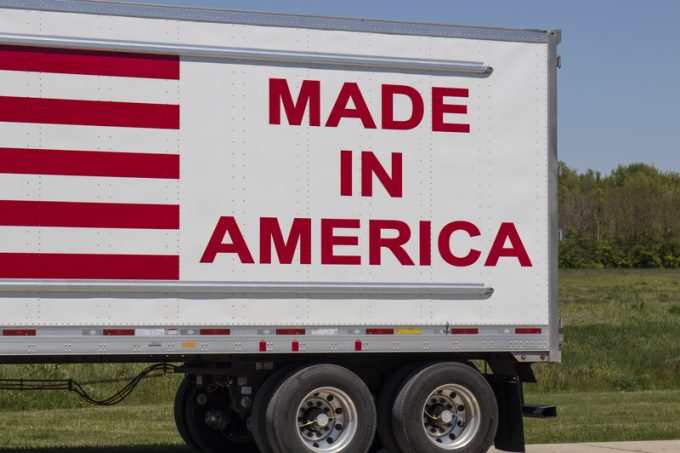
Since mid-January the US government has unleashed a strong push against trade flows with a barrage of tariff announcements and a failed effort to rein in ecommerce imports through an abrupt change of rules.
On top of this, intermodal chassis makers in Asia and Mexico find themselves on the receiving end of an anti-dumping campaign by US rivals.
The US Chassis Manufacturers Coalition (CMC) has filed petitions claiming American producers are being hurt by competitors in Vietnam, Thailand, and Mexico using ‘unfair trade practices’, namely support by their governments, to undercut US manufacturers.
The coalition also claims that the Chinese government has provided “cross-border subsidies that benefit chassis manufacturers in Mexico and Thailand”.
The CMC called for anti-dumping duties of 304.68% on chassis made in Vietnam, 234.06% on those from Thailand and 32.37% on those from Mexico.
The move is a re-run of similar action in 2020, when US chassis makers demanded anti-dumping charges on Chinese manufacturer CIMC. These were granted the following year by the Biden administration.
“While the sources of dumped and subsidised imports have shifted, they still have the same effect: taking domestic market share and eroding a proud American manufacturing industry,” said the CMC.
One US chassis provider that imports chassis sub-assemblies from Asia dismissed the allegations as baseless, adding that the anti-dumping action of 2020 resulted in a 75% increase in chassis prices and a reduction in capacity, which undermined availability further in 2022, when chassis were in short supply.
Paul Brashier, VP global supply chain for ITS Logistics, also recalled that chassis availability was a massive problem then, owing to a combination of cargo owners using chassis-mounted containers as supplemental storage space and restrictions on the use of different chassis pools.
Today the market is “fairly stable”, he reported.
“Pools are relatively robust at the ports,” he said, but added that empty containers had begun to build up at a few west coast terminals, which could adversely affect chassis availability if the situation deteriorated.
Nevertheless, there is uncertainty. To an administration feeling wronged by its trade partners and beleaguered by fentanyl smugglers and other hostile forces, anti-dumping duties could appear as another avenue to confront perceived external threats.
“With the new administration you can’t take anything off the table,” said one industry executive.
At the recent American Apparel and Footwear Association’s executive summit, one hot topic was whether Washington would follow up on its moves on China with tariffs on garments and textiles from Vietnam, currently the world’s second-largest producer, after China. It is no secret that large Chinese producers have set up subsidiaries in the South-east Asian nation.
For a number of fashion companies, including Nike and On, Vietnam has become a major sourcing area as they diversified their supply chains beyond China.
As with chassis production, the situation evokes the spectre of an administration playing ‘whack-a-mole’ in the face of shifting supply chains and complaints of foul play from domestic firms. For trade and end-user prices, the implications are ominous, while logistics providers have to stay nimble.
On the chassis supply situation, Mr Brashier expressed confidence, pointing to the learning curve from the disruptions of recent years and the rise of technology.
“Folks in my line have become more proactive in getting equipment into locations where it will be needed,” he said.
This article is © The Loadstar. Reproduction, rewriting, or derivative use requires a license. Contact [email protected] for licensing enquiries.

For uninterrupted access, sign in or sign up to The Daily News, Premium or The Loadstar Enterprise Plan.
Comment on this article