Monsoon storms bring added disruption to India's west coast ports
Monsoon storms along India’s west coast have exacerbated supply chain disruption for containerised freight moving ...

KNIN: AI TECH ADVANTAGEPLD: TRADING UPDATE ON THE WAY KNIN: UPSIDEJBHT: STRONG TRADING UPDATE DSV: EVERY LITTLE HELPSJBHT: CEO REMARKS WMT: VERTICAL INTEGRATION IN LOGISTICSJBHT: HERE WE GOPG: STEADY
KNIN: AI TECH ADVANTAGEPLD: TRADING UPDATE ON THE WAY KNIN: UPSIDEJBHT: STRONG TRADING UPDATE DSV: EVERY LITTLE HELPSJBHT: CEO REMARKS WMT: VERTICAL INTEGRATION IN LOGISTICSJBHT: HERE WE GOPG: STEADY
The trade impact of elevated US tariffs on Indian air cargo volumes has begun to ring louder, according to new industry data.
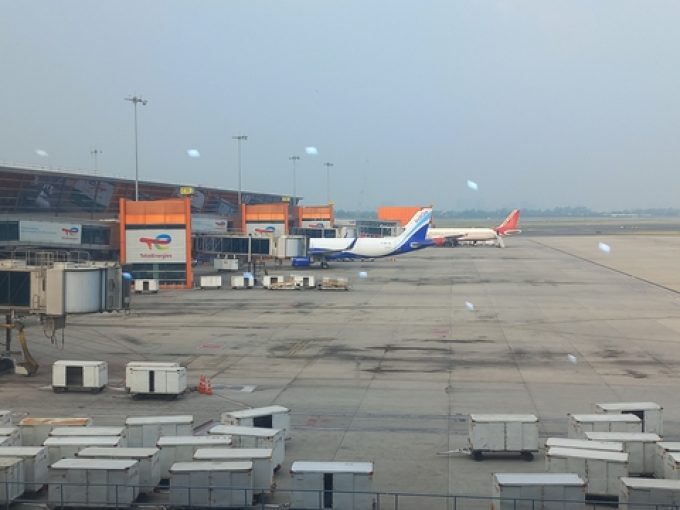
Delhi Air Cargo, the country’s busiest gateway terminal, continues to suffer reverses in export volume levels.
Delhi’s total tonnage in October was down 7% year-on-year, to 95,000 metric tonnes, with exports plunging 12%, to 30,000mt.
Import volumes for the month also dipped, albeit at a slower pace – down 3% to 29,000 mt, while Delhi’s domestic cargo handling stood at 36,000mt, down 5% year-on-year, data released by Delhi International Airport (DIAL) showed.
The setback is largely linked to the downturn in India-US trade volumes, industry sources told The Loadstar.
Sources said air cargo out of Delhi to the US took a sizeable hit of 19% in September, the first month that captured the full impact of a 50% tariff on Indian exports, which became effective 27 August.
India’s overall air freight picture is also not so rosy, as countrywide trade grew just 2.5% in September, with international volumes for the month edging up 2.3% year-on-year.
There had already been enough pointers to the steady downturn in India’s apparel export trade, as much of the demand for that sector has traditionally been from US buyers. India’s total ready-made garment (RMG) trade fell 10% year-on-year in September, data published by the Apparel Export Promotion Council (AEPC) showed.
“Indian textiles are globally valued for its quality, sustainability, and affordability, and such barriers risk disrupting long-standing supply chains built over decades,” said AEPC secretary general Mithileshwar Thakur in a statement.
“With such a high tariff, the Indian apparel sector clearly risks being tossed out of the US market,” Mr Thakur added.
Indian apparel exporters out of Tirupur – touted as the “knitwear capital of India” – had already reported significant demand strains due to the US tariff impact. The US is the largest export destination for Tirupur traders, valued at some $1.4bn annually.
“US buyers are pushing for downward price adjustments to offset the higher duty implications,” KM Subramanian, president of Tirupur Exporters’ Association (TEA), told The Loadstar.
However, Vineet Malhotra, co-founder and director at Mumbai-based Kale Logistics Solutions, believes India’s air cargo trade outlook remains upbeat with large-scale infrastructure development and other economic green shoots.
“Major hubs like Delhi, Bengaluru and Hyderabad remain strong contributors, supported by greater digital collaborations and smarter cargo-handling systems,” Mr Malhotra told The Loadstar.
“The upcoming Navi Mumbai and Noida international airports will enhance cargo capacity, connectivity and global competitiveness for India.”
Industry stakeholders are now pinning their hopes on a potential bilateral trade deal between India and the US, buoyed by some positive signals just aired by president Trump.
“Right now, the tariffs are very high on India because of the Russian oil, and they [India] have stopped doing the Russian oil… It’s being reduced very substantially. Yeah, we will bring the tariffs down at some point,” Mr Trump said.
For uninterrupted access, sign in or sign up to The Daily News, Premium or The Loadstar Enterprise Plan.

Comment on this article