Forwarders face margin squeeze as growth cools and disruption persists
The global freight forwarding market is still growing, but the industry’s easy gains appear to ...

WMT: VERTICAL INTEGRATION IN LOGISTICSJBHT: HERE WE GOPG: STEADYEXPD: NEW RECORD BA: DELIVERIESMAERSK: BEAR CAMP MUSINGSCHRW: HIGHER HIGHS ON THE RADARWTC: 'ONE RECORD'HLAG: EARNINGS GUIDANCE UPGRADE AAPL: GLOBAL SMARTPHONE SHIPMENTS VW: THE IMPACT VW: MASSIVE JOB CUTS CONFIRMEDEXPD: BULLISH
WMT: VERTICAL INTEGRATION IN LOGISTICSJBHT: HERE WE GOPG: STEADYEXPD: NEW RECORD BA: DELIVERIESMAERSK: BEAR CAMP MUSINGSCHRW: HIGHER HIGHS ON THE RADARWTC: 'ONE RECORD'HLAG: EARNINGS GUIDANCE UPGRADE AAPL: GLOBAL SMARTPHONE SHIPMENTS VW: THE IMPACT VW: MASSIVE JOB CUTS CONFIRMEDEXPD: BULLISH
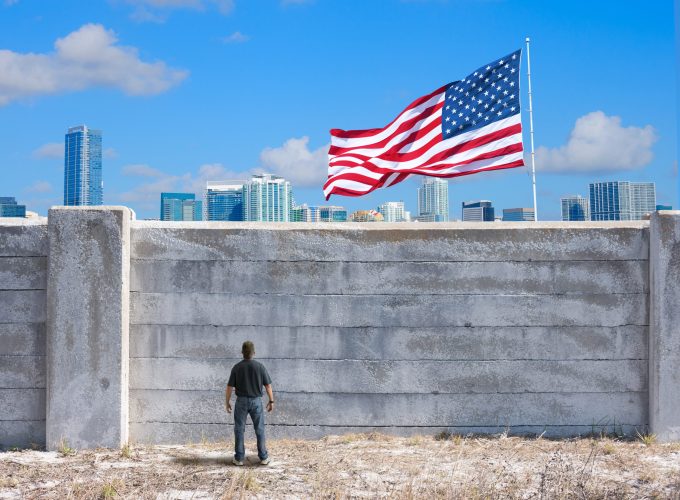
President Trump has offered a reprieve to North American automakers after imposing what have been called “punishing” 25% tariffs on goods coming from US neighbours Canada and Mexico.
The 25% penalty came into effect on Tuesday, sending stock markets into a spiral, more than wiping out gains that followed Mr Trump’s re-election in November, with US carmakers one of the biggest victims.
In a u-turn yesterday, the White House confirmed it would exempt the beleaguered car sector, provided there was compliance with existing free trade rules, for one month.
Mr Trump’s decision was spurred by pushback from representatives of his own party and came in the wake of calls from the biggest names in the US automotive sector, including Ford and GM, that tariffs would disadvantage them in favour of foreign firms.
White House press secretary Karoline Leavitt told reporters “the president is happy to do it [offer the exemption]”, and there was scope for further exemptions.
However, when asked if a one-month exemption was sufficient for the auto sector to prepare for the tariffs, Ms Leavitt said the president had been blunt with the US automakers in his belief that manufacturing needed to brought in-house.
She added: “[Mr Trump] told them that they should get on it, start investing, start moving, shift production here to the US where they will pay no tariff.”
Having long talked-up the prospect of the tariffs, in defiance of the free trade agreement between the US, Canada and Mexico under Mr Trump’s first administration, warnings were issued on the eve of their introduction that US consumers could face a $3,000 hike in the cost of “buying American”.
This is largely down to US automakers depending on Canadian steel for their vehicles and making use of cheaper labour options out of Mexico.
John Manners-Bell, CEO of Ti Insight, told The Loadstar it was “difficult to overstate the impact which Trump’s tariff policy pronouncements are causing on the North American auto sector”.
He added: “For decades the industry developed on cross-border flows of components – up to two-fifths of parts in US vehicles are likely produced in Mexico, a fifth in Canada.
“For logistics and supply chain structures to function efficiently, sales, inventory, sourcing strategies, and production plans need to be predictable and long-term. All of these are being thrown into disarray by constant uncertainty created by the on/off threat of tariffs.”
A month ago, the consensus was that the return of Mr Trump to the White House had been responsible for the decision by his opposite number in Ottawa, Justin Trudeau, to step down.
Since then, “America first” sentiment out of Washington has buoyed Mr Trudeau’s party, which is now, albeit marginally, leading in the polls ahead of this year’s election, with the prime minister’s final act being retaliatory tariffs on US goods.
Noting that “people are going to lose their jobs”, Ontario premier Doug Ford said Canada “will not back down. We will not budge. Zero tariffs and that’s it”.
For uninterrupted access, sign in or sign up to The Daily News, Premium or The Loadstar Enterprise Plan.
Comment on this article