Continuing war pushes airfreight rates toward Covid peak
Air cargo rates climbed 36% year on year in May as conflict in the Middle ...


JBHT: NEW HIGHS EVERYWHEREPLD: STRONG DELIVERYJBHT: FAIR-VALUE CONSENSUS ESTIMATE AT ALL-TIME HIGH KNIN: AI TECH ADVANTAGEPLD: TRADING UPDATE ON THE WAY KNIN: UPSIDEJBHT: STRONG TRADING UPDATE DSV: EVERY LITTLE HELPSJBHT: CEO REMARKS WMT: VERTICAL INTEGRATION IN LOGISTICS
JBHT: NEW HIGHS EVERYWHEREPLD: STRONG DELIVERYJBHT: FAIR-VALUE CONSENSUS ESTIMATE AT ALL-TIME HIGH KNIN: AI TECH ADVANTAGEPLD: TRADING UPDATE ON THE WAY KNIN: UPSIDEJBHT: STRONG TRADING UPDATE DSV: EVERY LITTLE HELPSJBHT: CEO REMARKS WMT: VERTICAL INTEGRATION IN LOGISTICS
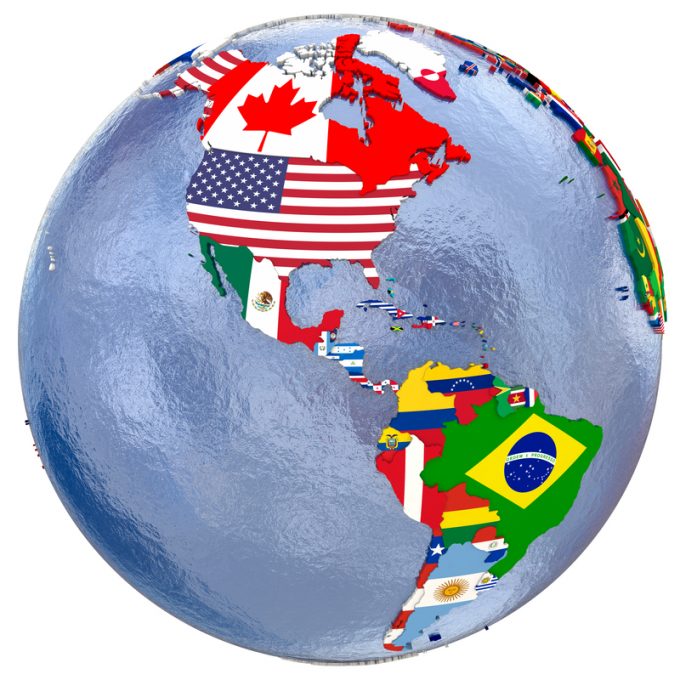
The imposition of 50% tariffs on US imports from Brazil on 1 August appears to have had little impact on overall northbound traffic flows by air and pricing.
This is despite the devastating effects on the perishables exporters in Latin America’s largest economy, who had little time to try and pivot to other markets.
Airfreight volumes from Central and South America slipped 1% in the third full week of August, but ended up 2% higher than 12 months earlier, as airborne exports to North America showed improvement in the latter half of last month from earlier decline.
According to data from WorldACD, they were flat for a second consecutive week, on a comparison of two weeks with the preceding two-week period. This followed back-to-back weeks of volume decline.
Coming at relatively short notice (announced on 10 July), the US tariffs caught Brazilian exporters and their customers unprepared and triggered a spike in northbound shipments, including charters, which was followed by a slump in traffic as importers cancelled orders and shifted sourcing to other countries, noted Roberto Schiavone, founder and CEO of Stratos Integrated Logistics Services.
Accordingly, WorldACD data show elevated airfreight pricing from the region to North America at the end of July, followed by a drop in rates. Nevertheless, pricing of overall airborne exports was up year on year through the first three full weeks of August.
To some extent, this reflects a shift by US importers to other origins than Brazil, but is also indicative of a strong focus on transatlantic markets by many Latin American shippers.
With volume out of Brazil to the US down as much as 50%, airlines reduced rates on the sector, which alleviated some of the impact, but could not turn the situation round for Brazilian perishables shippers, Mr Schiavone noted. One observer described the tariffs as an embargo on Brazilian beef.
About 23% of US beef imports come from Brazil, according to one estimate, which makes the nation the second-largest market for those beef exporters, after China. But, noted Mr Schiavone, this traffic, formerly an airfreight commodity, now moves almost entirely by ocean.
The slump in northbound traffic did not prompt airlines to adjust capacity. Passenger carrier schedules were bound to remain steady, while freighter operators do not treat Brazil as a key outbound market; it is a strong inbound market, but freighters typically move to other countries in the region – chiefly Chile, Peru, Colombia and Ecuador – to pick up outbound loads.
The situation would be starkly different if inbound traffic to Brazil were to face steep obstacles, or if flower exports from Colombia were hit by US tariffs, added Mr Schiavone.
The former scenario might conceivably materialise. Brazil has so far refrained from responding with tariffs on imports from the US, but on 29 August, the government ordered an analysis to see if its reciprocity law could be used to that effect.
For its part, Washington has launched an investigation on whether Brazil’s existing tariffs (which have been an irritant) constitute an “unreasonable or discriminatory act” against commerce with the US. This would be a stretch, as those tariffs do not target the US exclusively but apply to most non-Mercosur nations.
Observers have warned that Washington’s stance could cause closer ties between Brazil and China. The Asian giant is already Brazil’s largest trading partner and, in many cases, an obvious alternative market to the US.
Indeed, ties have been growing both ways. In the first six months of the year, Chinese firms invested $2.2bn in Brazil, an increase of 5% from the first half of 2024. And this year saw completion of a terminal at the port of Santos for China state-owned food and agricultural company Cofco.
Maritime traffic flow from South and Central America to North America grew throughout the first half of the year, CTS data show. Exports were up 6.2% year on year in June, following a 43.4% surge the previous month. After contraction in the first three months of the year, pricing showed gains in the following quarter, accelerating from a 1.3% annual rise in April to 5.5% in May and 10% in June.
Data from Sea-Intelligence show these gains were accompanied by improvements in ocean carriers’ schedule reliability from 66.1% in April/May to 81.3% in May/June and 86.7% in June/July. Year on year, the average delay for all vessels had shrunk 6.97% in the June/July period. Three of the container services linking the two hemispheres posted 100% on-time records, according to Sea-Intelligence.
For uninterrupted access, sign in or sign up to The Daily News, Premium or The Loadstar Enterprise Plan.

Comment on this article