Tariff refund bandwagon rolls on, but SMEs struggling
US Customs officials have accepted more than 70% of the applications for refunds related to ...

JBHT: NEW HIGHS EVERYWHEREPLD: STRONG DELIVERYJBHT: FAIR-VALUE CONSENSUS ESTIMATE AT ALL-TIME HIGH KNIN: AI TECH ADVANTAGEPLD: TRADING UPDATE ON THE WAY KNIN: UPSIDEJBHT: STRONG TRADING UPDATE DSV: EVERY LITTLE HELPSJBHT: CEO REMARKS WMT: VERTICAL INTEGRATION IN LOGISTICS
JBHT: NEW HIGHS EVERYWHEREPLD: STRONG DELIVERYJBHT: FAIR-VALUE CONSENSUS ESTIMATE AT ALL-TIME HIGH KNIN: AI TECH ADVANTAGEPLD: TRADING UPDATE ON THE WAY KNIN: UPSIDEJBHT: STRONG TRADING UPDATE DSV: EVERY LITTLE HELPSJBHT: CEO REMARKS WMT: VERTICAL INTEGRATION IN LOGISTICS
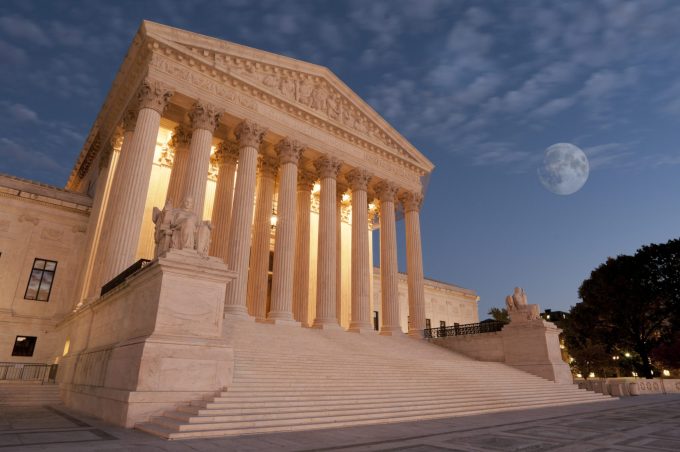
Billions of dollars of potential refunds have been put into play after the US Supreme Court yesterday agreed to hear arguments around the legality of the Trump administration’s tariff programme early, with investors purportedly offering to acquire rights to refunds ahead of the court’s decision.
The president petitioned the Supreme Court following a lower court’s verdict that the administration had exceeded its authority by invoking the International Emergency Economic Powers Act (IEEPA) to impose levies of 10%-50% on more than half the world.
A brief announcement from the court stated: “The motion to expedite and the petition for a writ of certiorari are GRANTED. The cases will be set for argument in the first week of November.”
While the court has proved more than willing to reinstate administration policy blocked by lower courts as cases flow through the appeals process, this marks the first time it will rule on the legality of a policy from the second Trump administration.
President Trump’s tariffs depended on an interpretation of an IEEPA provision that they can be used “to deal with any unusual and extraordinary threat, which has its source in whole or substantial part outside the US, to the national security, foreign policy or economy”.
However, the act requires “the president consult with Congress ‘in every possible instance’ before exercising any of the authorities granted under IEEPA”, and the US Court of Appeals determined that the tariffs had fallen foul of the “major questions doctrine”.
It said President Trump required clear authorisation from Congress before actioning “what amounted to a vast economic and political policy shift”, with commentators noting that the Supreme Court also tends to require Congressional approval for measures of such magnitude.
Citing the Court of Appeals, law firm Holland & Knight commented: “The majority remarked the projected ‘economic impact of the tariffs is predicted to be many magnitudes greater than the two programs the Supreme Court has previously held to implicate major questions’.”
Against this backdrop, importers are contending with the potential for refunds on tariffs already paid, with suggestions that the final amount collectively owed could be as high as $1trn, although, other projections put potential refunds around the $75bn-$100bn mark.
Logistics operator Alba Wheels Up’s founder, Salvatore Stile, noted that amid mounting speculation that the tariff order will be shut down by the court, institutional investors are popping up to offer importers cash in exchange for their potential refund rights.
He said: “Instead of waiting years to see if refunds are awarded, importers can sell their rights to potential recovery to institutional investors – receiving immediate, non-recourse cash.
“The investors assume the legal and regulatory risk and importers secure liquidity to offset supply chain costs, stabilise cash flow, or reinvest in operations. This secondary market for tariff refunds is particularly impactful for SMEs which often face the greatest cash constraints.”
Writing on LinkedIn, director of global customs at DSV Pete Mento noted that, should the Supreme Court rule against the tariffs – “let’s call it roughly a 60%-70% likelihood” – that it was unlikely the issuing refunds would be processed through the courts.
Rather, he said a “significant role” in facilitating the refunds would be placed in the hands of brokers, noting: “The volume of work would swamp the [court] system. Rather, brokers will carry the load. And yes, I imagine there will be fair fees for doing it.”
As such, he warned them to “get on this now” by agreeing terms and getting the necessary preparations in place to pursue refunds swiftly, echoing the calls of others for importers to preserve refund rights by extending the liquidation process that keeps entries open.
Customs and Border Protection (CPB) agency rules mean even if the tariffs are determined to be illegal, importers will be ineligible for a refund if a shipment has gone through the liquidation process CBP takes to finalise the duties, fees, and taxes owed on imported goods
That process typically takes 10 months – although CBP has reached a determination within weeks – meaning that given the fact that certain tariffs have been in place since April, some importers have very little time to act.
Mr Mento added: “Keep in mind, everyone from suppliers to customers are going to have strong opinions about how any refund is allocated on these past shipments. Very strong, I would imagine.”
For uninterrupted access, sign in or sign up to The Daily News, Premium or The Loadstar Enterprise Plan.
Comment on this article