India-M East airfreight rates ease as capacity returns, but volatility threatens
Air freight rate levels from India to the Middle East, which have shot up dramatically ...


GXO: CONTRACT RENEWALFDX: SELL-SIDE REACTION TO INTERIMSFDX: CONF CALL FDX: EARNINGS BEAT FDX: FREIGHT SPIN-OFF UPSIDEPLD: 'OPPORTUNISTIC DEAL-MAKING'PLD: REJECTED BY SEGROPLD: HUNTINGKNIN: BOND FINANCINGWTC: UP WE GODHL: NEW CFO APPOINTMENTFDX: TRADING UPDATE ON THE WAY TSLA: ON THE MENDGM: TECH STARTUP LISTINGDSV: NEW HIGH TARGET CHRW: BOLT-ON DEAL TIMEDHL: GO GREEN
GXO: CONTRACT RENEWALFDX: SELL-SIDE REACTION TO INTERIMSFDX: CONF CALL FDX: EARNINGS BEAT FDX: FREIGHT SPIN-OFF UPSIDEPLD: 'OPPORTUNISTIC DEAL-MAKING'PLD: REJECTED BY SEGROPLD: HUNTINGKNIN: BOND FINANCINGWTC: UP WE GODHL: NEW CFO APPOINTMENTFDX: TRADING UPDATE ON THE WAY TSLA: ON THE MENDGM: TECH STARTUP LISTINGDSV: NEW HIGH TARGET CHRW: BOLT-ON DEAL TIMEDHL: GO GREEN
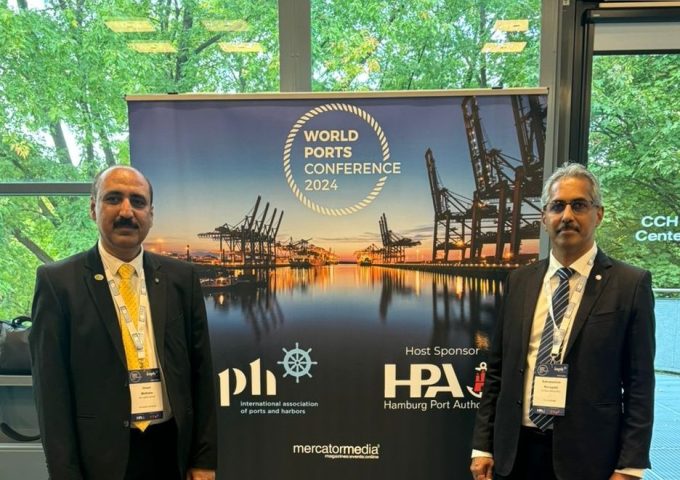
“Kale Logistics Solutions Ship Clearance System has been a game-changer for Port Klang. Transitioning from a manual, time-consuming process to a seamless digital platform has significantly improved efficiency and reduced clearance times.
“Kale’s commitment and technical expertise have been invaluable in overcoming initial challenges, ensuring smooth adoption.
“This solution not only meets regulatory standards but also sets the foundation for future digital advancements in port operations. We are proud to be among the first to implement it successfully.” Captain K Subramaniam, general manager, Port Klang.
In May 2022, the International Maritime Organization (IMO) introduced an amendment to the Facilitation of International Maritime Traffic (FAL) which stated that public authorities should require all ship clearances at ports to be handled by a single window system. This major shift to the mandatory digitalisation of ports by the IMO was the catalyst for the creation of the Malaysian Maritime Single Window (MMSW), developed by Kale Logistics Solutions (Kale).
Following the amendment by the IMO, which came into force in January 2024, the Malaysian government began the process of digitalising its ports. The Ministry for Transport entrusted Port Klang, located on the Malacca Strait, with heading the important project, and it enlisted the expertise of Kale to create the MMSW.
What is the MMSW?
The MMSW integrates seven key systems, including the National Single Window, 150 shipping line agents, the port authority, terminal operators, private jetties, customs, immigration, port health, and other regulatory agencies – streamlining communication and operations between all stakeholders to make port operations as efficient as possible.
With the IMO’s new requirements and Malaysia’s drive to digitalise their ports to better improve their trade, Kale was ready to introduce its robust digital system to complete these objectives. Kale’s design included a Ship Clearing System (SCS) to digitalise the Ship clearance process and effectively alleviate the problems Port Klang were experiencing.
The development and implementation of the SCS system was accompanied with the development of the MMSW, based on Kale’s United Nations accredited Port Community System (PCS).
Kale specialises in the digitalisation of ports offering a suite of comprehensive systems and platforms that can be utilised by stakeholders across transport and logistics infrastructure (airports, ports, landports) and maritime systems that are IMO compliant to offer a single electronic window that supports operational flow and facilities paperless trade.
The impact of the MMSW
Before Kale’s SCS system, Port Klang was struggling with vessel congestion due to inefficient vessel clearance – on average it took up to five days for a ship to be cleared by the port, creating a series of knock-on effects.
The main problem was the impact the congestion had on trade.
As a key trade hub for Malaysia the inefficient clearance times negatively impacted larger economic growth and inhibited development.
Kale’s SCS system greatly improved these problems, taking clearance times from five days to within hours. The SCS system creates a QR code that is scanned by incoming vessels and uploads the information to Port Klang’s MMSW instantaneously, dramatically cutting down processing times and creating a paperless system.
This inefficiency was exasperated by other issue caused by Port Klang’s lack of digitalisation. The use of paper documents was unsustainable and inefficient, also placing a larger strain on data protection. The problems worked together in tandem to create a back log for the port, further damaging efficiency.
What next for Malaysian maritime digitilisation?
After the introduction of the MMWS and SCS to Port Klang the systems have been installed across a further eight federal ports in Western Malaysia with the plan to make sure every port in Malaysia is using the same systems to make their operations more efficient.
Kale will continue to work with the Malaysian Department of Transport and Port Klang to continue the development of the MMSW; the digitalisation of Port Klang, through the onboarding of SCS and the MMSW, has so far significantly enhanced the efficiency of port systems by reducing time and resources spent on ship clearance whilst also making the security procedures more robust.
The impact that the Kale system has already had has contributed to the minimisation of many trade-related problems experienced by Port Klang, and Malaysia, and helped to boost Malaysian trade opportunities – the key objectives of the project.
This post was sponsored by Kale Logistics Solutions – technology that transforms.

For uninterrupted access, sign in or sign up to The Daily News, Premium or The Loadstar Enterprise Plan.

Comment on this article