China reprisal puts Panama-registered box ships on course for new flags
More than 100 containerships have reflagged from Panama to other registries in response to China’s ...

GM: TRADING UPDATE OUTUPS: REMEMBER THE TAILWINDS PLD: NEW RELEASEPLD: OUCHVW: NEW PARTNERS SOUGHTEXPD: AIRCRAFT ON GROUND SERVICESTSLA: JUST AS VW STRUGGLESBA: NEW BIG ORDERBA: THE ORDERBOOK GROWSPLD: PUSHING FOR A DEAL PLD: TIME TO DEALEXPD: ANOTHER ALL-TIME HIGH CHRW: NEW RECORD DSV: AHEAD OF EARNINGS RELEASE JBHT: NEW HIGHS EVERYWHERE
GM: TRADING UPDATE OUTUPS: REMEMBER THE TAILWINDS PLD: NEW RELEASEPLD: OUCHVW: NEW PARTNERS SOUGHTEXPD: AIRCRAFT ON GROUND SERVICESTSLA: JUST AS VW STRUGGLESBA: NEW BIG ORDERBA: THE ORDERBOOK GROWSPLD: PUSHING FOR A DEAL PLD: TIME TO DEALEXPD: ANOTHER ALL-TIME HIGH CHRW: NEW RECORD DSV: AHEAD OF EARNINGS RELEASE JBHT: NEW HIGHS EVERYWHERE
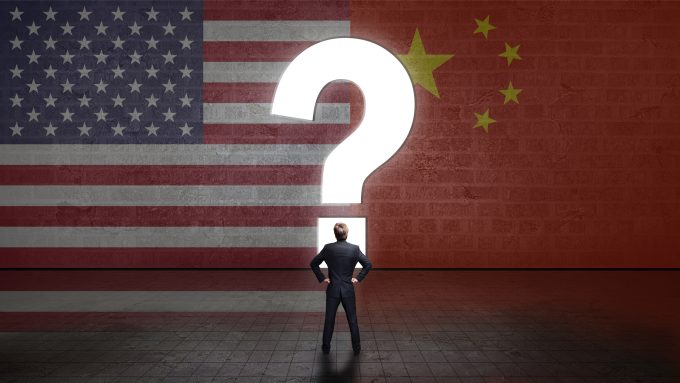
Exporters in China are invoking short-term emergency supply chain plans to try to mitigate tariff impacts, but the mid- to long-term strategies are “nearly impossible” to decide, according to Amy Holden, founder and director of toy manufacturer World Alive.
US president Donald Trump yesterday announced a 90-day suspension of ‘reciprocal tariffs’ supposed to come into effect that day, leaving a 10% tariff across the board, except China.
As the only country to retaliate, imported products from China, including from Hong Kong and Macau, are now subject to an additional ad valorem rate of duty of 125%.
Ms Holden tells The Loadstar she has been exporting from China since 2003, and “seen and survived” supply chain issues like volatile currency fluctuations, the 2008 financial crisis, changing rules for compliance or market access such as Brexit, Covid factory closures, pirate activity, the Suez Canal blockage, and warehouse fires and floods.
“However, the [then] Trump tariff import duty of 104% is the worst, self-imposed crisis to hit business in the US and those that sell or manufacture for them,” she says.
“Imagine you have some containers on the water, say $1m in product, which you had sold to a retailer for $1.3m, and now suddenly the landed cost of importing that product is over $2m. The retailer is refusing to take the increase for the suddenly imposed tariffs. You are facing a $700,000 deficit on just one order, a complete inability to serve product with any kind of margin thereafter, and possible insolvency from one month to the next.
“This is a practical example of what many hundreds of thousands, if not millions, of businesses are facing today, some on a smaller scale and some on a much larger scale.“
Ms Holden advised other shippers to use “stop-gap measures” when dealing with businesses which are in “immediate danger of insolvency due to the drastic and draconian” tariffs”, to try and avoid the extra charges.
Ways include using bonded warehouses to hold products in a free zone so they are temporarily not subject to tariffs – though they will eventually need to be imported or reexported – rerouting goods on vessels to other destinations, and holding goods at the factory.
She also suggested shipping bulk parts to the US for local transformation or assembly to access raw materials or other exemptions.
“Each country may have slightly different rules, but usually if you do the packaging and assembly or modify the product, like printing a logo on it, that constitutes it being substantially modified and of the new origin. So, goods could, potentially, be shipped from China to any low-tariff country for transformation and re-export to the US.
“In our particular case, we also have duplicate tooling and manufacturing in the EU in our own small factory, and we will have to suspend the manufacturing of the goods in China for US import and make them and ship them from the EU instead. The importer will be subject to a 10% tariff not 125%.”
And while these measures will cost more than usual, Ms Holden advises that it would still be “significantly less” than paying a 125% tariff and would “buy time” for shippers.
“In order to survive, businesses everywhere will be investigating these stop-gap options for their supply chain with their forwarders, looking for the best way to manage the crisis.”
This will help shippers stay afloat in the short term, but Ms Holden urges that mid- and long-term strategies will also be essential. But that is “nearly impossible with such erratic, non-diplomatic behaviour by the president, and having so many moving parts”.
Ms Holden explains that any longer-term solutions need to be based on “stable and finite rules and business conditions”, and shippers currently do not feel secure enough of what is likely to happen.
“What if you spend a considerable amount to reshore to the US, or any other manufacturing point, and then a deal is struck and China tariffs go back to zero? You would then be much less competitive in price, having invested wastefully.
“Also, which companies can afford to retool and set up a new manufacturing point when our margins are negative? It’s a costly process, and our factories are quite often participating business partners that spend money on making or maintaining tooling, stocking elements of our products, or financing our orders. It is not easy, fair, or ethical to just walk away from these deeply entwined partnerships.”
Ms Holden adds that even if companies wanted to consider manufacturing in the US, the country “simply does not have the capacity to cater for certain industries”.
“Taking my sector as an example, the US doesn’t have the capacity to make high-quality, low-price, fast production of toys… The supply chain for developing, testing, manufacturing this type of product is almost wholly in the Far East and barely available – and certainly not at an economical price – in the US.
“Also, there is not a workforce trained to make them, nor the electricity and logistics infrastructure or a supply chain available to provide all the elements and services. It would all take many years to build and take a massive investment that goes way beyond the capacity of small and medium business to set up.”
Another option shippers are considering is to suspend business with the US temporarily and swallow the consequential loss of revenue and jobs, she says.
“I expect shortages of product to the US, including fresh produce, cars, electronics, toys, gifts, homewares, and apparel. Right now, no matter who you speak to, and amid the fancy discourse on pivoting, reinventing, and thriving in a crisis, it seems to me we are all simply scrambling to salvage open orders and analyse potential future scenarios and possibilities without enough security to enact any particular strategy. It is all up in the air.”
For uninterrupted access, sign in or sign up to The Daily News, Premium or The Loadstar Enterprise Plan.
Comment on this article