High demand and tight capacity hits India-North Europe trade
As forwarders start to look towards the end of the peak season on the Asia-Europe ...

PLD: PROPOSAL DETAILSPLD: FINAL OFFERDSV: ROAD CEO MATTERSDSV: VOLUME PROGRESSION IN SEA FREIGHT DSV: TIME TO INCREASE THE VOLUMES IN SEA FREIGHTDSV: HEADCOUNT DISCREPANCIESDSV: TRASHEDDSV: IT IS A MATTER OF TRUSTDSV: FREE CASH FLOW QUESTIONEDDSV: QUESTION TIMEDSV: CEO ON SCHENKER INTEGRATIONDSV: CFO PREPARED REMARKSDSV: CEO PREPARED REMARKSDSV: CONF CALL FWRD: SHOOTING UPKNX: TRADING UPDATE ON THE WAY GM: TRADING UPDATE OUTUPS: REMEMBER THE TAILWINDS
PLD: PROPOSAL DETAILSPLD: FINAL OFFERDSV: ROAD CEO MATTERSDSV: VOLUME PROGRESSION IN SEA FREIGHT DSV: TIME TO INCREASE THE VOLUMES IN SEA FREIGHTDSV: HEADCOUNT DISCREPANCIESDSV: TRASHEDDSV: IT IS A MATTER OF TRUSTDSV: FREE CASH FLOW QUESTIONEDDSV: QUESTION TIMEDSV: CEO ON SCHENKER INTEGRATIONDSV: CFO PREPARED REMARKSDSV: CEO PREPARED REMARKSDSV: CONF CALL FWRD: SHOOTING UPKNX: TRADING UPDATE ON THE WAY GM: TRADING UPDATE OUTUPS: REMEMBER THE TAILWINDS
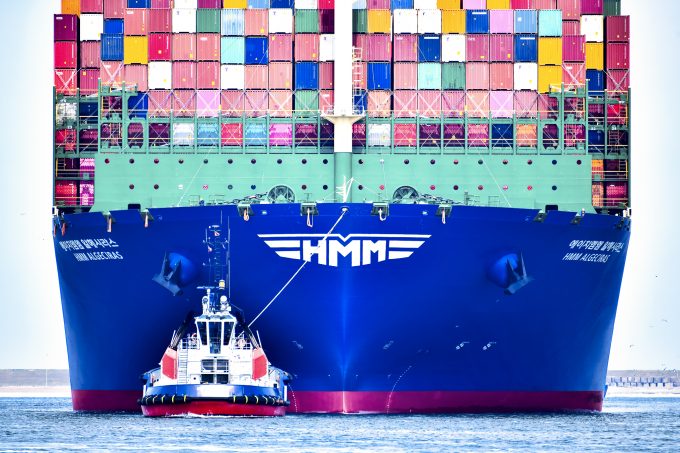
The Korea Shipowners’ Association (KSA) today expressed its opposition to the country’s largest steel-maker, POSCO, acquiring the country’s flagship carrier, HMM.
Last week, POSCO said it had formed an advisory team with Pricewaterhouse Coopers and Boston Consulting to explore the feasibility of acquiring HMM, currently just over 70%-owned by the state, through Korea Development Bank (KDB), Korea Ocean Business Corp and the National Pension Fund.
KSA vice-chairman Yang Chang-ho pointed out that in 2022, POSCO’s logistics unit, POSCO Flow, had signed an agreement with the association pledging to engage in “reasonable bidding practices” for the steel maker’s shipping requirements. He added: “Seeking entry into the shipping industry through HMM after just three years signifies a failure to fulfill this promise to the shipping industry.”
Mr Yang dismissed any perceived strengths from vertically integrating HMM into POSCO, adding that the move would distort competition in the shipping industry.
He explained: “If POSCO acquires HMM and transports its own cargo, including steel raw materials, logistics costs will rise due to increased transportation costs. Furthermore, a lack of expertise in the container shipping sector will significantly reduce efficiency, significantly harming POSCO’s profits.
“Furthermore, existing shipping companies will be forced out of the market, undermining the very foundation of the domestic shipping industry.”
KSA also claimed absorbing HMM into POSCO would see the steel maker relegated to a supporting role in its core industry, rather than investing in a shipping company. This could undo all government efforts to revive HMM.
In mid-2016, HMM came under state control after KDB exchanged its debts for equity to save the company from bankruptcy.
KSA added that POSCO had not learned from history, as its past experience in running now-defunct dry bulk operator Geoyang Shipping showed it could not operate a shipping business successfully.
POSCO acquired Geoyang in 1990 and in 1995 sold the business to Hanjin Shipping, which went bankrupt in 2017.
KSA said: “Past domestic and international examples demonstrate that the entry of large-scale shippers into the shipping industry not only hinders logistics cost reductions, through in-house cargo transport, but also degrades the shipping ecosystem, further exacerbating the national economy.
“This is because freight rates are determined through negotiation, rather than competitive pricing, to ensure the profitability of shipping companies.”
Finally, there are also regulatory hurdles, as South Korea’s Shipping Act precludes industrial cargo interests from owning ships. The minister for oceans and fisheries has to grant permission for such an arrangement to ensure shipping and third-party logistics remain competitive industries.
For uninterrupted access, sign in or sign up to The Daily News, Premium or The Loadstar Enterprise Plan.
Comment on this article