Volatility drives US importers to continue to look for new suppliers
US containerised imports held broadly steady in June, but the underlying sourcing picture suggests importers ...


JBHT: HERE WE GOPG: STEADYEXPD: NEW RECORD BA: DELIVERIESMAERSK: BEAR CAMP MUSINGSCHRW: HIGHER HIGHS ON THE RADARWTC: 'ONE RECORD'HLAG: EARNINGS GUIDANCE UPGRADE AAPL: GLOBAL SMARTPHONE SHIPMENTS VW: THE IMPACT VW: MASSIVE JOB CUTS CONFIRMEDEXPD: BULLISHCHRW: POSITIONING AHEAD OF EARNINGS
JBHT: HERE WE GOPG: STEADYEXPD: NEW RECORD BA: DELIVERIESMAERSK: BEAR CAMP MUSINGSCHRW: HIGHER HIGHS ON THE RADARWTC: 'ONE RECORD'HLAG: EARNINGS GUIDANCE UPGRADE AAPL: GLOBAL SMARTPHONE SHIPMENTS VW: THE IMPACT VW: MASSIVE JOB CUTS CONFIRMEDEXPD: BULLISHCHRW: POSITIONING AHEAD OF EARNINGS
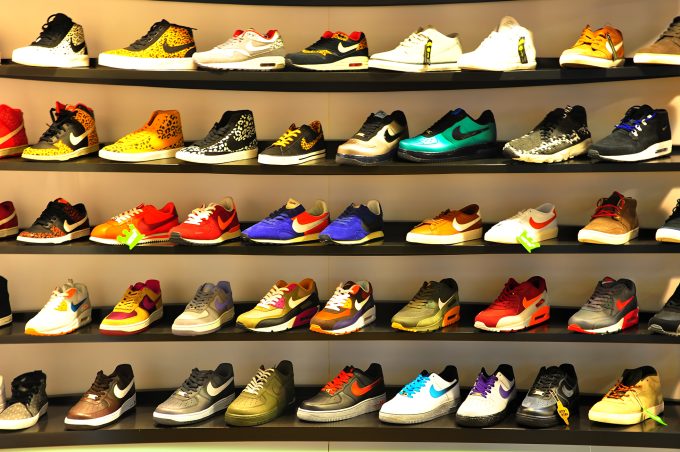
Decades of optimising supply chains purely for cost benefits looks set to hit shippers with potential billion-dollar-plus financial shocks in the short-term, amid the widest-reaching shift in global trade for generations.
Kick-started under Donald Trump’s first administration, the returning US president’s wide-reaching tariff policy has pushed this shift into overdrive, with companies including the likes of Nike, scrambling to find suppliers that mitigate the impact of these levies.
Announcing its full-year earnings last week, the US retail behemoth managed to generate a 10% share price spike despite recording its lowest quarterly revenue figures since Q3 2022 and reporting that president Trump’s tariffs could add $1bn to the company’s costs.
Chief market analyst at AvaTrade, Kate Leaman, said Nike’s revelation that $1bn could be added to the company’s costs this year alone should serve as a “flashing red warning for the entire apparel and footwear sector”.
Ms Leaman continued: “No longer can companies assume cheap, seamless manufacturing in China is a forever solution. The geopolitical tides have turned. Brands are now paying the price for decades of supply chains optimised purely for cost.
“A shift out of China is underway, but it’s neither cheap nor quick. Moving operations to Vietnam, Indonesia, or Cambodia takes time, money, and hard-earned trust with suppliers. In the near term, Nike’s resilience is encouraging.”
Nonetheless, she warned, with not all companies boasting the US footwear giant’s financial fire power, the new business environment would require shippers to become “geopolitical strategists as much as product innovators,” with supply chains likely fragmenting.
Nike was one of several US brands that sought an exemption from tariffs for footwear, joined by companies including Puma and Under Armour, warning in a letter addressed to president Trump that tariffs would become “a major impact for every family”.
Addressing investors, the company’s chief financial officer Matthew Friend sounded a note of optimism, stating that Nike has “strong relationships with our factory partners and our leadership team is experienced in managing through disruption”.
Mr Friend added that it would optimise its “sourcing mix and allocate production differently across countries to mitigate the new cost headwind into the United States,” as it continues to shift production from China, where it reportedly manufactures some 16% of its footwear.
This mix will likely see it move more production towards Indonesia and Vietnam, which, together with China, are responsible for some 95% of its footwear manufacturing, while it produces more than 50% of its apparel across Cambodia, China, and Vietnam.
However, forwarders have repeatedly told The Loadstar that shippers are almost in something of a purgatorial moment when it comes to choosing where to shift production too, with the Trump administration levelling tariffs on anyone and everyone.
Speaking earlier this year, one forwarder said the lack of stability when it comes to how, when, and for how long a tariff will be applicable was creating chaos for supply chains and left companies unable to action shifts away from China.
Compounding all of this is the quality of infrastructure available outside of China. The CEO of a US-based company that makes compounds used in fabrics for bedding, towels, and outdoor gear warned that “there’s nothing that really compares to it anywhere in the world”.
Cocona Labs’ Jeff Bowman told The New York Times that having been based in the US since the 1990s, the company was now working towards shifting operations to either China or India so as to allow the company to continue selling to Chinese customers.
Describing the Trump plan to use tariffs to bring manufacturing back to the US, Mr Bowman said it was “crazy” adding: “There’s no way in hell that those garment factories and bedding factories are coming back to the United States in any significant quantity.
“Unless American consumers are willing to pay a lot more for their goods.”
For uninterrupted access, sign in or sign up to The Daily News, Premium or The Loadstar Enterprise Plan.

Comment on this article