Brazil to allow shipping lines to bid for Santos Tecon10 terminal
The Brazilian government has put forward proposals to allow container shipping lines to bid for ...

TSLA: JUST AS VW STRUGGLESBA: NEW BIG ORDERBA: THE ORDERBOOK GROWSPLD: PUSHING FOR A DEAL PLD: TIME TO DEALEXPD: ANOTHER ALL-TIME HIGH CHRW: NEW RECORD DSV: AHEAD OF EARNINGS RELEASE JBHT: NEW HIGHS EVERYWHEREPLD: STRONG DELIVERYJBHT: FAIR-VALUE CONSENSUS ESTIMATE AT ALL-TIME HIGH KNIN: AI TECH ADVANTAGEPLD: TRADING UPDATE ON THE WAY KNIN: UPSIDE
TSLA: JUST AS VW STRUGGLESBA: NEW BIG ORDERBA: THE ORDERBOOK GROWSPLD: PUSHING FOR A DEAL PLD: TIME TO DEALEXPD: ANOTHER ALL-TIME HIGH CHRW: NEW RECORD DSV: AHEAD OF EARNINGS RELEASE JBHT: NEW HIGHS EVERYWHEREPLD: STRONG DELIVERYJBHT: FAIR-VALUE CONSENSUS ESTIMATE AT ALL-TIME HIGH KNIN: AI TECH ADVANTAGEPLD: TRADING UPDATE ON THE WAY KNIN: UPSIDE
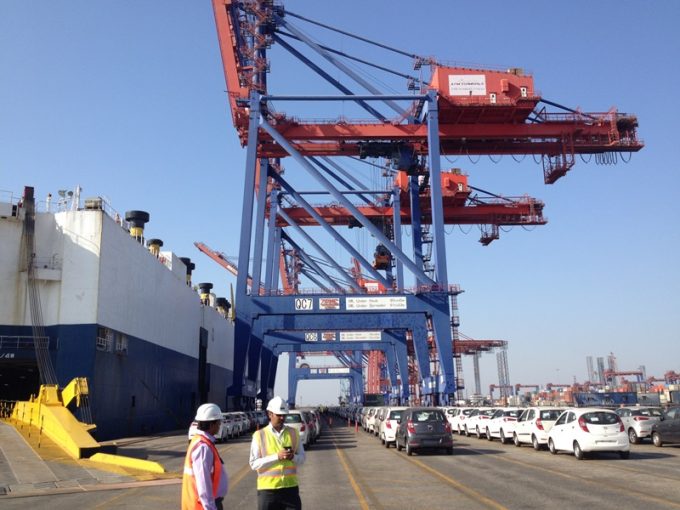
India is now regarded as the world’s third-largest automobile market by sales, and the fourth-largest producer of vehicles, according to industry data – providing a boost for ro-ro vessel operators.
The country has cemented its auto manufacturing footprint in recent years, thanks to the growing investment interest from global original equipment manufacturers (OEMs) and strong local demand.
That’s promising for ro-ro carriers seeking growth opportunities – and the latest Indian auto export data has bred a buoyant outlook too, despite US tariff issues clouding overall market sentiment.
Indian auto exports in H1 of fiscal 2025-26 soared 24%, year on year, new data shows, with exports, by volume, estimated at some 3.14 million units.
The Indian government commented: “We have moved on to build world-class vehicles that not only appeal to aspirations in India, but are also received well around the world.
“The auto component industry is also growing strongly, along with the auto industry.”
Ro-ro port volumes reflect that steady expansion. APM Terminals’ Pipavav facility handled some 99,000 vehicle shipments in H1, up from 71,000 a year ago. And APMT recently announced more expansion at the port, at an estimated cost of some $400m, to handle the growth in ro-ro and other cargo verticals.
Mundra and Chennai are the other leading ro-ro cargo gateways in India – indeed Indian ports generally have upgraded ro-ro handling infrastructure to capitalise on the growth.
Japanese ro-ro carriers like MOL, NYK and K Line have regular calls at many Indian ports, in addition to a few car-carrier operators, particularly Hoegh Autoliners.
Maruti Suzuki, a subsidiary of the Japanese automaker, is the frontrunner for India’s vehicle exports, sending out a record number of 332,585 finished vehicles in the Indian fiscal year 2024-25 that ended in March – that’s up 17.5% year on year, according to available data.
“As India’s number-one passenger vehicle exporter for the fourth consecutive financial year, Maruti Suzuki accounted for nearly 43% of the country’s total vehicle exports,” said the company. And it plans to expands its Indian production capacity to 4m units over the next five years, boosting its export capabilities to some 700,000 vehicles a year.
New Delhi-based Maruti Suzuki accounts for almost 90% of the ro-ro volumes shipped out of Mundra Port’s ro-ro terminal, which this month set a new productivity high by loading some 5,612 cars onto a single vessel in less than 40 hours.
Meanwhile, ro-ro supply chains remain somewhat challenging for OEMs, as Indian policymakers and port authorities increasingly bet on containerised and breakbulk/liquid bulk trades.
“Ro-ro vessels often face significant berthing delays at ports with no scheduled window systems,” one industry observer told The Loadstar. “Greater focus is critical to support the auto industry.”
For uninterrupted access, sign in or sign up to The Daily News, Premium or The Loadstar Enterprise Plan.
Comment on this article