Transpacific the top earner as a strong Q2 boosts OOCL revenue
OOCL’s second-quarter trading update has reinforced signs of a stronger-than-expected container shipping market, the carrier ...


WTC: 'ONE RECORD'HLAG: EARNINGS GUIDANCE UPGRADE AAPL: GLOBAL SMARTPHONE SHIPMENTS VW: THE IMPACT VW: MASSIVE JOB CUTS CONFIRMEDEXPD: BULLISHCHRW: POSITIONING AHEAD OF EARNINGSAMZN: IN THE NUMBERSAMZN: PEOPLE MATTER UNTILVW: THE LAST CUT IS THE DEEPESTJBHT: GEARING UP VW: BUYING TIMER: BIG VOTE OF CONFIDENCEAAPL: BEARISH HEDGEYE
WTC: 'ONE RECORD'HLAG: EARNINGS GUIDANCE UPGRADE AAPL: GLOBAL SMARTPHONE SHIPMENTS VW: THE IMPACT VW: MASSIVE JOB CUTS CONFIRMEDEXPD: BULLISHCHRW: POSITIONING AHEAD OF EARNINGSAMZN: IN THE NUMBERSAMZN: PEOPLE MATTER UNTILVW: THE LAST CUT IS THE DEEPESTJBHT: GEARING UP VW: BUYING TIMER: BIG VOTE OF CONFIDENCEAAPL: BEARISH HEDGEYE
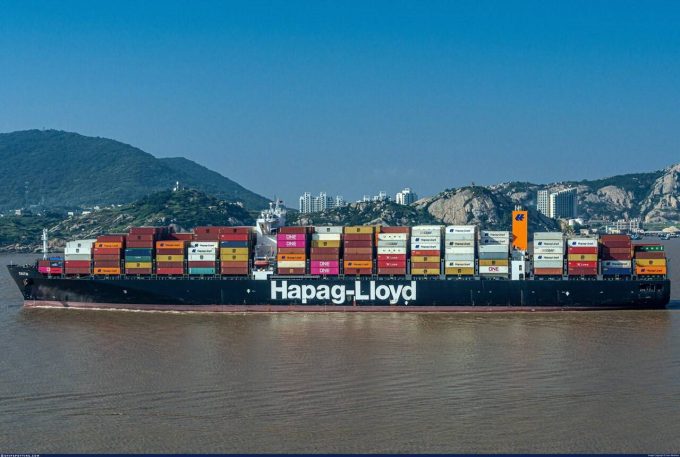
Hapag-Lloyd has “several” vessels unable to leave the Persian Gulf following the latest escalation of hostilities in the Middle East, with cargo volumes in the mid-double-digit thousands of teu exposed and booking restrictions under consideration.
Speaking at TPM in Long Beach today, Rolf Habben Jansen, chief executive of Hapag-Lloyd, said the line had ships stuck in the region and that safety was now the overriding concern.
“Everyone has ships stuck in the Persian Gulf… currently our first priority is to ensure that our crews and ships remain safe. They cannot go out at the moment, and the situation still remains very fluid,” he said.
Mr Habben Jansen declined to specify the number of vessels involved, but confirmed the cargo impact was significant, describing it as “mid-double-digit thousand” teu and clarified that at around 50,000 teu.
The carrier is now scrambling to secure space to discharge Gulf-bound cargo, rather than leaving it stranded onboard vessels.
“What we’re doing right now is to assess where we have space to potentially store some of that cargo, because we don’t want all of that to be stuck on the ships,” Mr Habben Jansen said.
For now, Hapag-Lloyd continues to accept and load cargo for the region – but only just.
“For now, we have not stopped cargo acceptance, and we have also not stopped loading cargo… But we also know that we’re fairly close to what we can take,” he said.
A decision on booking restrictions could come within days.
“Depending on the solutions that we find over the next… three to five days, we will then decide whether to go ahead with it or not,” Mr Habben Jansen added, noting that terminal space was tight and competitors were also searching for storage options.
The latest developments have also derailed Hapag-Lloyd’s tentative return to the Suez Canal.
“We had just actually started moving the first service through, but we have said we’ll only do that as long as we have close protection. That is not available at the moment,” he said, adding that services had already reverted to alternative routing.
He acknowledged that only days ago the carrier had believed it was edging closer to a broader Suez restart, but that the outlook had shifted again, making the timing “very, very difficult” to predict.
Mr Habben Jansen rejected any suggestion that disruption in the region might benefit carriers.
“I could really do without these types of disruptions… We have currently crews and people… stuck… I really don’t want that,” he said.
He warned that higher oil prices and operational instability would weigh on the sector: “Oil prices… will hit us… and then we’ll have a lot of disruption… pure disruption typically tends to cost you more than you pay.”
For now, he stressed, the impact outside the Gulf remained limited.
“The good news is that so far, the impact on operations outside of the Persian Gulf is very, very limited… and that means that we’ll be able to keep the rest of our network going as normal… for now.”
But with vessels immobilised, cargo volumes stacking up and Suez plans paused again, the crisis has reintroduced a level of geopolitical risk that liner operators had only recently hoped was receding.
For uninterrupted access, sign in or sign up to The Daily News, Premium or The Loadstar Enterprise Plan.

Comment on this article