Low-cost barge model wins business for Medlog’s Dhaka terminal
Five months after taking over Bangladesh’s underused Pangaon Inland Container Terminal, MSC’s Medlog has attracted ...


PLD: TRADING UPDATE ON THE WAY KNIN: UPSIDEJBHT: STRONG TRADING UPDATE DSV: EVERY LITTLE HELPSJBHT: CEO REMARKS WMT: VERTICAL INTEGRATION IN LOGISTICSJBHT: HERE WE GOPG: STEADYEXPD: NEW RECORD BA: DELIVERIESMAERSK: BEAR CAMP MUSINGS
PLD: TRADING UPDATE ON THE WAY KNIN: UPSIDEJBHT: STRONG TRADING UPDATE DSV: EVERY LITTLE HELPSJBHT: CEO REMARKS WMT: VERTICAL INTEGRATION IN LOGISTICSJBHT: HERE WE GOPG: STEADYEXPD: NEW RECORD BA: DELIVERIESMAERSK: BEAR CAMP MUSINGS
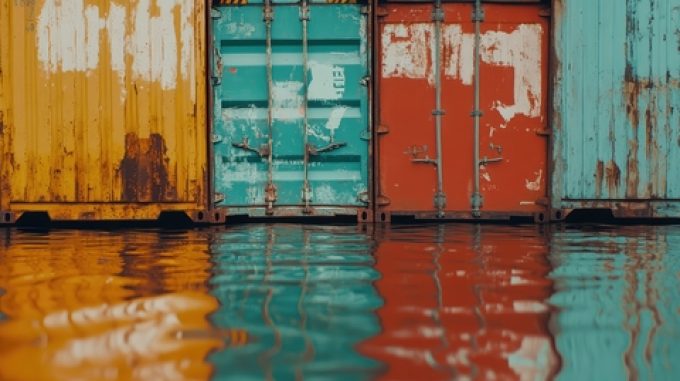
Bangladesh’s exporters are seeking compensation after nearly a week of heavy rain severely disrupted import and export operations through Chittagong port.
Businesses reported damage to cargo, delayed vessel sailings, and widespread supply chain disruption.
The incessant rain left parts of the country’s main maritime gateway, private inland container depots, and surrounding highways under water, slowing cargo movement and reducing container releases.
Chittagong Port Authority (CPA), however, has ruled out compensation for damaged cargo, saying the flooding was an “act of God” and therefore outside its responsibility.
According to businesses, waterlogged highways prevented export containers from reaching the port on time, while flooded terminal areas delayed cargo handling. Scores of vessels delayed their departures by up to 24 hours.
Flooding remained at parts of the port yards for much of the week, further hampering operations, and the disruption reduced the number of import containers that could be released, creating further supply chain bottlenecks.
Videos circulating on social media showed dozens of containers at the port’s general cargo berth in floodwater, raising fears of cargo damage. Businesses also claimed cargo stored in the port’s less-than-containerload (LCL) sheds had been severely damaged, while forwarders reported cargo losses at some private inland container depots.
In a letter to Bangladesh’s shipping ministry on Sunday, apparel manufacturers and other business groups demanded compensation for damaged cargo and emergency measures put in hand to restore the flow of trade.
Other demands included: the urgent restoration of full road and rail connectivity to Chittagong port, to prioritise the movement of import and export cargo; the creation of a special committee to assess losses; waivers on port rent, storage, yard and shipping charges for containers stranded by the flooding; and fast-track customs clearance, inspection, and delivery procedures for raw materials, export cargo, food, medicines, and other urgent or perishable goods.
Inamul Haq Khan, SVP of the Bangladesh Garment Manufacturers and Exporters Association, said the scale of the losses had yet to be assessed – “But we think the losses will be huge,” he added.
Mr Khan rejected the CPA’s position that the flooding constituted an act of God. He said: “We don’t think waterlogging falls under the purview of ‘act of God’. This is the port authority’s failure for proper management of containers and cargo.”
Khairul Alam Suzan, former VP of the Bangladesh Freight Forwarders Association, claimed cargo had been damaged both at private depots and within the port, and “the port authority should have taken proper measures so that no waterlogging occurs”.
“Since there are specific vulnerabilities at certain points within the port, if these are identified and addressed immediately, we can avert potential damage in the future.”
However, the CPA insisted it would not compensate cargo owners, spokesperson Nahid Mostafa insisting the authority had stored containers in accordance with international practice.
“That is why the port authority never assumes liability for this. Since we are not paying any compensation, we are not assessing the loss.”
But he added that the authority planned to renovate its warehouses to help prevent similar incidents in future.
Meanwhile, Bangladesh Inland Container Depots Association secretary general Ruhul Amin Sikder said only a small number of private depots had experienced flooding, and that no damage claims had yet been received.
However, he acknowledged the wider disruption to operations.
“During the first two rainy days in this spell, sending export containers to the port yards almost halved due to waterlogging in the highways and port yard,” he said. “Some ships had to delay sailing as yards were swamped and port people could not complete works in time.”
For uninterrupted access, sign in or sign up to The Daily News, Premium or The Loadstar Enterprise Plan.

Comment on this article