Maersk fined $1.9m for unfair D&D fees, with more carriers in the firing line
It has been a busy fortnight for the US Federal Maritime Commission (FMC), having slapped ...


PLD: TRADING UPDATE ON THE WAY KNIN: UPSIDEJBHT: STRONG TRADING UPDATE DSV: EVERY LITTLE HELPSJBHT: CEO REMARKS WMT: VERTICAL INTEGRATION IN LOGISTICSJBHT: HERE WE GOPG: STEADYEXPD: NEW RECORD BA: DELIVERIESMAERSK: BEAR CAMP MUSINGSCHRW: HIGHER HIGHS ON THE RADAR
PLD: TRADING UPDATE ON THE WAY KNIN: UPSIDEJBHT: STRONG TRADING UPDATE DSV: EVERY LITTLE HELPSJBHT: CEO REMARKS WMT: VERTICAL INTEGRATION IN LOGISTICSJBHT: HERE WE GOPG: STEADYEXPD: NEW RECORD BA: DELIVERIESMAERSK: BEAR CAMP MUSINGSCHRW: HIGHER HIGHS ON THE RADAR
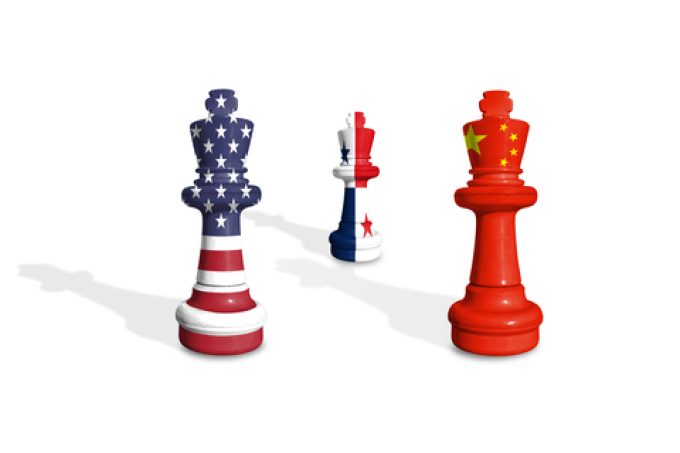
Friday witnessed widespread reporting that China had begun arresting Panamanian-flagged vessels in an apparent response to the decision of Panama’s Supreme Court to strip a Hutchison subsidiary of its rights to operate terminals along the famed canal.
Per one outlet, as many as 70 vessels had already been detained and more looked set to contend with this act of Chinese reciprocity; the only problem surrounding this action is that there appears little in the way of proof; so where did the story originate?
Last Thursday, the recently instated US Federal Maritime Commission (FMC) chair Laura DiBella issued a statement claiming she was closely monitoring “China’s retaliatory actions against Panama” and the effects on global shipping.
Referencing the court ruling against Hutchison, Ms DiBella said that “in a parallel response, the Chinese Ministry of Transport summoned Maersk and MSC to Beijing for high‑level discussions”, and also added that Cosco had suspended and rerouted Balboa-destined services.
“China has now imposed a surge in detentions of Panama‑flagged vessels in Chinese ports under the guise of port state control, far exceeding historical norms [and] appear intended to punish Panama after transfer of Hutchison’s port assets,” she continued.
Before noting that “given that Panama‑flagged ships carry a meaningful share of US containerised trade, these actions could result in significant commercial and strategic consequences to US shipping”.
What we do know is that the process to which Ms DiBella was referring – Port State Control (PSC) – involves the inspection of foreign ships in national ports to ensure that the ship and equipment comply with international regulations.
Further to which, the PSC also ensures that the inspected ship is manned and operated in compliance with these rules, with one source noting “arguably, China is merely putting focus on the safety and security of shipping as well as prevention of pollution”.
After all, Panama is the the largest open ship registry in the world, or flags of convenience as it is known in the industry, so there is a logic of probability, all else being equal, that suggests that more of its vessels would be detained than other flags.
Nonetheless, the source told The Loadstar these inspections could “easily” see vessels and operators “exposed to political scrutiny or ‘investigation into wrongdoing’” before saying of Ms DiBella’s assertions “look who’s talking – it takes one to know one”.
Yet it was unhelpful that Ms DiBella failed to provide a list of affected ships, nor indicate the numbers that the Chinese state have purportedly detained. However, after The Loadstar’s own efforts failed, someone helpfully shared a database from Tokyo MOU of globally detained ships, which indicates a potential spike in detentions – a database we are trawling through now.
Nonetheless, another source told The Loadstar it is certainly true that Chinese ship owners are somewhat less enthusiastic about both flagging their vessels in Panama or chartering newbuilds flagged to Panama.
Instead, it seems that the Bahamas, Liberia, and the Marshall Islands could become the de facto leaders for Chinese ship owners on the hunt for a flag of convenience for new arrivals.
For uninterrupted access, sign in or sign up to The Daily News, Premium or The Loadstar Enterprise Plan.

Comment on this article