Back to Suez...
Maersk said today it was pleased to announce “a structural change to one of the Gemini ...

VW: THE LAST CUT IS THE DEEPESTJBHT: GEARING UP VW: BUYING TIMER: BIG VOTE OF CONFIDENCEAAPL: BEARISH HEDGEYE AAPL: THE BEAR CASEFDX: LIFE SCIENCES ORG UNVEILEDWTC: UPS AND DOWNSWTC: ASX ANNOUNCEMENT REGARDING DSV PARTNERSHIP VW: D-DAYPLD: KEEP PUSHINGDHL: NEW AIR SERVICEDHL: GUIDANCE UPGRADE REACTION
VW: THE LAST CUT IS THE DEEPESTJBHT: GEARING UP VW: BUYING TIMER: BIG VOTE OF CONFIDENCEAAPL: BEARISH HEDGEYE AAPL: THE BEAR CASEFDX: LIFE SCIENCES ORG UNVEILEDWTC: UPS AND DOWNSWTC: ASX ANNOUNCEMENT REGARDING DSV PARTNERSHIP VW: D-DAYPLD: KEEP PUSHINGDHL: NEW AIR SERVICEDHL: GUIDANCE UPGRADE REACTION
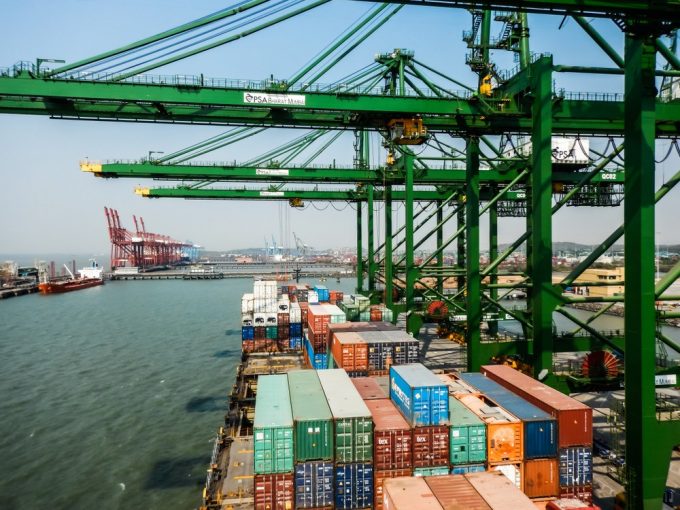
Global container carrier heavyweights are likely to bid for the upcoming re-award of a container terminal concession, currently held by DP World at India’s Nhava Sheva port (JNPA).
Nhava Sheva International Container Terminal (NSICT) is India’s first container terminal developed through a build-operate-transfer (BOT) model across the 12 government/major ports, following privatisation of the sector in the 1990s.
The Dubai group’s 30-year concession rights for NSICT will end in late 2027, and a fresh government tender is expected at the end of this year, or early next, for selection of a new concessionaire.
NSICT became part of the DP World global terminal network following its takeover of UK-based P&O Ports in 2006. The terminal – with a quay length of 600 metres and capacity to handle 1.2m teu annually – complements Nhava Sheva (India) Gateway Terminals, and NSIGT, which opened in 2016 on a 17-year concession.
While DP World remains top contender or interested party in the NSICT rebidding programme, for strategic reasons, competition looks certain, according to industry sources, with potential suitors likely to include CMA CGM and Hapag-Lloyd.
“Port terminals are now an integral part of carriers’ supply chain planning and operations, so we should expect a fierce bidding war for the available opportunity,” one industry source told The Loadstar.
“Especially as the port is fully built out and has no room for further terminal developments.”
CMA CGM, through subsidiary CMA Terminals, already has a terminal venture, NSFT, at Nhava Sheva in partnership with JM Baxi Group. Interestingly, Hapag-Lloyd owns 40% of JM Baxi Ports & Logistics, which has a clutch of terminals in India.
Foreign container lines are increasingly keen to invest in the Indian port sector, to gain dedicated terminal benefits amid the supply chain integrator buzz.
MSC has terminal JVs with Adani Ports at Mundra and Ennore ports.
The retention of the NSICT concession is critical to DP World, as the terminal is located alongside its sister entity, NSIGT, with the combined or contiguous quay arguably allowing the company to handle the ultra-large container vessels (ULCVs) increasingly calling at Indian ports.
JNPA is now a full-fledged landlord port, so greater private competition will undoubtedly help it reap rich dividends in the form of royalty or revenue share, sources believe.
The CMAT/JM Baxi consortium had bid a revenue share of INR4,520 per teu, ($53) to bag the NSFT contract, involving the privatisation of the port’s own oldest terminal, previously called JNPCT.
Despite the deep market inroads made by Adani’s Mundra port and other demand challenges, Nhava Sheva has kept volumes growing at an impressive rate. It hit a new throughput high of 7.3m teu in fiscal year 2024-25, up 13.5% year on year.
And that growth pace has continued, with Q1 (April-June) traffic soaring 15.5% to 1.9m teu, data shows.
For uninterrupted access, sign in or sign up to The Daily News, Premium or The Loadstar Enterprise Plan.
Comment on this article