From optional ESG to ‘no contract’ – risk hedging in upcoming tenders
Carriers who don’t report 2026 CSRD data will vanish from big tenders


WMT: VERTICAL INTEGRATION IN LOGISTICSJBHT: HERE WE GOPG: STEADYEXPD: NEW RECORD BA: DELIVERIESMAERSK: BEAR CAMP MUSINGSCHRW: HIGHER HIGHS ON THE RADARWTC: 'ONE RECORD'HLAG: EARNINGS GUIDANCE UPGRADE AAPL: GLOBAL SMARTPHONE SHIPMENTS VW: THE IMPACT VW: MASSIVE JOB CUTS CONFIRMEDEXPD: BULLISH
WMT: VERTICAL INTEGRATION IN LOGISTICSJBHT: HERE WE GOPG: STEADYEXPD: NEW RECORD BA: DELIVERIESMAERSK: BEAR CAMP MUSINGSCHRW: HIGHER HIGHS ON THE RADARWTC: 'ONE RECORD'HLAG: EARNINGS GUIDANCE UPGRADE AAPL: GLOBAL SMARTPHONE SHIPMENTS VW: THE IMPACT VW: MASSIVE JOB CUTS CONFIRMEDEXPD: BULLISH
With over 80% of global emissions reported to come from indirect supply chain activities, the decarbonization of global supply chains remains one of the most pressing and complex challenges facing businesses on the path to net-zero. Scope 3 emissions – a term used to describe indirect emissions from downstream activities – include the transportation of goods and the procurement of materials. Today, the movement of cargo by air, ocean, inland waterways, road and rail contributes over two gigatons of CO2 annually. Tackling these emissions is vital to effectively decarbonize supply chains and align global commerce with regulated climate goals.
Despite its growing ambition, both fuel providers and carriers face considerable challenges when it comes to decarbonization. On the one hand, pioneering energy and transportation companies are investing in low-carbon fuels such as sustainable aviation fuel (SAF), bio-LNG, and hydrogen. These technologies are ready, scalable, and vital to pivoting from carbon-heavy fuels, but crucially, they come with increased costs for fleet operators who often struggle to recover investments without a mechanism to share these costs with their supply chain partners.
On the other hand, corporates are struggling to achieve these Scope 3 targets due to the complexity of global supply chains, lack of direct control, and the many stakeholders involved. To overcome these challenges, transport and logistics companies are looking for alternative solutions that distribute the costs of low-carbon initiatives across the entire supply chain.
These alternative solutions, however, must be accepted as a means to reduce their supply chain emissions. Since the vast majority of companies have submitted their Net Zero targets using the Science Based Targets Initiative (SBTI) framework, their acceptance plays a crucial role in the adoption of new solutions. In March 2025, the draft of the new SBTI Net-Zero standard was published, which approved the use of Book & Claim as a powerful tool for reducing Scope 3 emissions. The approval of the Book and Claim approach offers companies greater control and flexibility in reducing their transport-related Scope 3 emissions, thereby accelerating the decarbonization of difficult-to-abate industries. In this new draft standard, SBTi also prefers Book & Claim over traditional carbon offsetting as Book & Claim directly funds the physical decarbonization of multimodal transportation and, therefore, directly tackles the issue of rising supply chain emissions.
The Power of Book & Claim
Book and claim is an instrumental tool that connects companies looking to reduce their Scope 3 emissions with fleet operators that are able and willing to decarbonize. It allows fleet operators to share the environmental benefits, regardless of the company’s physical operations.
Supported by a globally accepted Book and Claim methodology (Market-Based Measure Framework) – published by the Smart Freight Center and backed by the World Economic Forum – the creation and allocation of verified Environmental Attribute Certificates (EACs) has allowed actors from all transportation modalities to share the cost of their carbon reduction projects with their customers or pay for their decarbonized transport by allocating transparent and externally verified carbon claims to paying customers, regardless of the location of their logistics operations. This methodology can be compared to the Renewable Energy Certificates that are used in the green electricity market.
The development of this methodology has created opportunities within global carbon markets to easily accelerate emission reduction goals by creating a greater pool of transparent, high-quality, and verifiable EACs.
The recent launch of Carboninsets marks the next phase in this evolution, providing a simple and intuitive mechanism for connecting supply and demand actors while accelerating the market for Scope 3 decarbonization.
The future of supply chain sustainability lies in collaboration, transparency, and quality. There’s no silver bullet when it comes to decarbonization, but the introduction of Book&Claim and emerging services, such as Carboninsets, reveals that progress is being made. By unlocking new opportunities for businesses to invest in low-carbon transport, supply chain partners can unlock meaningful emission reductions to support global decarbonization efforts.
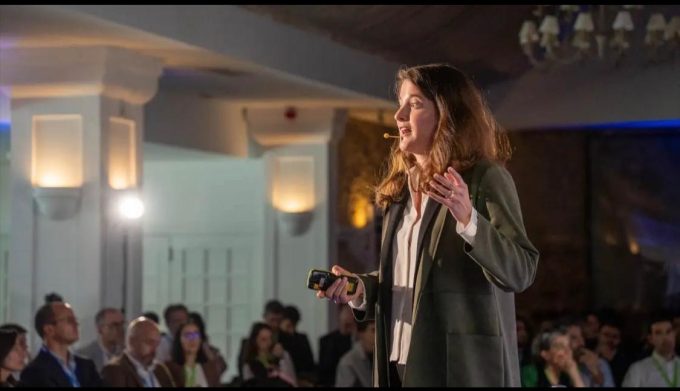
This is a guest post by Maria Lacalle Muls, Head of Customer Decarbonization at Carboninsets, a new independent matchmaker for verified Environmental Attribute Certificates (EAC).
Carboninsets brings freight forwarders, cargo owners, carriers, and fuel providers together in one intuitive platform. Each certificate includes detailed emissions data, sustainability compliance, additionality assessments, legal accountability, and third-party assurance. All EACs delivered by Carboninsets adhere to the latest Book and Claim standards and are exclusively issued on the 123Carbons registry, a globally recognized Book and Claim platform specialized in multimodal transportation.
For uninterrupted access, sign in or sign up to The Daily News, Premium or The Loadstar Enterprise Plan.
Comment on this article