CNBC: Amazon layoffs take their toll in saturated job market
CNBC reports: On an early morning in January, Jake Linsley woke up to a text from ...

WTC: 'ONE RECORD'HLAG: EARNINGS GUIDANCE UPGRADE AAPL: GLOBAL SMARTPHONE SHIPMENTS VW: THE IMPACT VW: MASSIVE JOB CUTS CONFIRMEDEXPD: BULLISHCHRW: POSITIONING AHEAD OF EARNINGSAMZN: IN THE NUMBERSAMZN: PEOPLE MATTER UNTILVW: THE LAST CUT IS THE DEEPESTJBHT: GEARING UP VW: BUYING TIMER: BIG VOTE OF CONFIDENCEAAPL: BEARISH HEDGEYE
WTC: 'ONE RECORD'HLAG: EARNINGS GUIDANCE UPGRADE AAPL: GLOBAL SMARTPHONE SHIPMENTS VW: THE IMPACT VW: MASSIVE JOB CUTS CONFIRMEDEXPD: BULLISHCHRW: POSITIONING AHEAD OF EARNINGSAMZN: IN THE NUMBERSAMZN: PEOPLE MATTER UNTILVW: THE LAST CUT IS THE DEEPESTJBHT: GEARING UP VW: BUYING TIMER: BIG VOTE OF CONFIDENCEAAPL: BEARISH HEDGEYE
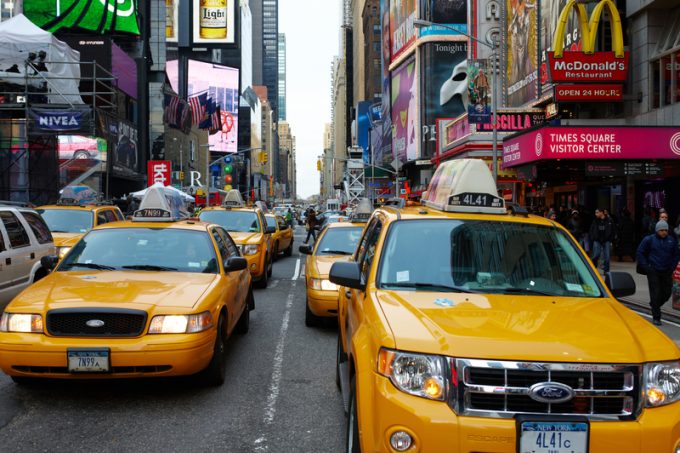
Amazon is facing a legal battle, as the New York City Council is poised to discuss introducing a licensing regime for final-mile delivery operations in the city.
This would apply to such operations based in fulfilment centres and warehouses in the city, and would require operators employ their workers – a direct aim at Amazon’s third-party provider strategy.
The Delivery Protection Act calls for a mandate that final-mile operators would need a licence from the city’s Department of Consumer and Worker Protection (DCWP). If that department detects a “pattern of practice of violations” at an operator, it can deny an application or revoke an existing licence.
The legislation does not target delivery drivers, but operators of warehouses and other facilities from which deliveries are made.
City Hall reinforced its case for new regulations of e-commerce fulfillment activities in the city with a report in November by the New York City Comptroller, which noted that package deliveries in the city surged from 1.1 million parcels a day in 2017 to 2.5m in 2024, while 18 large final-mile facilities opened, 11 of them since 2020.
According to the Fast Shipping, Slow Justice report, this led to significant increases in crashes, congestion, and air quality problems in predominantly ‘black and brown neighbourhoods’. Truck-related crashes in the areas where these facilities opened increased by 146%, while truck crashes involving injuries climbed 137%.
The Delivery Protection Act was introduced in September, but it was not addressed in a committee hearing before the term end of the city council in December, so it was re-introduced on 12 February.
Observers expect it to be adopted as it had garnered endorsement from 41 out of 51 council members and was already co-sponsored by 27 at its re-submission.
That event saw a rally organised by the Teamsters union on the steps of City Hall calling for the legislation’s passage.
The rally left no doubt about the primary target of the legislation.
“Amazon has pocketed billions off the backs of workers, yet dares to claim that the people delivering their packages don’t work for them,” said Randy Korgan, director of the Teamsters Amazon Division. “The Delivery Protection Act is desperately needed to end this trillion-dollar company’s exploitation of its workers in New York City.”
The inclusion of a prohibition on hiring warehouse workers through staffing agencies or subcontractors for core operational roles in the legislation is aimed squarely at Amazon’s Delivery Service Partner (DSP) programme. This touches on the long-running battle between the union and the e-commerce giant over worker classification as independent contractors instead of employees.
Mr Korgan left no doubt that the Big Apple is but the opening stage for such legislation, as far as the union is concerned.
“When the Teamsters and our union allies succeed here, we will take this fight to cities and localities across the country,” he stated.
Amazon is not alone in its opposition to the bill. The NY Delivers Coalition, which comprises mostly chambers of commerce and logistics firms, has expressed opposition to regulation of the sector, arguing that this would drive businesses out of the city, or out of business altogether, with dire repercussions.
It is not clear when the coalition came into existence. According to its website, it was formed “to make sure our local elected leaders understand what’s at stake. Proposed legislation at City Hall will put jobs at risk, raise costs for working families, and make it harder for small businesses—especially in the outer boroughs—to survive”.
The coalition will have its hands full. Last month City Hall introduced new regulations for delivery services (including food and grocery deliveries). According to law firm Seyfarth Shaw, “covered app‑based delivery services operating in New York City face a host of new compliance requirements and should expect robust enforcement by the DCWP”.
Amazon will likely challenge the legislation. Should City Hall prevail, it could use the US Postal Service or another third-party delivery service, but this would likely dent its push for ultra-fast deliveries.
For uninterrupted access, sign in or sign up to The Daily News, Premium or The Loadstar Enterprise Plan.

Comment on this article