Freighter market turbulence: narrowbody glut, widebody scarcity
A flurry of narrowbody conversions has tipped the industry into oversupply for regional capacity, while ...

HLAG: EARNINGS GUIDANCE UPGRADE AAPL: GLOBAL SMARTPHONE SHIPMENTS VW: THE IMPACT VW: MASSIVE JOB CUTS CONFIRMEDEXPD: BULLISHCHRW: POSITIONING AHEAD OF EARNINGSAMZN: IN THE NUMBERSAMZN: PEOPLE MATTER UNTILVW: THE LAST CUT IS THE DEEPESTJBHT: GEARING UP VW: BUYING TIMER: BIG VOTE OF CONFIDENCEAAPL: BEARISH HEDGEYE AAPL: THE BEAR CASEFDX: LIFE SCIENCES ORG UNVEILEDWTC: UPS AND DOWNSWTC: ASX ANNOUNCEMENT REGARDING DSV PARTNERSHIP
HLAG: EARNINGS GUIDANCE UPGRADE AAPL: GLOBAL SMARTPHONE SHIPMENTS VW: THE IMPACT VW: MASSIVE JOB CUTS CONFIRMEDEXPD: BULLISHCHRW: POSITIONING AHEAD OF EARNINGSAMZN: IN THE NUMBERSAMZN: PEOPLE MATTER UNTILVW: THE LAST CUT IS THE DEEPESTJBHT: GEARING UP VW: BUYING TIMER: BIG VOTE OF CONFIDENCEAAPL: BEARISH HEDGEYE AAPL: THE BEAR CASEFDX: LIFE SCIENCES ORG UNVEILEDWTC: UPS AND DOWNSWTC: ASX ANNOUNCEMENT REGARDING DSV PARTNERSHIP
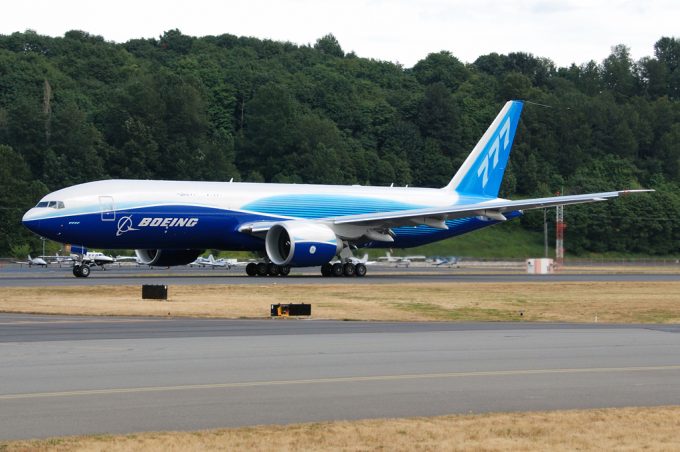
The global widebody freighter fleet has expanded faster than anticipated, but now approaches an expected market slowdown.
And the longer-term outlook for available capacity remains tight.
Last week Emirates saw the delivery of the 300th B777 freighter, the 23rd Boeing has delivered to customers this year.
Indeed, the manufacturer’s output hit 150 deliveries in the second quarter, including 12 777 freighters and five 767-300Fs, bringing its tally for the first half to 280 aircraft, its highest output since 2018.
The global fleet of large widebody freighters grew by 5% over the 12 months since June 2024, noted Tom Crabtree, MD of Transport Research Advisory. And apart from three B747-8Fs owned by AirBridgeCargo that found a new home at Atlas Air a year ago, a number of retired 747-400Fs were reactivated in response to soaring demand, he added.
It is unclear how many more 777-200Fs Boeing will deliver this year. Israel Aerospace Industries is said to be close to obtaining certification for its 777-300 conversion programme and has five units ready, which “would be a big pile of machines to hit the market”, according to Mr Crabtree.
They would be hitting a market expected to be in retreat in H2, although the extended suspension of elevated tariffs between the US and China for 90 days offers some respite. While recent reports of global airfreight volumes have been higher than anticipated, pricing has been rather flat and load factors have weakened.
Diminished prospects for global airfreight growth as a result of tariffs are weighing on carriers’ fleet plans – they are not the sole reason for second thoughts on freighters orders, but they are in the equation, at least as Air Lease is concerned.
The launch customer for the A350F, cancelled its order for all seven, citing delay of the projected market entry and uncertainty in cargo markets. And Air France KLM Martinair announced it would scale back its order for A350 freighters from eight to six.
In Air Lease’s case, the dynamics of the passenger market have to be another factor behind the decision to shift from freighters to passenger models. Although output has increased, widebody aircraft production remains hobbled by supply chain problems.
Instead of six A350 deliveries a month as planned, Airbus rolled out just 21 A350s in the first half. Boeing fared somewhat better, delivering 37 B787s in the same period, also short of its target, 42, but much improved on the 22 managed in the first six months of last year.
There are other obstacles. Lufthansa is waiting for certification of the business class seat model it has chosen for its 787, which has put delivery of 15 aircraft in limbo.
As for the B777-9, Boeing now hopes to get that ready for market entry some time in the second half of next year. Reportedly it has five of the type in a flight test programme to check resilience against electromagnetic interference and lightning strikes. But, in light of the current supply chain issues, industry observers do not anticipate a torrent of B777-9s rolling off the production lines once the type is certified for commercial operations.
A stark reflection of this came this month when aircraft appraiser and aviation consulting firm IBA reported that market values for new-generation widebody aircraft have risen by an average of 11.6% since 2021.
After average widebody value dropped 8.6% during the pandemic, but has rebounded steadily, IBA found. By some estimates the momentum has accelerated since 2023, when international travel recovered. Combined with constrained production pipelines, this has created a seller’s market for new-generation widebodies and has prompted airlines to hang on to their B777s.
The result is that feedstock for 777 conversions now faces severe constraints – a shortage of available aircraft and high residual values. This points to more use of existing freighters in the medium term – barring a collapse in the airfreight market – as more-attractive margins in the passenger arena put question marks over freighter investment, hobbling availability of conversion feedstock.
For uninterrupted access, sign in or sign up to The Daily News, Premium or The Loadstar Enterprise Plan.

Comment on this article