155 hospitalised as toxic gas leak forces Antwerp box terminals to close
European shippers and forwarders have been warned to expect significant disruption to operations after a ...


PLD: TRADING UPDATE ON THE WAY KNIN: UPSIDEJBHT: STRONG TRADING UPDATE DSV: EVERY LITTLE HELPSJBHT: CEO REMARKS WMT: VERTICAL INTEGRATION IN LOGISTICSJBHT: HERE WE GOPG: STEADYEXPD: NEW RECORD BA: DELIVERIESMAERSK: BEAR CAMP MUSINGS
PLD: TRADING UPDATE ON THE WAY KNIN: UPSIDEJBHT: STRONG TRADING UPDATE DSV: EVERY LITTLE HELPSJBHT: CEO REMARKS WMT: VERTICAL INTEGRATION IN LOGISTICSJBHT: HERE WE GOPG: STEADYEXPD: NEW RECORD BA: DELIVERIESMAERSK: BEAR CAMP MUSINGS
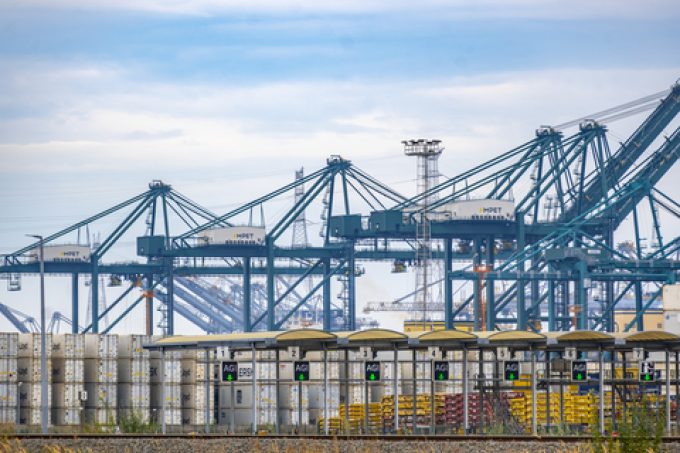
Antwerp’s Deurganckdok port area partially reopened today after an emergency services clean-up following Tuesday night’s hydrofluoric acid toxic gas leak that saw 155 people hospitalised.
While the northern side of the MSC-PSA MEPT terminal, known as Quay 1741, remains closed, DP World’s Antwerp Gateway (Quay 1700) and an additional part of MPET (Quay 1718) are now operational.
“Thanks to the progress made by the specialist response teams, operations at Quay 1718 resumed on Wednesday evening from 10pm for shipping, lorry, and inland waterway operations,” MPET told customers, along with Medrepair S11, which also reopened its doors at the same time.
Meanwhile, emergency services said the toxic substance that leaked from the container had ‘partly evaporated, but also partly settled’, which meant that “a large part of the infrastructure at Quay 1742, including a number of employees’ vehicles, needs to be cleaned”.
A port authority statement this morning said: “Air quality measurements were taken throughout the night. The containers that were near the leaking container were unloaded and cleaned.
“The security perimeter remains unchanged, and the terminal is therefore not yet allowed to start up.”
With both MPET and Antwerp Gateway terminals closed for at least 24 hours, there are fears of a considerable cargo backlog building up.
The Loadstar understands that the throughput of MPET, which its owners claim is Europe’s largest container terminal, is around 24,000 teu a day, while neighbouring Antwerp Gateway is around 7,000.
“As all traffic – both at the waterside and landside – have been suspended, the impact is considerable although difficult to quantify today,” a local source told The Loadstar. “Some ocean container vessels have likely bypassed Antwerp and discharged the Antwerp import containers in Zeebrugge or Rotterdam.
“I hope to learn more on the impact on the export side as thousands of containers are pending on rail, inland barges, and trucks to move in,” he added.
For example, according to Xeneta’s eeSea liner database, the 14,000 teu MSC Camille, deployed on MSC’s Asia-Europe Britannia service, is due to call at Zeebrugge rather than Antwerp today.
Meanwhile, Antwerp Port Authority released its first-half throughput figures this morning, which showed a 1.5% year-on-year decline to 6.8m teu, a fall “exacerbated by exceptional operational disruptions”, the authority explained.
“A four-day strike in the nautical chain in March resulted in an estimated loss of 100,000 teu, followed by the oil spill in the Deurganckdock in April, which caused an additional loss of approximately 85,000 teu,” it said. “In June, industrial action by pilots again caused disruptions and resulted in an estimated loss of 75,000 teu.”
But it added: “Despite diversions and adjusted sailing schedules, the port remained operational, and backlogs were gradually cleared.”
It noted that exports of full containers dropped 5.7% year on year, “reflecting the weak export position of the Western European economy”.
However, throughput of empty containers rose 13.7%, “indicating a growing imbalance between imports and available export cargo”.
For uninterrupted access, sign in or sign up to The Daily News, Premium or The Loadstar Enterprise Plan.

Comment on this article