JNPA grants ground rent relief as truck shortages clog box flows
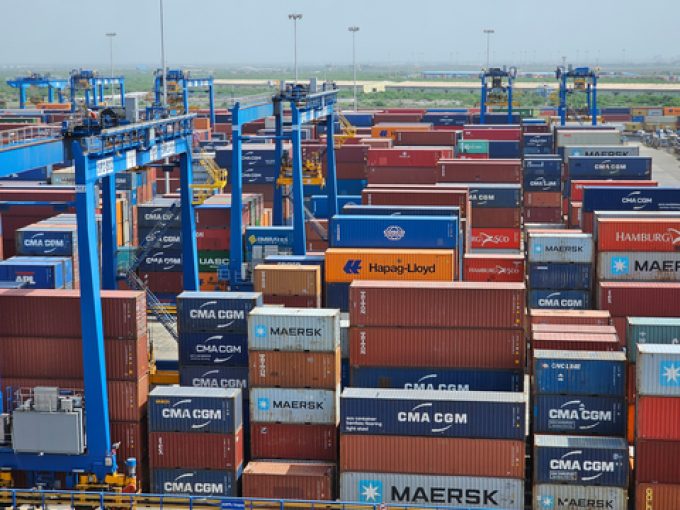
Indian shippers using container terminals at Nhava Port (JNPA) have won some respite from penalties ...


HLAG: EUROGATE DEALAAPL: SUPPLY CHAIN HURDLESVW: DECISION TIME VW: UPDATE XOM: EARNING GROWTHWTC: REBOUND ON WEAKNESSCHRW: BENCHMARKINGDHL: UPGRADEDEXPD: QUOTE OF THE WEEKVW: MASSIVE JOB CUTSFDXF: FIRST TRADING UPDATE EXPD: MORE BULLISH THAN BEARISHFWRD: HUNTING FOR VALUEFDX: CAPITAL STRUCTURE ADJUSTMENT
HLAG: EUROGATE DEALAAPL: SUPPLY CHAIN HURDLESVW: DECISION TIME VW: UPDATE XOM: EARNING GROWTHWTC: REBOUND ON WEAKNESSCHRW: BENCHMARKINGDHL: UPGRADEDEXPD: QUOTE OF THE WEEKVW: MASSIVE JOB CUTSFDXF: FIRST TRADING UPDATE EXPD: MORE BULLISH THAN BEARISHFWRD: HUNTING FOR VALUEFDX: CAPITAL STRUCTURE ADJUSTMENT
Shipping lines are fundamentally reshaping their global service networks, with secondary, regional ports emerging as the winners, while some of Asia’s largest transhipment hubs are losing out.,
According to new analysis from Sea-Intelligence of the latest UN Conference on Trade and Development (UNCTAD) Port Liner Shipping Connectivity Index (PLSCI) for the second quarter, carriers have moved beyond ‘temporary disruption management’ and are now embedding new operating models into their networks.
The analyst said the figures indicated that “shipping lines are seemingly moving beyond initial crisis management into active network decentralisation”.
It added: “As primary transhipment nodes hit connectivity ceilings, shipping lines are actively shedding excess capacity at mega-hubs in favour of secondary regional relays and specific gateways that directly support cross-border supply chain diversification.”
The shift has been driven by the prolonged instability in the Middle East, alongside manufacturers’ continuing China+1 diversification strategies, with carriers increasingly favouring regional relay ports over traditional transhipment hubs.
The changes are particularly visible across the Middle East, where carriers have rebuilt their networks around ‘safer’ locations since the onset of the Red Sea crisis.
Saudi Arabian port Jeddah recorded one of the strongest gains, its connectivity index rising 14.9% quarter on quarter, from 403.06 in Q1 to 463.02 in Q2.
In the Gulf, Khor Fakkan saw the region’s largest increase, surging 188.6%, to 167.51, while Sharjah’s connectivity rose 18.6%. Fujairah, previously absent from the container connectivity index after largely serving as a bunkering hub, reappeared, with a score of 111.01.
East African ports have also benefited, albeit unevenly. Djibouti’s connectivity increased 8.6% during the quarter, to 210.34, while Dar es Salaam rose 8% quarter on quarter, and 11.3% since the end of 2025. Mombasa, however, failed to maintain gains it achieved last year, with connectivity flattening.
The report also suggests shipping lines are beginning to bypass the Indian subcontinent’s largest gateway ports in favour of smaller alternatives.
Connectivity at Mundra fell 5.7% during the quarter, while Nhava Sheva slipped 1.8% and Colombo edged down 0.1%. Secondary ports like Pipavav, Ennore, Hazira, and Visakhapatnam all recorded connectivity growth.
According to Sea-Intelligence, this reflects “a deliberate strategy to bypass congested primary nodes in favour of secondary port networks to manage the latest wave of regional relay cargo”.
The redistribution is also becoming evident at Asia’s largest container hubs: Singapore’s connectivity declined from its Q4 25 peak of 1,876.95, to 1,833.94 in Q2 this year; Malaysia’s Port Klang and Tanjung Pelepas experienced steeper declines, falling 5% and 7.1% respectively; and even Shanghai and Ningbo recorded quarter-on-quarter connectivity declines, of 2% and 2.2%.
But rather than signalling weaker trade, Sea-Intelligence argues these reductions reflect carriers pruning redundant transhipment strings as traffic disperses across a wider range of ports.
The China+1 manufacturing shift is also producing clear regional winners and losers. Vietnam’s Haiphong has overtaken Ho Chi Minh City in connectivity, recording 5.1% growth during the latest quarter, while Thailand’s Laem Chabang gained 4%.
Indonesia has also benefited, with Semarang posting long-term connectivity growth of 46.6%, and Batam Island’s index increasing more than 320% since early 2023, as carriers incorporated it into their regional feeder networks.
However, industrial investment alone is not guaranteeing stronger connectivity. Malaysia’s Penang, despite attracting significant electronics and semiconductor manufacturing investment, has seen its connectivity decline 18.2% since 2023, as shipping lines reduced the number of direct calls, increasingly relying on feeder services.
And Sea-Intelligence concluded that the latest data pointed to a structural, rather than temporary, transformation.
It said: “These dispersed routing patterns, evident in the sustained growth of ports like Djibouti, Ennore, and Haiphong, represent locked-in operational baselines rather than temporary network anomalies.”
For uninterrupted access, sign in or sign up to The Daily News, Premium or The Loadstar Enterprise Plan.

Comment on this article