Forwarders face margin squeeze as growth cools and disruption persists
The global freight forwarding market is still growing, but the industry’s easy gains appear to ...


DSV: STOCK MARKET REACTION XOM: OIL INVENTORY WARNINGWTC: EBL DEAL DETAILSWTC: EBL DEALEXPD: 'READ MY LIPS' HON: DEALS ON THE MENUEXPD: NEW RECORD XPO: THE REBOUNDCAT: PAYOUT UPDHL: LIGHTHOUSEMAERSK: ANOTHER UPGRADEFWRD: HEALTHY CORRECTION R: RYDER CEO SAYS
DSV: STOCK MARKET REACTION XOM: OIL INVENTORY WARNINGWTC: EBL DEAL DETAILSWTC: EBL DEALEXPD: 'READ MY LIPS' HON: DEALS ON THE MENUEXPD: NEW RECORD XPO: THE REBOUNDCAT: PAYOUT UPDHL: LIGHTHOUSEMAERSK: ANOTHER UPGRADEFWRD: HEALTHY CORRECTION R: RYDER CEO SAYS
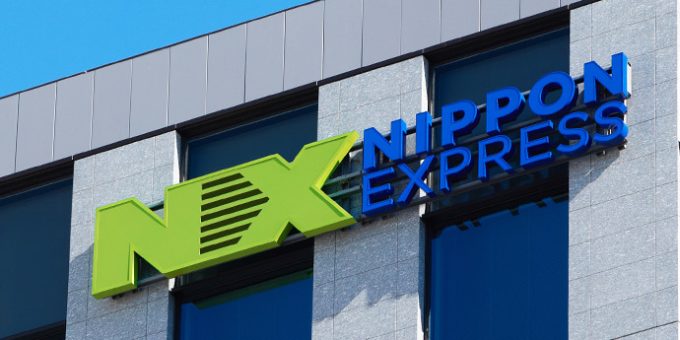
Japan’s Nippon Express has launched one of its boldest overseas moves in recent years, agreeing to acquire Canada-based Metro Supply Chain in a deal worth up to C$2.2bn (around $1.6bn), as it accelerates its expansion into North America.
Nippon Express will pay an enterprise value of C$1.8bn, with a further C$400m earn-out tied to performance, for the Montréal-headquartered contract logistics provider, which operates across Canada, the US and the UK.
For Nippon Express (NX), the deal represents a step-change in strategy, and a decisive attempt to build scale in a region where it has historically lagged some global peers.
Metro Supply Chain has a sizeable contract logistics platform, with operations spanning retail, consumer goods, healthcare, technology and the public sector. NX said the acquisition would strengthen its North American presence, expand its end-to-end capabilities and broaden its customer base beyond its traditional focus on Japanese clients.
Crucially, the deal gives NX immediate access to infrastructure, customers and management – effectively allowing it to buy a ready-made regional platform rather than build one gradually.
The move aligns with NX’s longer-term ambition to become a globally significant logistics player by 2037, its centenary year .
What makes the Metro acquisition particularly notable is how it contrasts with NX’s recent approach.
Over the past year, the group has largely focused on incremental expansion, opening facilities, strengthening regional networks, and making selective, smaller investments. Its recent activity has included buying a minority stake in Pakistan’s TCS Logistics and the acquisition of Germany’s Simon Hegele Group, a specialist player in healthcare and industrial logistics.
But this new deal is a full-scale acquisition in a developed market, aimed at securing immediate scale rather than adding niche capabilities.
The move also comes as NX shifts further towards an asset-light model.
Following the sale of Nippon Cargo Airlines to ANA, the group no longer controls its own freighter fleet, instead relying on commercial airline partnerships for air cargo capacity.
The move also highlights a more aggressive approach than that taken by some Asian peers in North America.
South Korea’s CJ Logistics, for example, has spent years building out a US platform following its acquisition of DSC Logistics, gradually expanding into a broad domestic-style network. LX Pantos, meanwhile, has been pursuing a more incremental strategy, combining partnerships, asset investments, and organic growth to establish a foothold.
By contrast, NX is opting for speed, effectively buying its way into scale in one transaction.
The timing reflects the growing importance of North America as a logistics battleground, particularly in contract logistics, where proximity to end customers and integrated services is increasingly critical.
Metro Supply Chain, while relatively low-profile globally, has been growing steadily, giving NX a platform with both scale and sector diversity.
For uninterrupted access, sign in or sign up to The Daily News, Premium or The Loadstar Enterprise Plan.
Comment on this article