African demand + capacity = import explosion feeding container growth
Terminals and more terminals


DHL: LIGHTHOUSEMAERSK: ANOTHER UPGRADEFWRD: HEALTHY CORRECTION R: RYDER CEO SAYS R: AMAZON ANNOUNCEMENTS RPLD: EV INFRASTRUCTURE PUSHDHL: RAMPING UP 'NEW ENERGY LOGISTICS' GXO: NEW WINAMZN: LTL SERVICE UPDATEGM: ENERGY PROVIDER MODELEXPD: LAYOFFS CONFIRMED DHL: DOWNSIDE RISKDHL: OVERVIEWDHL: DATE CENTRE PUSH IN APAC
DHL: LIGHTHOUSEMAERSK: ANOTHER UPGRADEFWRD: HEALTHY CORRECTION R: RYDER CEO SAYS R: AMAZON ANNOUNCEMENTS RPLD: EV INFRASTRUCTURE PUSHDHL: RAMPING UP 'NEW ENERGY LOGISTICS' GXO: NEW WINAMZN: LTL SERVICE UPDATEGM: ENERGY PROVIDER MODELEXPD: LAYOFFS CONFIRMED DHL: DOWNSIDE RISKDHL: OVERVIEWDHL: DATE CENTRE PUSH IN APAC
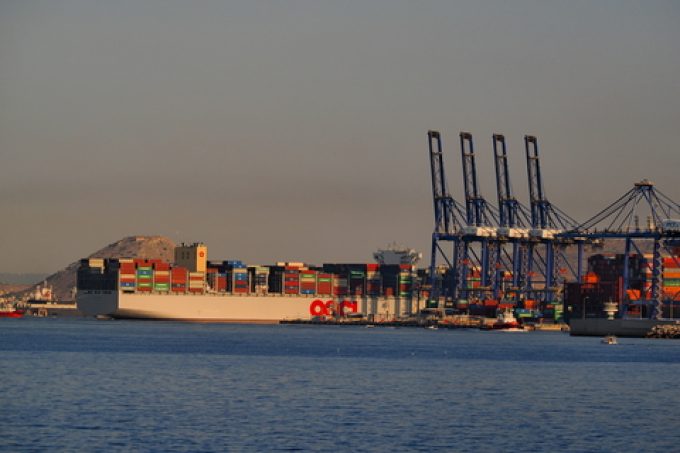
The Greek transhipment hub of Piraeus, controlled by China’s Cosco group, saw throughput last year drop 6%, the second consecutive year of declining volumes as the tensions in the Middle East continued to hit the eastern Mediterranean’s largest container port.
Releasing its annual results today, the partially Hong Kong-listed terminal operator said the “total throughput of Piraeus Terminal decreased 6% year on year, to 3.97m teu, primarily due to a slowdown in market demand within the Mediterranean region”.
However, analysts at Alphaliner today argued that the cause of the decline was more likely due to reshaped shipping routes since the onset of Houthi attacks on commercial shipping.
“The port of Piraeus again suffered a loss in throughput in 2025 as Red Sea service reconfigurations diverted cargo to gateways in Spain and northern Europe,” they wrote, adding that its 2024 throughput was 6.1% down on 2023.
“The port has now lost 600,000 teu in annual volume since 2023, as well as its (pre-Red Sea conflict) standing as the premier European port outside of the big three, Rotterdam, Antwerp and Hamburg,” Alphaliner said.
Meanwhile, throughput at the Suez Canal Container Terminal, of which Cosco owns 20%, grew 41% over 2024, to hit 5.5m teu, while its Kumport terminal in Istanbul/Ambarli – in which it has a 22% stake – registered 22.7% volume growth, to reach 1.54m teu, indicating continuing robustness in regional east Mediterranean demand.
Cosco Ports’ full-year 2025 revenue was $1.7bn, producing a net profit of $312m.
On an equity-adjusted basis, its combined global throughput grew 3.4%, to 43.85m teu, with 70% of that coming from its China operations – its equity-adjusted Chinese throughput grew just 1.6%, to 32.79m teu.
However, with China’s overall container throughput thought to be around 6% in 2025, to 350m teu, it would appear Cosco has lost market share in its home market.
But it did appear to be making gains in international markets, with the equity-adjusted throughput of its international facilities showing an above-market average growth of 7.9% over 2024, to reach 14.1m teu.
The group is responding to these developments with plans to deepen its integration with parent company Cosco Shipping Lines as the latest example of major carriers evolving into one-stop shop logistics providers.
It said today: “Key initiatives include advancing the intelligent route planning project to enhance operational efficiency and strengthening standardised management of equipment throughout its lifecycle to sustain operational capacity, strengthen network aggregation and enhance comprehensive service capabilities.
“The company will focus on upgrading from ‘single-point development’ to ‘network synergy’. [It will] continuously reinforce trunk and feeder networks and corridor development at key hubs to enhance transhipment and network capabilities [and] vigorously develop integrated ‘port + logistics’ services and promote standardised supply chain products,” it added.
One notable addition to its portfolio was the first full year of operations at its newly built port in Peru, Chancay, which handled 336,000 teu and has been touted as a possible transhipment hub for the west coast of South America.
Alphaliner noted today that the top 30 ports globally had seen volumes cumulatively rise 5.2%, with transhipment hubs such as Malaysia’s Tanjung Pelepas witnessing the strongest growth, explaining Cosco’s renewed focus on hub-and-spoke operations.
“Recording a second year of solid growth, the 5.2% figure was above the 4.7% increase seen in the general container trade,” said Alphaliner. “This reflected the serious operational disruption seen during the year, including large-scale re-routing and supply chain disorder.
“Transhipment gateways have been the main beneficiary of this disruption, notably ports such as Singapore, Tanjung Pelepas and Colombo in Asia, and Tanger Med and Valencia in the Mediterranean,” it added.
For uninterrupted access, sign in or sign up to The Daily News, Premium or The Loadstar Enterprise Plan.

Comment on this article