Gemini carriers sail past 90% schedule reliability targets in April/May
Gemini Cooperation partners Maersk and Hapag-Lloyd hit their 90% on-time schedule reliability target across all ...


GXO: CONTRACT RENEWALFDX: SELL-SIDE REACTION TO INTERIMSFDX: CONF CALL FDX: EARNINGS BEAT FDX: FREIGHT SPIN-OFF UPSIDEPLD: 'OPPORTUNISTIC DEAL-MAKING'PLD: REJECTED BY SEGROPLD: HUNTINGKNIN: BOND FINANCINGWTC: UP WE GODHL: NEW CFO APPOINTMENTFDX: TRADING UPDATE ON THE WAY TSLA: ON THE MENDGM: TECH STARTUP LISTINGDSV: NEW HIGH TARGET CHRW: BOLT-ON DEAL TIMEDHL: GO GREEN
GXO: CONTRACT RENEWALFDX: SELL-SIDE REACTION TO INTERIMSFDX: CONF CALL FDX: EARNINGS BEAT FDX: FREIGHT SPIN-OFF UPSIDEPLD: 'OPPORTUNISTIC DEAL-MAKING'PLD: REJECTED BY SEGROPLD: HUNTINGKNIN: BOND FINANCINGWTC: UP WE GODHL: NEW CFO APPOINTMENTFDX: TRADING UPDATE ON THE WAY TSLA: ON THE MENDGM: TECH STARTUP LISTINGDSV: NEW HIGH TARGET CHRW: BOLT-ON DEAL TIMEDHL: GO GREEN
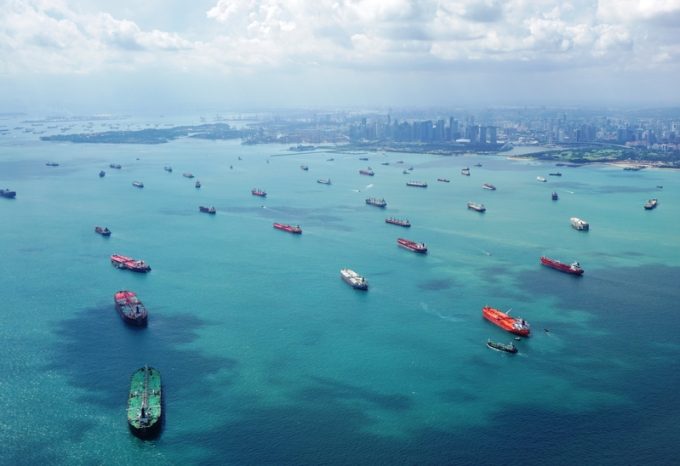
The global container fleet seems to be performing very well, with incessant headwinds generating strong demand in the charter market keeping the number of commercially idle ships “historically low”.
According to Alphaliner, just 75,000 teu was idled in the second half of January, idle ships making up just 0.5% of the 33m teu cellular fleet – a level not seen since last August, leading the analyst to claim: “The liner sector can still be considered ‘fully employed’, with no ‘structural idling’.”
It added: “The slight decrease was primarily driven by carrier-controlled vessels that have since re-entered revenue-generating service. This movement is uniform across all size segments, with the exception of 7,500-12,500 teu that remains unchanged.”
Playing no small part in this, it said, was the struggles charterers were having accessing ships, particularly those above 3,000 teu, Alphaliner noting that the shortage had forced them to fix tonnage far ahead of schedule to meet requirements.
Consequently, fixing activity has been kept low, leading to charter rates remaining elevated, and little to indicate that this could change in the short-term, the maritime intelligence company noting this would be true “even if there was a downturn in the market”.
“Below 3,000 teu, where most fixing activity is concentrated, the higher liquidity of tonnage is giving charterers more choice; but even there, thinning availability, especially for modern and energy-efficient units, is increasingly forcing charterers to be pro-active,” it said.
This comes even with the continued deliveries of new ships to the market, which Alphaliner noted had shown little struggle absorbing the additional capacity – although news this week that Gemini added services into the Red Sea means that could change.
With the Cape of Good Hope routing having gobbled up significant capacity, a full-fledged Suez return could result in a tidal wave of excess capacity hitting the market, and there are those that believe Gemini’s decision could be indicative of what the market is thinking.
Vespucci Maritime CEO Lars Jensen said that, unless the situation with the Iran-backed Yemeni rebels “suddenly deteriorates”, he expected Gemini’s decision “highly likely to signal the beginning of a gradual return for all carriers over the coming months”.
Nonetheless, Alphaliner appears confident short-term demand for larger tonnage will remain high, citing rumours that Israeli carrier, Zim has agreed a deal for four fixed wide beam 9,000 teu vessels for $43,000 a day for five years, after delivery next year.
“This deal shows that charterers are still actively chasing large tonnage, especially quality units, and are willing to accept strong terms despite the current market headwinds,” including Shanghai Container Freight Index recording a 10% rate drop this week.

For uninterrupted access, sign in or sign up to The Daily News, Premium or The Loadstar Enterprise Plan.

Comment on this article
February 06, 2026 at 9:57 amgood