Carriers keep the price pressure on – a 'shock and awe' PSS the standout
Container spot freight rates on the transpacific and Asia-Europe trades rose for the sixth consecutive ...


HON: DEALS ON THE MENUEXPD: NEW RECORD XPO: THE REBOUNDCAT: PAYOUT UPDHL: LIGHTHOUSEMAERSK: ANOTHER UPGRADEFWRD: HEALTHY CORRECTION R: RYDER CEO SAYS R: AMAZON LTL ANNOUNCEMENTPLD: EV INFRASTRUCTURE PUSHDHL: RAMPING UP 'NEW ENERGY LOGISTICS' GXO: NEW WINAMZN: LTL SERVICE UPDATEGM: ENERGY PROVIDER MODEL
HON: DEALS ON THE MENUEXPD: NEW RECORD XPO: THE REBOUNDCAT: PAYOUT UPDHL: LIGHTHOUSEMAERSK: ANOTHER UPGRADEFWRD: HEALTHY CORRECTION R: RYDER CEO SAYS R: AMAZON LTL ANNOUNCEMENTPLD: EV INFRASTRUCTURE PUSHDHL: RAMPING UP 'NEW ENERGY LOGISTICS' GXO: NEW WINAMZN: LTL SERVICE UPDATEGM: ENERGY PROVIDER MODEL
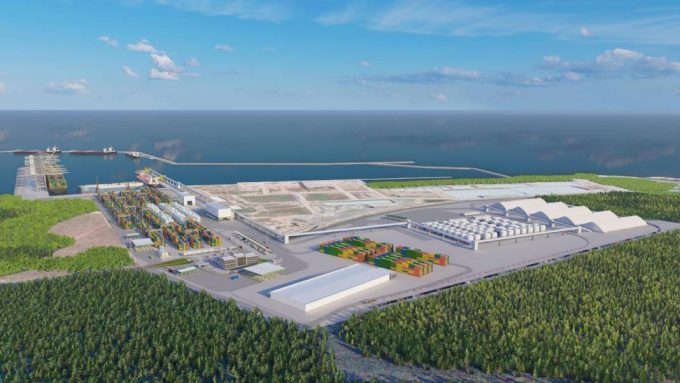
The trend of major shipping lines acquiring container terminal assets has accelerated as 2026 begins, with both Hapag-Lloyd and ONE announcing investments clearly designed to underpin their shipping networks.
In China, Japanese carrier ONE reported that it had agreed to acquire an undisclosed stake in Dalian Container Terminal, the largest of the four box terminals in the northern Chinese port. With an annual capacity of 6.6m teu, the facility accounts for around 60% of the port’s combined 9.75m teu and features 14 container berths across a quay of 4.39km.
“This acquisition of a minority stake aligns with our strategy of ensuring access at key regional ports,” said Hiroki Tsujii, global chief officer of ONE’s Product and Network division.
“The ownership stake allows us to collaborate with DCT and contribute to its continued infrastructure development and green terminal initiatives, further supporting Dalian’s role as a key gateway for international trade in North-east China,” he added.
According to Xeneta’s eeSea liner database, Dalian currently hosts just a single ONE service, the BH2 North-east Asia feeder service connecting to Tianjin and Busan, which calls at the competing Dalian International Container Terminal, in which ONE shareholder NYK holds a 20% stake.
ONE also has two services calling at DCT under its membership of the Premier Alliance – the North America-Far East-Middle East GS2 and the Asia-Mediterranean MD3, operated in conjunction with MSC.
However, the recent publication of the Premier Alliance’s 2026 schedule revealed that its members will no longer feature direct calls at Japanese ports on Asia-Europe services, and feeder demand out of Japan to Chinese ports as well as the South Korean hub of Busan is expected to grow as a result.
According to eeSea, the shareholders of DCT are Singapore’s PSA, with 50% and Chinese shipping line Cosco, with 19%, with the remainder held by state interests. It is not known from where ONE purchased its minority stake, nor the size of the deal.
Meanwhile in Brazil, Hapag-Lloyd announced that its port operating subsidiary, Hanseatic Global Terminals, had agreed to acquire a 50% stake in a new greenfield terminal in Aracruz, in the state of Espírito Santo, with the financial details also undisclosed.
The facility, Imetame Logística Porto, was first tabled in 2009, then resurfaced in 2024 by local firm Imetame Group, which began the hunt for a shipping line partner to back the project.
“Hanseatic Global Terminals possesses great expertise to offer the new terminal’s customers, importers and exporters efficient cargo handling and further strengthen Brazil’s importance in global trade,” said Etore Selvatici Cavallieri, Imetame Group chairman.
The terminal is scheduled to launch operations in mid-2028, with a future annual capacity of around 1.2m teu. It will initially offer 750 metres of quay and a depth of 17 metres alongside, suitable for the largest containerships.
“Our joint-venture with Imetame Group and the development of a new transhipment hub and gateway port on Brazil’s east coast strengthens our terminal portfolio while addressing capacity constraints in a growth region,” said Dheeraj Bhatia, CEO of Hanseatic Global Terminals.
“This investment in the port of Aracruz benefits Brazil by strengthening trade infrastructure via a port closer to consumer markets and key global shipping routes than traditional gateway ports – thereby providing several cargo-originating states an alternative and more efficient access to global markets,” he added.
The facility could provide a key hub for Hapag-Lloyd’s Brazilian cabotage subsidiary, Norcoast, and allow the German carrier to develop something of a standalone network in the country.
According to consultancy Linerlytica, Norcoast operates four 3,500 teu vessels, acquired via Hapag-Lloyd’s takeover of NileDutch and subsequently reflagged to Brazil.
For uninterrupted access, sign in or sign up to The Daily News, Premium or The Loadstar Enterprise Plan.

Comment on this article