Carriers keep the price pressure on – a 'shock and awe' PSS the standout
Container spot freight rates on the transpacific and Asia-Europe trades rose for the sixth consecutive ...


HON: DEALS ON THE MENUEXPD: NEW RECORD XPO: THE REBOUNDCAT: PAYOUT UPDHL: LIGHTHOUSEMAERSK: ANOTHER UPGRADEFWRD: HEALTHY CORRECTION R: RYDER CEO SAYS R: AMAZON LTL ANNOUNCEMENTPLD: EV INFRASTRUCTURE PUSHDHL: RAMPING UP 'NEW ENERGY LOGISTICS' GXO: NEW WINAMZN: LTL SERVICE UPDATEGM: ENERGY PROVIDER MODEL
HON: DEALS ON THE MENUEXPD: NEW RECORD XPO: THE REBOUNDCAT: PAYOUT UPDHL: LIGHTHOUSEMAERSK: ANOTHER UPGRADEFWRD: HEALTHY CORRECTION R: RYDER CEO SAYS R: AMAZON LTL ANNOUNCEMENTPLD: EV INFRASTRUCTURE PUSHDHL: RAMPING UP 'NEW ENERGY LOGISTICS' GXO: NEW WINAMZN: LTL SERVICE UPDATEGM: ENERGY PROVIDER MODEL
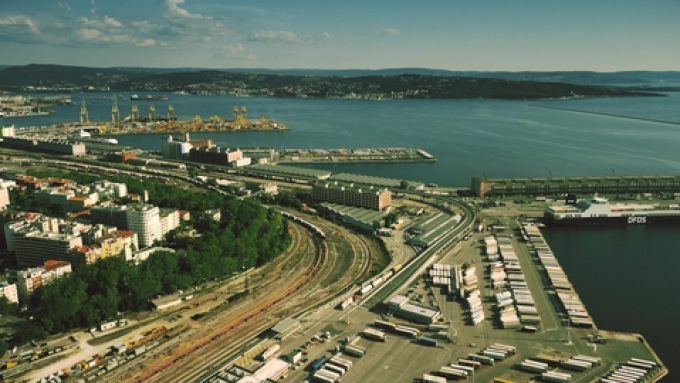
Cut-throat competition has broken out this year on the Istanbul-Trieste trade, dragging ro-ro and ferry operators into a market share battle with container lines, and where access to port capacity has become a complicating issue.
It could also have been a decisive factor in the recent decision to replace DFDS chief executive Torben Carlsen.
However, freight trades out of Turkey to Europe, expected to be buoyed by new nearshoring initiatives in the wake of recent geopolitical upheavals, are characterised by genuine multimodal competition – with all-road services competing with ro-ro routes that offer either road or rail connections to the European hinterland, which in turn compete with short sea and regional container strings.
According to DFDS around 50% of Turkish trailers are purely road freight, with the remaining 50% carried by ferries.
This time a year ago, Italian ro-ro operator Grimaldi launched a new ro-ro service between the Istanbul port area of Ambarli and Trieste, deploying two ro-ro ferries capable of carrying 500 trucks each, pitching it into direct competition with DFDS’s existing Istanbul-Trieste service and driving down rates.
The competition intensified this year after Grimaldi added a further two vessels to the route and by the third quarter was understood to have gained a 45% market share on the Istanbul-Trieste route.
However, DFDS’s response was to publicly avoid an all-out descent into a freight rate war and instead hiked prices on the route, as Mr Carlsen explained during its recent third-quarter earnings call.
“We’ve seen the competition entering a fourth vessel in October, following, you can say, our price initiative, whether it’s connected or not, we don’t know.
“But our initiation of price increases was necessitated by the results we were delivering despite relatively strong volumes on that particular route. So, we decided to increase prices. Have they been increased as much as we would have liked? No. Have they had an effect? Yes.
“We’ve lost, versus last year, probably 10%-15% in volumes between Turkey and Italy.
“But we have also reduced capacity. The price increases will have further impact in 2026. We can hope for a little more tailwind in terms of growth in Turkey as well next year… there has, of course, been pushback from customers. And then we have settled a certain level where we see improvement, and we already have commitments that will mean further improvements in 2026.”
Meanwhile, further competition is arriving in the form of both ro-ro and container services, as well, of course, as the road freight sector out of Turkey, in which DFDS is a major player since last year’s acquisition of Turkish operator EKOL – but it has been having considerable difficulty in rejuvenating its fortunes, with Turkish trailer volumes growing by just 1% this year compared to the first nine months of 2024 following “a negative impact from a larger than usual seasonal dip in August market volumes. Extra costs were incurred by continued rail traffic bottlenecks to Germany and increasing EU visa restrictions for Turkish drivers,” DFDS’s third-quarter report noted.
Nonetheless, further competition arrived from the AD Ports-backed UGR Ro-Ro operation, which has launched a single vessel operation between Ambarli, and Trieste’s smaller neighbour Monfalcone, although Mr Carlsen described its impact of DFDS as “marginal”.
A more existential threat could come from the container sector, as a number of deepsea carriers appear to be targeting intra-Europe volumes and following the inauguration of new container terminal capacity in the region – and where Trieste has always been in a three-way fight for box volumes and services with two of its closest neighbours – Koper and Rijeka.
Chief amongst these is APM Terminals’ newly opened $600m Rijeka facility in Croatia. Developed with local parter ENNA Group, the first phase offers 400 metres of quay and an annual capacity of 650,000 teu, which will be taken up to 680 metres of quay and capacity to over 1m teu.
The Rijeka Gateway terminal was built on the idea that it would offer an alternative to North Europe gateways for central and eastern European shippers, as explained by ENNA Group chief executive Boštjan Napast at the opening ceremony: “Our goal is to strengthen the ports of the northern Adriatic and enhance their competitiveness compared to other European ports, particularly those in the North Sea. Geographically, we are excellently positioned – we are closer to the Far East and closer to the heart of Europe.”
However, the same principle works for the Turkey-Europe trade, should exporters choose to ship in containers rather than trailers, and two key services appear to run in direct competition with the ro-ro sector – CMA CGM’s intra-Mediterranean BMS, and MSC’s Adriaka service, on which Maersk charters slots. Both services feature calls at Rijeka, Koper and Trieste.
Freight rates on ro-ro versus container services are also broadly similar – DFDS’s published new September all-in rate (including BAF, ETS and THC charges) is currently €1,383 per laden trailer/container on its Istanbul-Trieste route, while the Freightos Terminal rates database recorded a container rate of $1,400 per dry 40ft from Ambarli to Trieste at the beginning of October, although it had dropped to $932 per 40ft this week.
Indeed, only this week the French carrier launched a new marketing push for its Adriatic Rail service, now offering 16 rail departures a week from the three ports which are specifically catering for onward transport of containers from the BMS service; as well as its Maestrale feeder service that connects with its main Mediterranean transhipment hub at Malta and the Asia-Mediterranean deepsea BEX service that is part of the Ocean Alliance network, and which is currently making the news as the service most likely to resume Suez Canal transits.
One final factor can be found in Trieste itself and what plans MSC has for the port’s PLT terminal, which came under its control following its acquisition of a minority stake in its owner, German stevedore HHLA. It also happens to be DFDS’s Trieste terminal, but over the course of 2025 it had to redirect a number of services to other terminals due to mounting congestion issues.
“We are very unhappy with how we have been treated in the PLT terminal. That is a fact,” Mr Carlsen said in the earnings call.
“We have established a project to see how we can make sure that customers pick up trailers faster from our own terminal to see if we can free space to accommodate these extra calls. And we’re also looking at whether we have to reduce calls,” he added.
PLT is a multipurpose facility equipped with mobile cranes rather than dedicated container handling equipment, and currently MSC’s container services all call at the Trieste Marine Terminal, in which HHLA acquired a 50% stake in 2021. The facility handled around 750,000 teu last year, representing a 61% utilisation of its 1.2m teu annual capacity, according to the eeSea liner database.
The big question for both ro-ro and liner operators into the port will be what plans MSC might have for the PLT facility, and whether it will look to replicate the strategy seen elsewhere of building out dedicated terminal capacity for itself and ultimately converting it to a container-only operation.
For uninterrupted access, sign in or sign up to The Daily News, Premium or The Loadstar Enterprise Plan.

Comment on this article