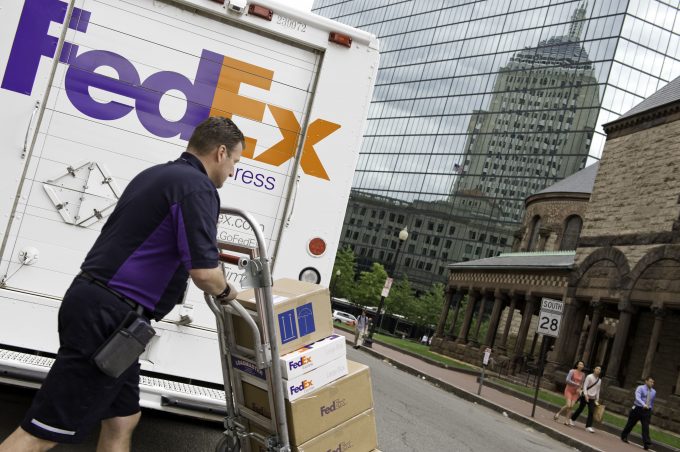
FedEx Freight ready to trade
PRESS RELEASE FedEx Completes Spin-Off of FedEx Freight Creates Two Independent, Industry-Leading Public Companies Positioned to Deliver ...
KNX: TIME TO SAY GOODBYEODFL: SET THE BAR HIGHBA: PIPELINEBA: SUPPLY CHAIN TESTAMZN: AI WAVESDHL: THE FRENCH CONNECTIONJBHT: MIND THE SPREADMAERSK: GAUGE THE UPSIDE DSV: UP AND DOWNCHRW: FIRST OF ITS KINDMFT: TAKING PROFIT
As the peak season for parcel deliveries approaches, US shippers are looking for alternatives to FedEx and UPS.
Regional parcel carrier OnTrac has unveiled new coast-to-coast services, while Uber Eats bagged another large client for its fulfilment portfolio.
UPS did not endear itself to shippers by delaying announcing its peak season surcharges until 29 August, which left shippers barely four weeks before they kick in, on 28 September.
UPS CEO Cargo Tomé said in the integrator’s earnings call on 29 July that major shippers were struggling to forecast holiday demand, but observers were not convinced, noting that FedEx had unveiled its surcharges back in July, as UPS had done last year.
Some have accused UPS of deliberately holding back the announcement to give customers less time to look for alternatives.
Meanwhile, parcel consultants have advised shippers to soften the impact of surcharge hikes by negotiating discounts with the integrators. However, such negotiations typically take between 60 and 90 days, according to ShipScience.
Besides higher levies on packages that are bulky, oversized or require additional handling, UPS is implementing a demand surcharge for large clients on parcel volumes exceeding their weekly baseline shipping activity from July. This ranges from $0.40 to $8.75, depending on the service and the difference to July shipment numbers. FedEx has also upped its peak season surcharges.
Industry experts have stressed that these surcharges can drive up shippers’ costs drastically.
“UPS’s tiered structure creates significant cost risk for high-volume shippers. Going 200% over baseline can triple or quadruple per-package fees,” warned TI Solutions.
In addition to their peak levies, UPS and FedEx announced a $2.50 processing fee for international packages headed to the US. This came at a time of confusion surrounding international parcel imports. The withdrawal of de minimis exemption for all parcel imports has created heightened uncertainty, prompting numerous foreign postal agencies, as well as DHL, to suspend parcel services to the US.
According to one logistics executive, the impact of the de minimis withdrawal extends beyond online merchants. It has been a useful tool for cross-border shipping for other businesses, which were sent scrambling for alternatives by the short notice of the withdrawal, she noted.
There are also concerns that inbound parcels could be delayed in customs inspections, which should benefit large parcel carriers with well established brokerage departments and regular interaction with the US Customs & Border Protection (CBP) agency.
Cathy Morrow Roberson, founder and head analyst of Logistics Trends & Insights, said the integrators were somewhat “reluctant participants” in B2C parcel logistics. Their focus is on the more lucrative B2B sector, but demand in that segment has been tepid, and the integrators need additional volume to optimise their networks, she noted.
Meanwhile, their competition keeps growing. On Tuesday, OnTrac, a regional parcel carrier that has taken big steps toward a national network over the past couple of years, announced a line-up of coast-to-coast services and plans for a hybrid air-and-ground express service next year, in partnership with ClearJet, which operates a regional network and air service through regional narrowbody passenger carriers.
Increasingly, large shippers are looking at unconventional parcel delivery solutions. This week Best Buy announced a partnership with Uber Eats for deliveries from 800 of the tech retailer’s locations. The service, free for Uber One subscribers, offers on-demand delivery and scheduled drop-offs.
With this move, Best Buy is walking in the footprints of Home Depot and Dollar General, which have started working with Uber Eats for deliveries this year.
Walmart, which has increasingly opened its logistics infrastructure to third parties, has seen sales fulfilled from its stores jump nearly 50% in the past quarter, according to EVP and CFO John Rainey. On the retail behemoth’s recent earnings call he said about one-third of deliveries from stores arrived in three hours or less, with 20% of these reaching consumers within 30 minutes.
The model appears to be feeding itself: Mr Rainey said the quick deliveries had led to more frequent orders from shoppers.
For uninterrupted access, sign in or sign up to The Daily News, Premium or The Loadstar Enterprise Plan.
Comment on this article